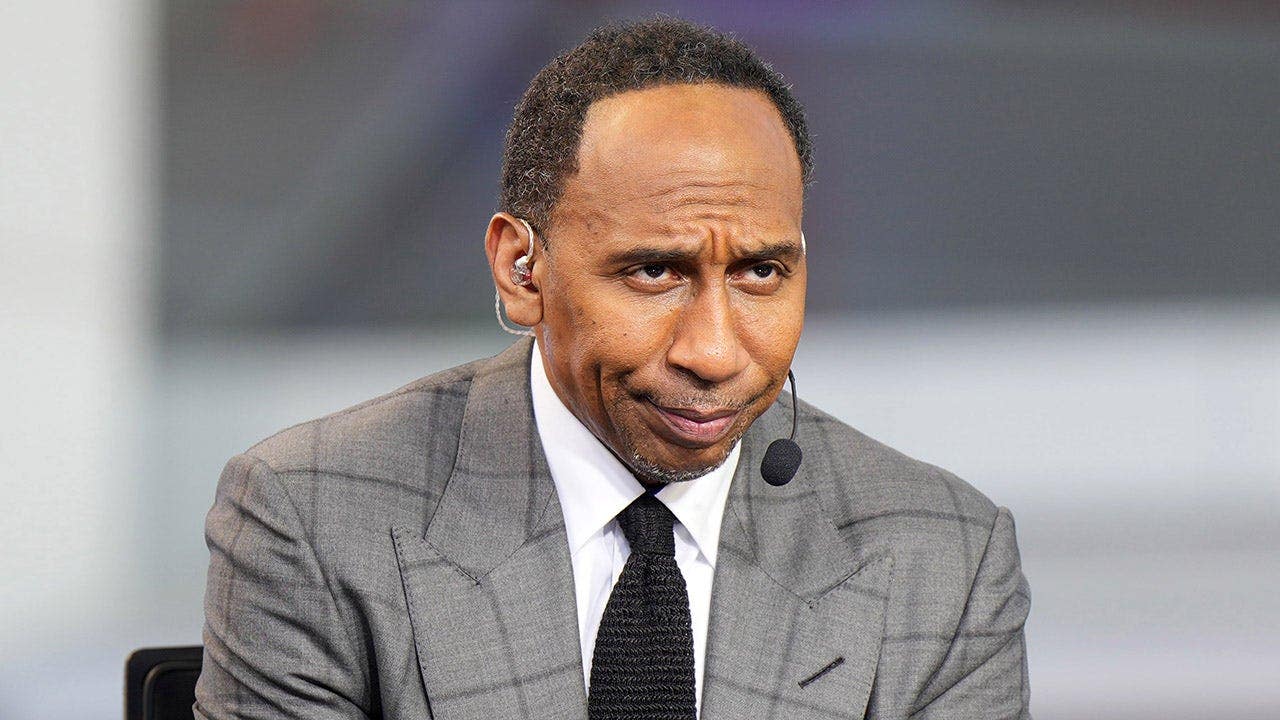
Stephen A. Smith’s Selective Courage: Speaking Truth Only When Safe
Stephen A. Smith’s Late Apology to Kyrie Irving: Courage or Convenience?
Introduction
Imagine a kid on the playground who stays quiet while everyone picks on someone else. Then, weeks later—when the teachers aren’t looking and the popular kids have moved on—that same kid says, "Hey, that wasn’t fair!"
Is that bravery? Or is it just safe timing?
That’s basically the question writer Jon (from OutKick) is asking about sports superstar Stephen A. Smith. Recently, Smith apologized to NBA player Kyrie Irving and criticized Dr. Anthony Fauci. But the author thinks this might be more about politics and timing than real courage.
What Happened Recently?
On a recent episode of The Stephen A. Smith Show titled "Did Fauci Lie to Us All?", two big things happened:
- Smith attacked Dr. Fauci. He pointed out that Fauci "pleaded the Fifth" (a legal right to stay silent so you don’t incriminate yourself) over 100 times during a Congressional hearing.
- Smith apologized to Kyrie Irving. Years ago, Smith called Irving "selfish" for refusing the COVID-19 vaccine, which cost Irving millions and games missed. Now, Smith says:
"It didn’t make him stubborn or selfish. It made him brave… We did him wrong. I did him wrong. And for that, I’m sincerely sorry."
Important Point: Pleading the Fifth isn’t an admission of guilt. It’s a constitutional protection. But politically, it looks like someone has something to hide.
The Author’s Main Argument: "He Only Goes Where the Political Tide Turns"
The author doesn’t buy the "change of heart." Here’s why:
| Then (2021–2023) | Now (2024–2026) |
|---|---|
| Called Kyrie Irving "selfish" | Calls Kyrie Irving "brave" |
| Silent on Fauci / COVID mandates | Slams Fauci after 100+ "plead the Fifth" moments |
| Silent on men in women’s sports (Lia Thomas celebrated by ESPN) | Suddenly condemns men in women’s sports |
| Didn’t defend Sam Ponder (reprimanded/fired for speaking up) | Praises Sophie Cunningham for "saying what others won’t" |
The Author’s Verdict:
"Stephen A. only goes where the political tide turns. It’s what he’s been doing for years now… How convenient."
Examples of "Too Little, Too Late"
The article lists people who paid a real price for speaking up early—when it was unpopular, risky, and lonely:
- Kyrie Irving – Lost millions, sat out home games in NYC.
- Novak Djokovic – Detained in Australia, banned from tournaments.
- Aaron Rodgers, Cole Beasley, Tyler Bertuzzi – Vilified by media and fans.
- Allison Williams – Fired from ESPN for refusing the vaccine while pregnant.
- Sam Ponder – Vilified and pushed out of ESPN for defending women’s sports.
Key Contrast: These people spoke up when it hurt. Smith is speaking up now that it’s safe.
Why Timing Matters (ELI5 Version)
Think of it like this:
- Real courage = Jumping into a cold pool to save someone.
- Convenience = Waiting until the pool is heated, then saying, "I would’ve jumped in!"
The author argues Smith had a massive platform (ESPN) for years. He could have defended Irving, Ponder, or vaccine skeptics when they were being crushed. He didn’t. Now that public opinion has shifted? He’s "brave."
A Balanced View (The Author Admits This)
To be fair, the author does say:
"Yes, I’m thankful he’s apologizing, whether it’s truly sincere or not."
"We should be hoping for [this] from many sports media members, family, friends, politicians…"
So it’s not that the apology is bad—it’s that calling it "courageous" insults the people who actually risked everything early on.
Summary
- Stephen A. Smith recently apologized to Kyrie Irving and attacked Dr. Fauci.
- The author (Jon from OutKick) says this is political opportunism, not courage.
- Smith stayed silent or joined the mob when it mattered most (2021–2023).
- Real courage came from Irving, Djokovic, Rodgers, Ponder, Williams—who lost jobs, money, and reputation.
- Apologies are good. But don’t confuse "safe truth-telling" with "bravery."
FAQ
1. Did Stephen A. Smith really call Kyrie Irving "selfish"?
Yes. During the NBA vaccine mandate drama (2021–2022), Smith repeatedly criticized Irving for refusing the shot, calling him selfish and a distraction.
2. What does "pleading the Fifth" mean?
It means refusing to answer questions in a legal setting because your answers could be used against you in a criminal case. It’s a constitutional right—not proof of guilt.
3. Who is Sam Ponder and why does she matter?
Sam Ponder was a high-profile ESPN host. She spoke out against men competing in women’s sports. She was criticized internally and eventually left the network. The author uses her as an example of real courage—speaking up inside the machine, not after leaving it.
4. Is the author saying Smith shouldn’t have apologized?
No. The author says the apology is positive and needed. But he rejects the idea that it’s heroic—because it came years late, only after the cultural wind changed.
5. Why does the author mention "liberal overlords at ESPN"?
This is the author’s opinion: he believes ESPN has a progressive bias, and Smith—wanting to keep his job and rise—aligned with that bias until it became politically profitable to pivot.