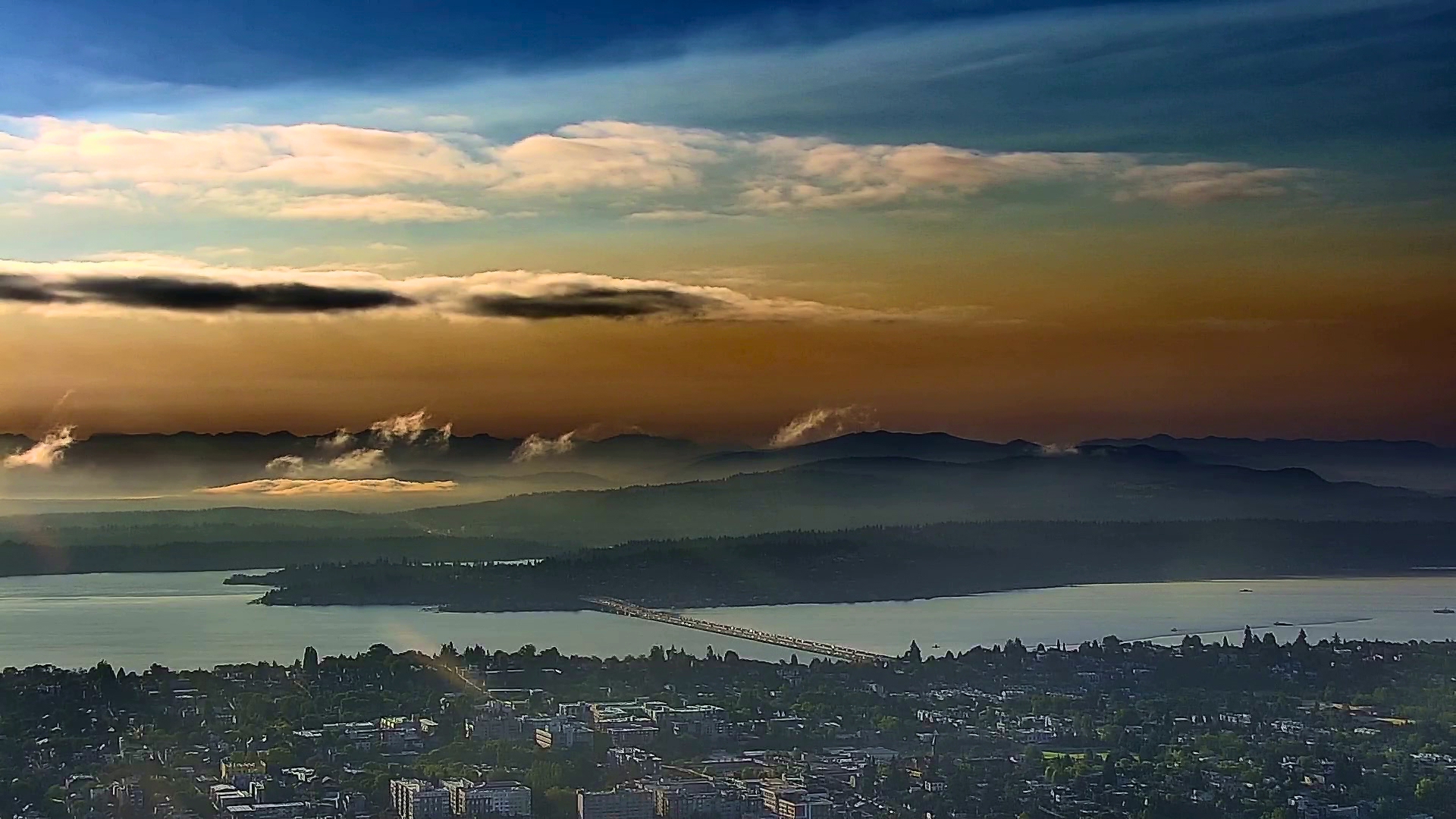
Wildfire Smoke Chokes Puget Sound: Hazardous Air Alert Issued
Wildfire Smoke and Heat Wave Headed for Western Washington: What You Need to Know
The Big Picture
Smoke from multiple wildfires is drifting into western Washington starting Monday, bringing hazy skies and worsening air quality through mid-week. At the same time, a stretch of hot, dry weather will push temperatures into the 90s, creating elevated fire danger across the region.
Where Is the Smoke Coming From?
The smoke blanketing our region has three main sources:
- Northern Cascades fires – Burning in the mountains north of Seattle
- British Columbia wildfires – Smoke drifting south across the border
- Eastern Washington fires – Including the large Spokane Complex Fire that has forced tens of thousands to evacuate
Think of it like a campfire: When you sit too close, smoke blows in your face. Right now, winds are acting like a giant fan, blowing smoke from all these distant fires right into the Puget Sound region.
Air Quality Alert: What You Need to Know
The National Weather Service has issued an Air Quality Alert from Monday at noon through Wednesday at 5 PM for these counties:
- King County
- Kitsap County
- Pierce County
- Snohomish County
- Thurston County
Day-by-Day Air Quality Forecast
| Day | Expected Conditions | What It Means for You |
|---|---|---|
| Monday | Smoke stays high in the atmosphere at first; some mixes down to ground level later | "Moderate" to "Unhealthy for Sensitive Groups" for most of Puget Sound |
| Tuesday | Thicker, near-surface smoke arrives | Air quality could reach "Unhealthy" category |
| Wednesday | Smoke remains thick near ground level | Continued "Unhealthy" conditions possible |
| Thursday | Gradual improvement begins | Still smoky but getting better |
| Friday | Onshore winds return, clearing smoke | Back to "Good" or "Moderate" air quality |
IMPORTANT: "Unhealthy for Sensitive Groups" means children, older adults, pregnant people, and anyone with heart or lung conditions (like asthma) should limit outdoor activity. "Unhealthy" means everyone should reduce outdoor exertion.
Heat Wave on the Way
The smoke isn’t arriving alone—it’s bringing a heat wave with it.
Temperature Timeline
- Monday: Comfortable highs in the 70s and low 80s
- Tuesday through Thursday: Temperatures climb to the upper 80s and 90s
- Friday: Cool-down begins, back to upper 70s and low 80s
- Weekend: Pleasant temperatures return
Why this matters: Hot, dry weather + low humidity + dry grass and trees = high fire danger. That’s why the KING 5 Weather Team has declared First Alert Weather Days through Thursday.
How to Protect Yourself: 5 Simple Steps
- Check air quality before heading out – Use AirNow.gov or your phone’s weather app
- Limit outdoor activity when air quality is "Unhealthy for Sensitive Groups" or worse
- Keep windows and doors closed – Run air conditioning or fans instead
- Use a portable air cleaner or make a DIY box fan filter (attach a furnace filter to a box fan)
- Stay hydrated and cool – Drink water, avoid strenuous activity during peak heat (1–6 PM)
Pro Tip: If you don’t have air conditioning, visit a cooling center, library, mall, or community center during the hottest part of the day.
What "First Alert Weather Days" Mean
KING 5 activates First Alert for weather events that could affect lives, property, or travel. During this event, the weather team will provide:
- Hour-by-hour smoke and air quality updates
- Temperature forecasts and heat safety tips
- Fire danger updates and evacuation info if needed
- Timeline for when conditions will improve
Summary
- Smoke arrives Monday, worsens Tuesday–Wednesday, improves Friday
- Air Quality Alert active Monday noon – Wednesday 5 PM for 5 counties
- Heat wave brings 90s Tuesday–Thursday with high fire danger
- Protect sensitive groups (kids, seniors, anyone with breathing/heart issues)
- Stay indoors, filter your air, and hydrate until conditions improve Friday
FAQ
How can I check the current air quality near me?
A: Visit AirNow.gov or open the weather app on your smartphone. Look for the AQI (Air Quality Index) number and color code.
What’s the difference between "Unhealthy for Sensitive Groups" and "Unhealthy"?
A: "Unhealthy for Sensitive Groups" (AQI 101–150) means people with asthma, heart disease, kids, and older adults should limit outdoor activity. "Unhealthy" (AQI 151–200) means everyone may experience health effects and should reduce outdoor exertion.
Will masks help with wildfire smoke?
A: N95 or KN95 masks can filter out fine smoke particles if worn correctly (tight seal on face). Cloth masks, surgical masks, and bandanas do not protect against wildfire smoke.
Why does smoke stay "high in the atmosphere" at first, then mix down?
A: In the morning, cooler air near the ground traps smoke above it (like a lid on a pot). As the sun heats the ground, the air mixes vertically, bringing that elevated smoke down to breathing level.
When will it be safe to open windows again?
A: Likely Friday when onshore winds (cool, clean air from the Pacific Ocean) return and push the smoke out. Check AirNow.gov Friday morning before opening up.
Stay safe, stay informed, and take care of each other during this smoke and heat event. The KING 5 First Alert Weather Team will keep you updated every step of the way.