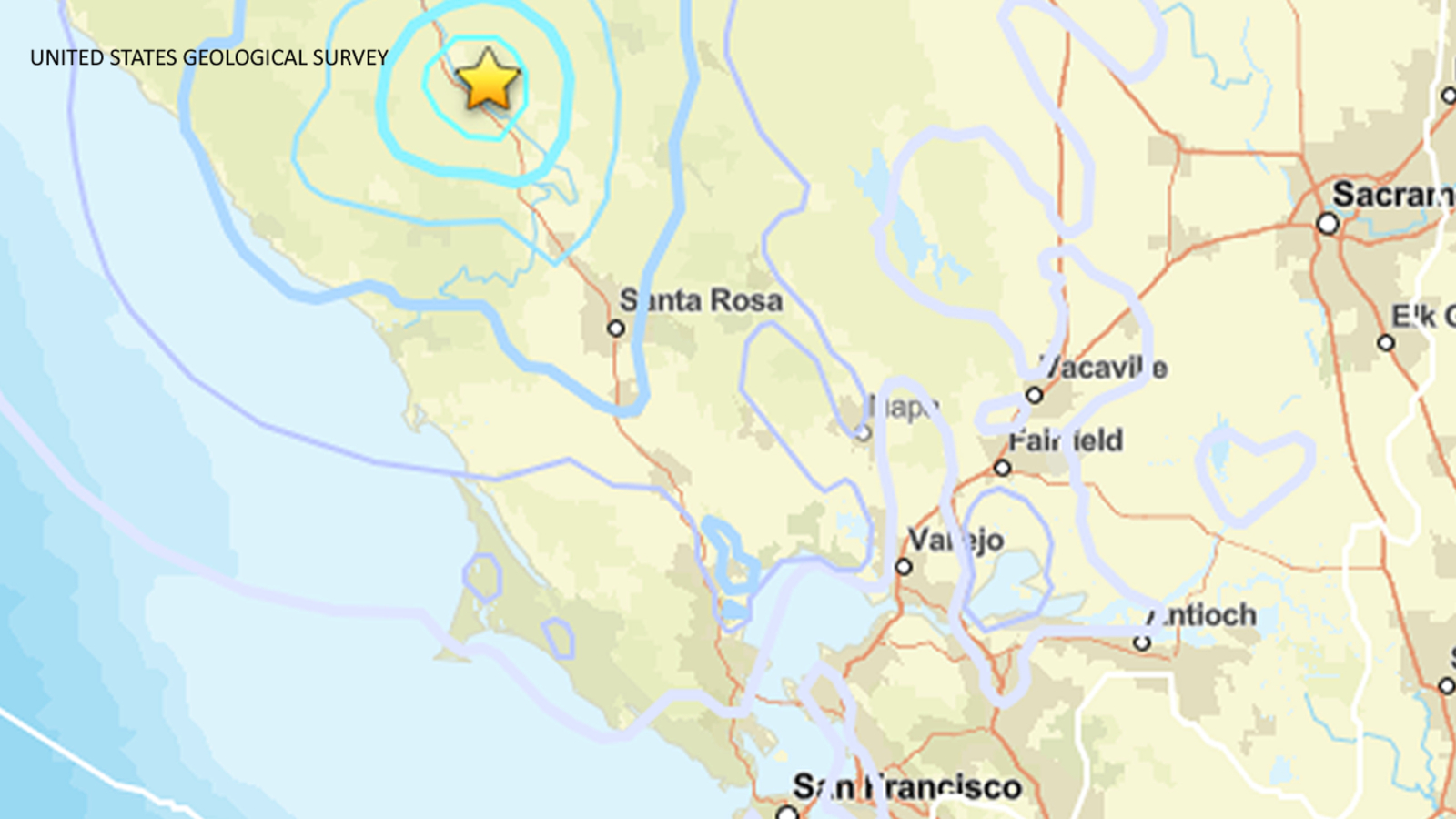
4.3 Quake Rocks North Bay Near Cloverdale, USGS Says
Magnitude 4.3 Earthquake Shakes North Bay Near Cloverdale
When: Tuesday night, July 28, 2026 at 7:40 p.m.
Where: Near Cloverdale, California (North Bay region)
Magnitude: 4.3 on the Richter scale
Depth: 3.42 miles underground
Aftershock: A smaller 2.5 magnitude quake followed
Good News: No injuries or major damage reported
What Happened?
Imagine the Earth’s crust like a giant puzzle made of massive pieces called tectonic plates. These pieces are always slowly moving — but sometimes they get stuck. When they finally break free, the ground shakes. That’s an earthquake.
On Tuesday night, one of those sudden shifts happened near Cloverdale, a town in Northern California’s wine country. The U.S. Geological Survey (USGS) — the official government agency that tracks earthquakes — confirmed it was a magnitude 4.3 quake.
What Do These Numbers Mean? (ELI5 Edition)
Magnitude 4.3 — “Moderate” Shake
- Think of it like a big truck rumbling past your house.
- You’d feel it clearly indoors — dishes might clink, pictures might tilt.
- Outside, it feels like the ground is gently rolling.
- Not usually dangerous, but definitely noticeable!
Depth: 3.42 Miles — Pretty Shallow
- Earthquakes can happen miles deep or right near the surface.
- Shallower quakes (like this one) feel stronger at the surface because the energy doesn’t have to travel as far.
- Deeper quakes spread out more and feel weaker up top.
Aftershock: Magnitude 2.5 — The “Little Brother”
- After a main quake, the ground often settles with smaller follow-up shakes.
- A 2.5 is very minor — most people won’t even feel it unless they’re very close and perfectly still.
- It’s like the Earth letting out a tiny sigh after a big stretch.
Why This Matters (Even If Nothing Broke)
Important Point:
No damage doesn’t mean “no risk.”
This quake is a reminder that the Bay Area sits on active fault lines. Small quakes help scientists understand where stress is building — and where a bigger one might happen someday.
What Should You Do? (Simple Steps)
- Stay Calm — Most quakes this size pass in seconds.
- Drop, Cover, Hold On — If you’re inside, get under a sturdy table.
- Check Your Surroundings — After the shaking stops, look for gas smells, broken glass, or cracks.
- Have a Plan — Know where to meet family, keep flashlights and water handy.
- Stay Informed — Follow trusted sources like USGS.gov or ABC7 News for updates.
Want to See Where You Live vs. Fault Lines?
ABC7 has an interactive map showing:
- Major fault lines in the Bay Area (like the San Andreas!)
- Where strong quakes have hit before
- How close your neighborhood is to them
Summary
| Detail | Info |
|---|---|
| Event | Magnitude 4.3 earthquake |
| Location | Near Cloverdale, North Bay, CA |
| Time | Tuesday, July 28, 2026 · 7:40 PM |
| Depth | 3.42 miles (shallow = felt more strongly) |
| Aftershock | 2.5 magnitude (minor) |
| Impact | Felt widely, no injuries or major damage |
| Source | U.S. Geological Survey (USGS) |
| Coverage | ABC7 Bay Area (KGO-TV) — live 24/7 streaming |
Bottom Line: This was a moderate, shallow quake that gave the North Bay a good shake — but caused no harm. It’s a great chance to review your earthquake readiness!
FAQ
Is a 4.3 earthquake big?
It’s moderate — strong enough to feel clearly, but rarely causes damage. For comparison, the 1989 Loma Prieta quake was 6.9 (over 500x stronger!).
Why was it felt so widely if it was only 4.3?
Because it was shallow (3.42 miles deep). Shallow quakes send more shaking energy to the surface — like a speaker on the floor vs. in the ceiling.
Should I worry about “The Big One”?
The Bay Area will have a major quake someday — but no one knows when. Small quakes like this don’t prevent big ones, but they don’t mean one is coming tomorrow either. Best move? Be prepared.
What’s an aftershock? Will there be more?
Aftershocks are smaller quakes that follow the main one as the ground settles. There might be more — but they usually get smaller and less frequent over time.
Where can I get real-time earthquake alerts?
- USGS ShakeAlert (powers phone alerts in CA, OR, WA)
- MyShake App (free, from UC Berkeley)
- ABC7 News — live 24/7 coverage at abc7news.com
Stay safe, stay informed — and keep an emergency kit ready. The ground might shake again, but you’ll be ready.