11
11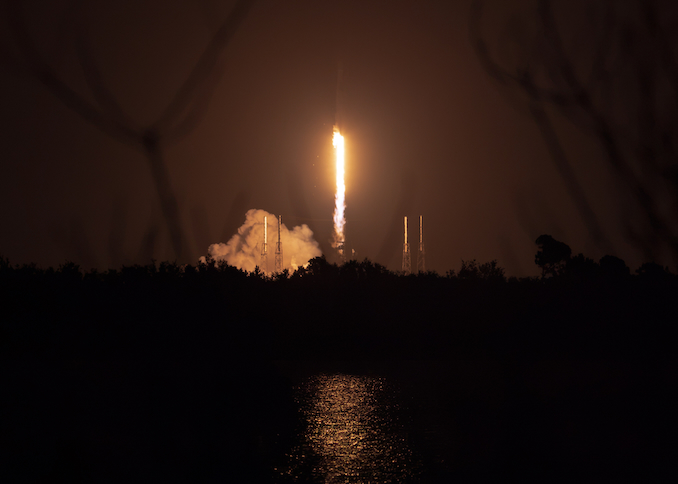
Imagine wanting to put a school-bus-sized machine 22,000 miles above the Earth so it can beam your favorite music and radio shows down to your car. That’s exactly what happened on a Sunday night in June 2026! A company called SpaceX launched a massive satellite for SiriusXM — the company that provides satellite radio.
The rocket, called a Falcon 9, blasted off from Cape Canaveral Space Force Station in Florida at 10:25 p.m. EDT. It soared into the sky on an easterly path, carrying the satellite on a mission to replace two older satellites that have been floating in space for well over a decade.
Important Point: This satellite is extremely heavy — about 15,000 pounds (7.5 tons) — and it was deployed from the rocket about half an hour after liftoff. That’s like trying to throw a pickup truck into space!
Launching a rocket isn’t as simple as pressing a button. You have to check the weather — and space meteorologists take this very seriously!
Here’s what the weather forecasters said:
The weather officers explained that winds high in the atmosphere were weak and unpredictable, which made storm movement hard to forecast. But thankfully, conditions cooperated, and the launch went ahead smoothly!
Not all rocket parts are used just once. SpaceX is famous for reusing its rocket boosters, and this particular booster is a real workhorse!
Meet Booster B1085:
After launching the SXM-11 satellite on its way, the booster did something pretty amazing: it came back down and landed on a drone ship floating in the Atlantic Ocean! The ship is called "A Shortfall of Gravitas" (a fun reference from a sci-fi book, The Hitchhiker’s Guide to the Galaxy).
Important Point: This was the 158th successful landing of a Falcon 9 booster, tying a record held by another now-retired drone ship called "Just Read the Instructions," which has been repurposed to help with SpaceX’s even bigger Starship rocket.
Now let’s talk about the star of the show: the SXM-11 satellite itself!
The SXM-11 satellite is built to replace two older satellites:
These older satellites are getting tired (imagine running for over 14 years straight!), so SXM-11 and its sibling, SXM-12, are stepping in to keep SiriusXM’s services running strong.
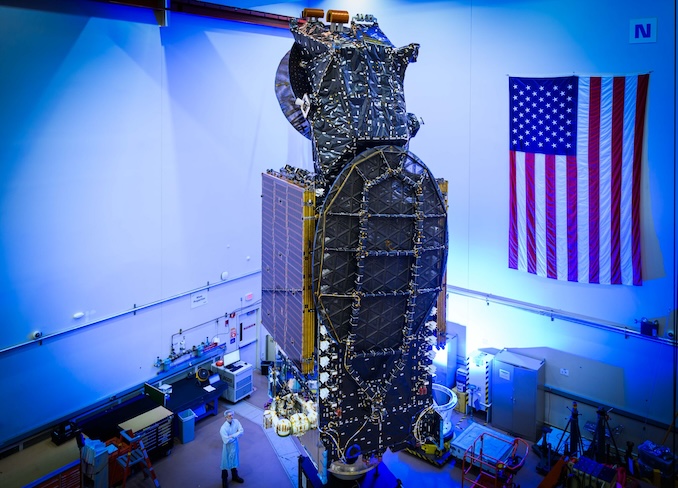
The satellite was made by Lanteris Space Systems, a company that used to be called Maxar Space Systems. In January 2026, it was bought by another space company called Intuitive Machines for about $800 million.
This thing is HUGE:
It’s built on something called the IM-1300 satellite bus — think of a "satellite bus" like the chassis of a car. It’s the basic frame and structure that everything else gets attached to.

Important Point: The last satellite in this series, SXM-10 (which launched in June 2025), is expected to keep working until around 2040. That’s a working life of roughly 15 years!
Here’s a quick recap of everything important:
Think of it as a stepping-stone path in space. The rocket didn’t drop the satellite directly into its final parking spot. Instead, it placed the satellite in an egg-shaped orbit (that’s the "transfer" part). From there, the satellite uses its own engines to slowly climb up to its final, circular orbit about 22,000 miles above Earth, where it will stay fixed over one spot.
Excellent question! Imagine a truck where most of what it’s carrying is gasoline. The satellite hauls fuel to keep adjusting its position in space (because gravity from the Sun and Moon can slowly nudge it). Once the fuel runs out around 2040, the satellite can no longer hold its spot and will be moved to a "graveyard orbit" to get out of the way.
A geostationary satellite orbits the Earth at the same speed the Earth spins. That means it always stays above the exact same spot on the ground. For a satellite radio provider like SiriusXM, this is perfect — your car antenna always knows exactly where to point!
SpaceX gives every booster a unique ID number. B1085 means it was the 1,085th booster core ever built (or assigned to that series). It’s like a license plate — it helps engineers track every booster’s entire flight history.
Yes — but you probably won’t notice an immediate difference! The satellite first needs time to reach its final orbit, get tested, and then be integrated into the fleet. The improved signal quality and expanded Alaska coverage will roll out over the coming months.