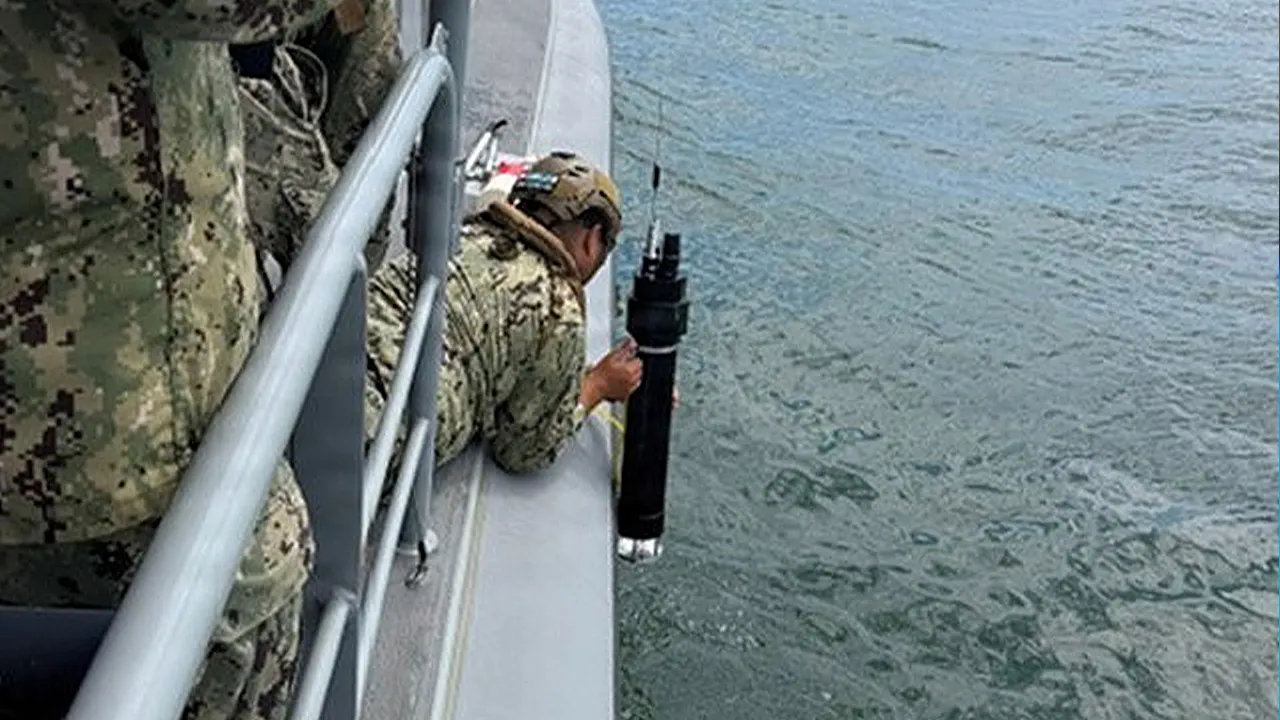
Army Unleashes ‘Hammer of the Gods’ Overseas for First Time
U.S. Army Tests "Hammer of the Gods" at Sea: A New Shield Against Enemy Missiles
Source: Based on reporting by Bonny Chu for Fox News Digital
What Is "Hammer of the Gods"?
Imagine you’re playing a game of tag, but the other team has special glasses that let them see exactly where you are from miles away. That’s what GPS does for modern weapons—it gives them "perfect vision" to hit targets with incredible accuracy.
Now imagine you have a magic flashlight that makes those glasses go blurry. The enemy can’t see you clearly anymore, so their throws (or missiles) miss.
That’s essentially what "Hammer of the Gods" does. It’s a new U.S. Army electronic warfare system that jams enemy navigation signals—like GPS—so their precision weapons can’t find their targets.
Key Features at a Glance
| Feature | What It Means (ELI5) |
|---|---|
| Jams PNT Signals | Scrambles Positioning, Navigation & Timing data (like GPS) that enemy missiles need |
| Portable | Can be moved and set up relatively easily |
| Maritime Variant | New version designed to work on ships at sea |
| Protects Friendly Forces | Creates a "safe zone" where U.S. comms still work |
| Multi-Domain | Works across land, sea, space, and cyber |
The Big Test: First Time at Sea
Where & When?
- Location: Off the U.S. West Coast (Pacific Ocean)
- Time: Mid-July 2026
- Exercise: Project Convergence Capstone 6 (PC-C6)
Why This Test Matters
IMPORTANT POINT: Land-based versions have been tested for two years, but this was the first time the maritime (ship-based) version was tested in real ocean conditions.
What They Proved
The Army confirmed the system can be:
- Launched from a ship
- Operated in real maritime environments (waves, salt, weather)
- Recovered safely afterward
How It Protects Troops: Two Superpowers
The system does two big things at once:
1. Blinds Enemy Weapons
- Targets long-range artillery
- Disrupts guided missiles
- Confuses cruise missiles
- Result: Missiles miss, missions get delayed, enemies waste ammo
2. Keeps Friendly Forces Connected
- Builds a tough communications network
- Works even when enemies are jamming
- Lets troops "shoot, move, and communicate" (the three core tasks of soldiers)
Think of it like this: The enemy’s radio goes static, but your walkie-talkie stays crystal clear.
Team Effort: Joint Forces Together
This wasn’t just the Army working alone. The test brought together:
- U.S. Army (lead)
- U.S. Navy
- U.S. Space Force
- U.S. Space Forces Pacific
- Naval Base San Diego
- U.S. Army Space and Missile Defense Command
They practiced combining:
- Space capabilities (satellites)
- Cyber capabilities (digital warfare)
- Conventional capabilities (ships, soldiers, gear)
Step-by-Step: How a Test Like This Works
- Plan – Define goals: "Can we jam from a ship? Does our comms survive?"
- Deploy – Load system onto naval vessels
- Launch – Activate the Hammer of the Gods at sea
- Simulate – Fire practice enemy missiles (or simulate their signals)
- Measure – Track: Did missiles miss? Did friendly radios work?
- Recover – Pack up system, bring it back safely
- Analyze – Review data, fix bugs, plan upgrades
- Repeat – Test again in tougher conditions
Why This Matters for the Future
Modern warfare depends heavily on GPS. Almost every precision weapon uses it. If you can deny that GPS to the enemy while keeping it for yourself, you gain a massive advantage.
This test shows the U.S. is preparing for high-tech conflicts where:
- Satellites might be attacked
- Signals might be jammed
- Battlefields are "electromagnetically noisy"
Summary
| What Happened | Why It Matters |
|---|---|
| "Hammer of the Gods" tested at sea for first time | Proves it works on ships, not just land |
| Jams enemy GPS/PNT signals | Makes precision missiles miss |
| Protects friendly communications | Troops stay connected in electronic warfare |
| Joint exercise with Navy & Space Force | Shows real-world, multi-domain readiness |
| Part of Project Convergence Capstone 6 | Ongoing effort to modernize U.S. military tech |
FAQ: Your Questions Answered
Q1: Is "Hammer of the Gods" a weapon that blows things up?
A: No! It’s an electronic warfare tool—it fights with radio waves, not explosives. It "attacks" by confusing enemy navigation, not by destroying hardware.
Q2: Does it jam our GPS too?
A: No. The system is designed to create a protective bubble. Enemy signals get scrambled, but friendly forces keep working thanks to the resilient network it builds.
Q3: Why test it at sea? Isn’t land enough?
A: Ships move, rock, and operate far from support. Testing at sea proves the system works in harsh, real-world conditions—salt water, waves, limited space, and ship power systems.
Q4: What is "Project Convergence"?
A: It’s the Army’s big yearly experiment to test new tech and tactics. Think of it as a "giant rehearsal" where they try out future gear before it goes to real units.
Q5: Could this be used to protect civilians?
A: Potentially, yes. Similar tech could defend airports, power plants, or cities from drone or missile attacks. But right now, it’s a military system for battlefield use.
Want to Learn More?
This technology is part of a bigger shift called "Electromagnetic Spectrum Operations"—controlling the invisible airwaves that modern war runs on. The side that owns the spectrum… often wins the fight.