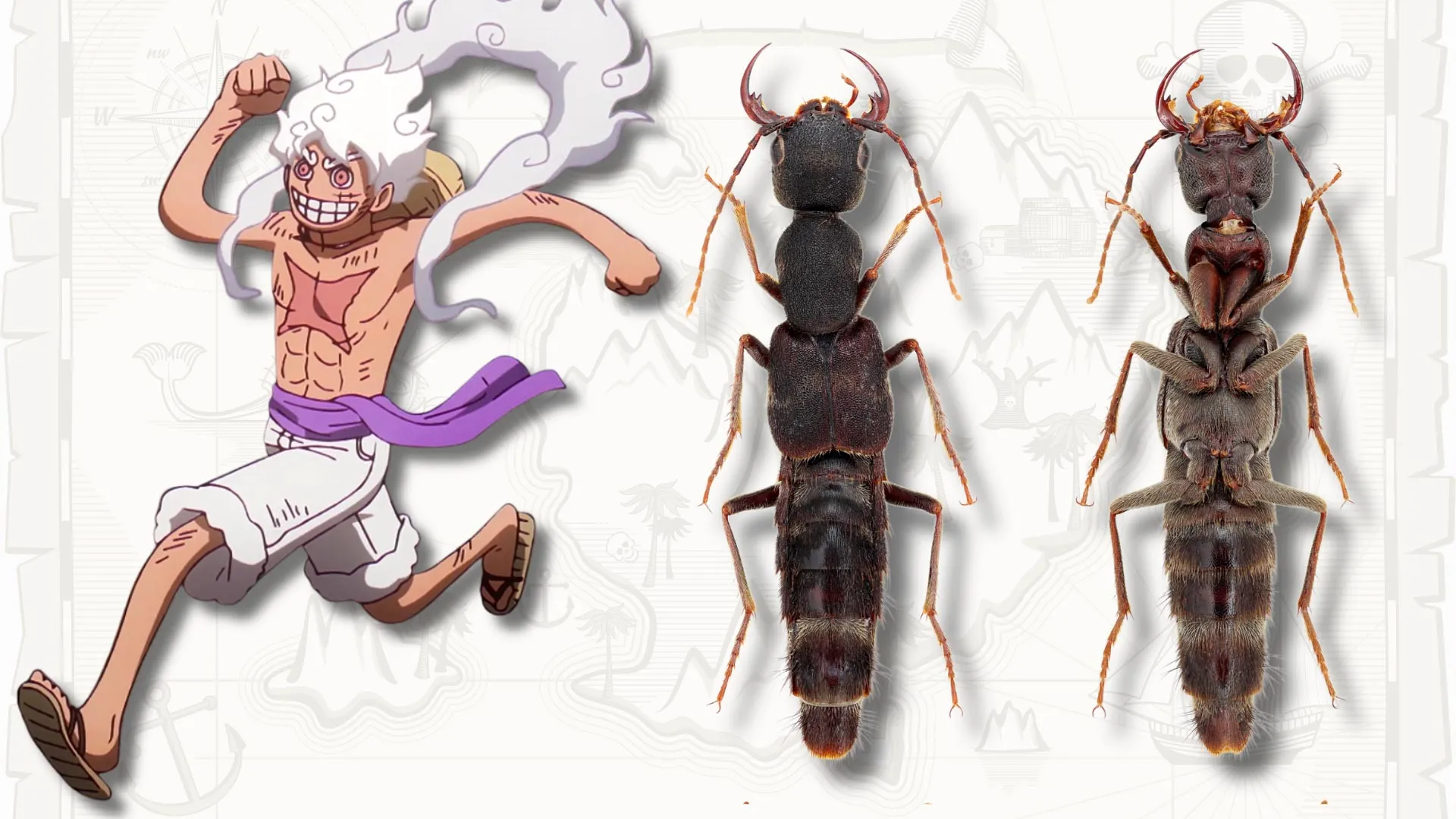
Scientists Discover ‘Rubber’ Beetles, Name Them Luffy
Meet the Luffy Beetles: Real-Life Bugs Named After a Stretchy Anime Hero
Why These Beetles Got a Super Cool Name
Imagine a beetle with super long arms, legs, and mouthparts—like it ate a magic fruit that lets it stretch like rubber. That’s exactly what scientists thought when they discovered a brand-new group of beetles in Asia. They named the whole genus Luffy, after Monkey D. Luffy, the main character of the hit manga and anime One Piece.
Important Point: This wasn’t just a fun nickname. The beetles’ bodies actually look like Luffy’s rubber powers in action!
Two Brand-New Species Discovered
So far, researchers have found two species in the new Luffy genus:
| Species Name | Where It Was Found | Why That Name? |
|---|---|---|
| Luffy schillhammeri | Broadleaf forests in Yunnan Province, China | Honors Dr. Harald Schillhammer, a beetle expert from the Natural History Museum Vienna |
| Luffy nika | Louang Namtha, northern Laos | Named after Luffy’s “Nika” transformation (Gear 5)—the beetle has white, fluffy hair bands that look like Luffy’s smoke-covered Nika form |
What Makes Luffy Beetles So Weird (In a Good Way)
Compared to their cousins, Luffy beetles have:
- Extra-long, skinny mandibles (jaws)
- Super-slender antennae (feelers)
- Stretched-out maxillary palps (tiny mouth-parts used for tasting)
All these “stretchy” parts reminded the scientists of Luffy’s ability to extend his limbs at will.
Important Point: The beetles don’t actually stretch—but their permanently elongated body parts give the same visual vibe.
A Missing Puzzle Piece in Beetle Evolution
This discovery isn’t just about a cool name. PhD student Fang-Shuo Hu and beetle expert Alexey Solodovnikov (Natural History Museum of Denmark) did a massive family-tree review of the entire Ocypus group of rove beetles.
What They Did
- Examined every known genus in the group
- Studied tricky “mystery” groups like Acupronotes, Apostenolinus, and Staphylinus
- Compared tiny anatomical details across hundreds of specimens
- Identified shared derived traits (called synapomorphies) that define the “Eucibdelus lineage”
Where Luffy Fits
- Luffy beetles have the special dorsal ridge teeth on the left mandible that mark the Eucibdelus lineage
- But their labrum (upper lip) is NOT fully hardened (sclerotized) like the others
- They also have unique traits found nowhere else
Conclusion: Luffy is likely the sister group to the whole Eucibdelus lineage—making it a crucial evolutionary bridge.
Important Point: Think of Luffy as the “missing link” that helps scientists understand how this huge beetle family evolved.
Why This Matters for Science (And You)
- Published in ZooKeys: A top, open-access, peer-reviewed journal—so anyone can read it for free.
- Taxonomy gets a spotlight: Naming species after pop culture makes biodiversity science fun and memorable.
- Inspires future scientists: The researchers hope kids (and adults!) will get excited about discovering and classifying life on Earth—with the same adventurous spirit as Luffy himself.
Summary
- A new beetle genus Luffy was named after the One Piece hero because its long, slender body parts look like Luffy’s rubber limbs.
- Two species: Luffy schillhammeri (China) and Luffy nika (Laos)—the latter has white hair bands like Luffy’s Gear 5 form.
- The discovery fills a major gap in rove beetle evolution: Luffy is the sister group to the Eucibdelus lineage.
- Published open-access in ZooKeys, the study shows how creative naming can make serious taxonomy accessible and exciting.
FAQ
Q: Do Luffy beetles actually stretch like rubber?
A: No—their mandibles, antennae, and palps are just permanently long and skinny, giving them a “stretched” appearance.
Q: Why name a beetle after an anime character?
A: The physical resemblance was striking, and the researchers wanted to make taxonomy more engaging for the public.
Q: What is a “sister group” in evolution?
A: It’s the closest relative on the family tree—like your cousin who shares the same grandparents as you.
Q: Where can I read the original scientific paper?
A: It’s free to read in the journal ZooKeys (open-access).
Q: Are there more Luffy species waiting to be found?
A: Very likely! Southeast Asia’s forests are full of undiscovered insects, and the researchers encourage more exploration.