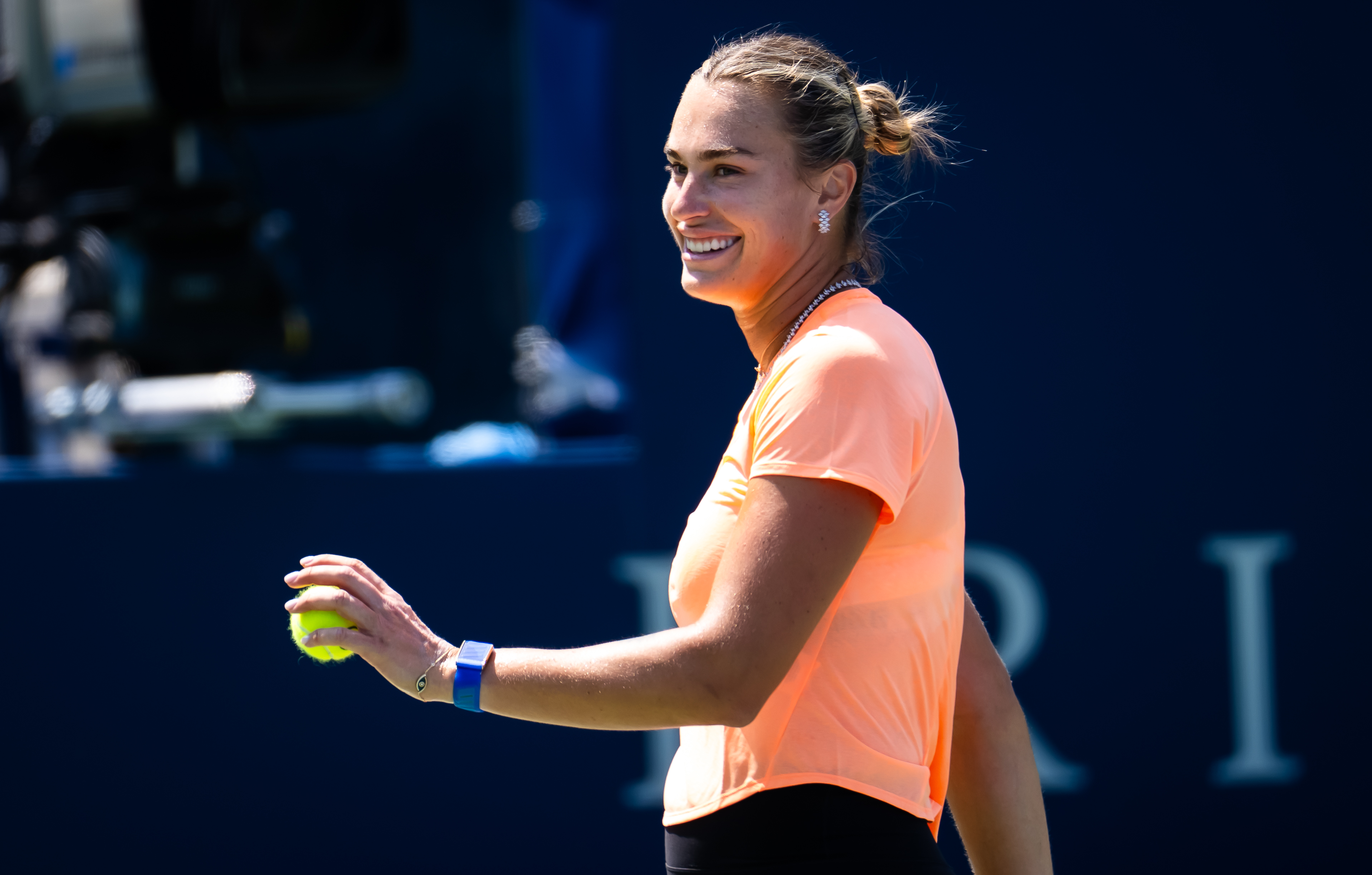
Back to Basics, Ready to Dominate: Sabalenka’s Hard Court Warning
Aryna Sabalenka Hits Reset Button: Why the World No. 1 Took a Break and What Comes Next
The Shock at Wimbledon
Imagine working incredibly hard for months, winning almost everything, and then suddenly—bam!—you lose early at the biggest tournament of the summer. That’s exactly what happened to Aryna Sabalenka at Wimbledon.
Important Point
Sabalenka lost to Naomi Osaka in straight sets in the fourth round. It was her earliest Grand Slam exit in four years.
After the match, she didn’t hold back. She told reporters:
“I want to get completely drunk, forget about tennis. And try to get better.”
She was frustrated, exhausted, and ready to walk away—at least for a little while.
The Month That Changed Everything
Instead of jumping right back into tournaments, Sabalenka did something smart: she took a full month off.
What She Did During Her Break
- Vacation in Mykonos – Sun, relaxation, zero tennis.
- Mental Reset – She admitted she suffered physically and mentally during the clay and grass swing.
- Back to Basics – When she returned to practice, she didn’t try fancy tricks. She focused on simple, repetitive drills.
Important Point
Sabalenka said the break was "much needed." After Mykonos, she "felt much better. I couldn’t wait to get back on court and start working towards my goals."
Why the First Half Was Actually Amazing (Even If She Forgot)
It’s easy to focus on the Wimbledon loss, but let’s rewind.
Sabalenka’s Stellar Start to the Year
- 3 Titles in 4 main-draw events
- One set away from winning the Australian Open
- Dominant on hard courts (her favorite surface)
But then came the clay and grass season (the "natural surfaces"):
- 13–5 record (good for most, not for her standards)
- Zero finals appearances
She tried new tactics—dropshots, serve-and-volley, sharp angles—but they didn’t click.
“I was trying a couple things, things didn’t go the way that I expected… and I really hope it’s going to work out well on the hard court again.”
The New (Old) Game Plan: "Routine, Rallies, Repeat"
Sabalenka is a power player. Her weapon is first-strike tennis—hitting hard, early, and taking control. But lately, she added too much "variety" (tricky shots) and lost her rhythm.
Her Practice Routine Now
- Lots of rallies – Long, grinding exchanges.
- Basic patterns – Mostly cross-court shots.
- Small variety – No dropshots, no serve-and-volley, no crazy angles.
- Build confidence – Master the baseline first.
- Then add variety – Only after the foundation is rock-solid.
“It’s a routine… going back to really small variety of the game… bring back the baseline game, make sure I’m really confident there. Then, on top of that, put some variety.”
Think of it like learning to walk before you run—or in her case, mastering the sledgehammer before adding the scalpel.
Why Toronto Matters (A Lot)
Sabalenka skipped the National Bank Open in Toronto last year. This year, she’s back—and the stakes are high.
What’s on the Line
- Valuable ranking points (WTA 1000 event = big points)
- Defending World No. 1 spot (Elena Rybakina is right behind her)
- Momentum for the US Open swing (hard courts all the way to New York)
First Match Alert
- Opponent: Moyuka Uchijima (Japan)
- Round: Second Round (she got a first-round bye)
- Day: Tuesday
This is her first real test of the "reset" game plan.
Summary
| Phase | What Happened | Key Takeaway |
|---|---|---|
| Start of Year | 3 titles, near AO win | Dominant on hard courts |
| Clay/Grass Swing | 13–5, no finals, tried too many new shots | Experimentation backfired |
| Wimbledon Loss | Lost to Osaka, earliest exit in 4 yrs | Mental & physical breaking point |
| The Break | Mykonos vacation + total disconnect | Essential recovery for body & mind |
| The Reset | Back to basics: rallies, cross-courts, baseline confidence | Simplicity > Complexity |
| Now (Toronto) | First match vs. Uchijima Tuesday | Test the new (old) approach; protect No. 1 |
Sabalenka isn’t reinventing herself—she’s remembering who she is. A powerhouse who wins by dictating play from the baseline. If the "routine" works, the second half of 2025 could be scary good for the rest of the tour.
FAQ
Why did Sabalenka lose so early at Wimbledon?
She was physically and mentally exhausted after a long, intense first half of the season. She also experimented with new tactics (dropshots, net play) that didn’t suit her natural aggressive game on grass.
Was her clay/grass season actually "bad"?
Not objectively—a 13–5 record is strong. But for her standards (3 titles in 4 events earlier), zero finals felt like a failure.
What does "back to basics" mean for a pro tennis player?
It means stripping away complex strategies and drilling core patterns: deep cross-court rallies, consistent serve returns, and moving well. It rebuilds muscle memory and confidence.
Why is the Toronto tournament so important for her ranking?
It’s a WTA 1000 event (one tier below Grand Slams). She missed it last year (0 points to defend), so every win adds points. This helps her keep the No. 1 ranking ahead of Elena Rybakina.
Who is Moyuka Uchijima?
A rising Japanese player (career-high ~No. 50s). She’s a lefty with a gritty baseline game—exactly the kind of "test match" to see if Sabalenka’s reset works under pressure.