 11
11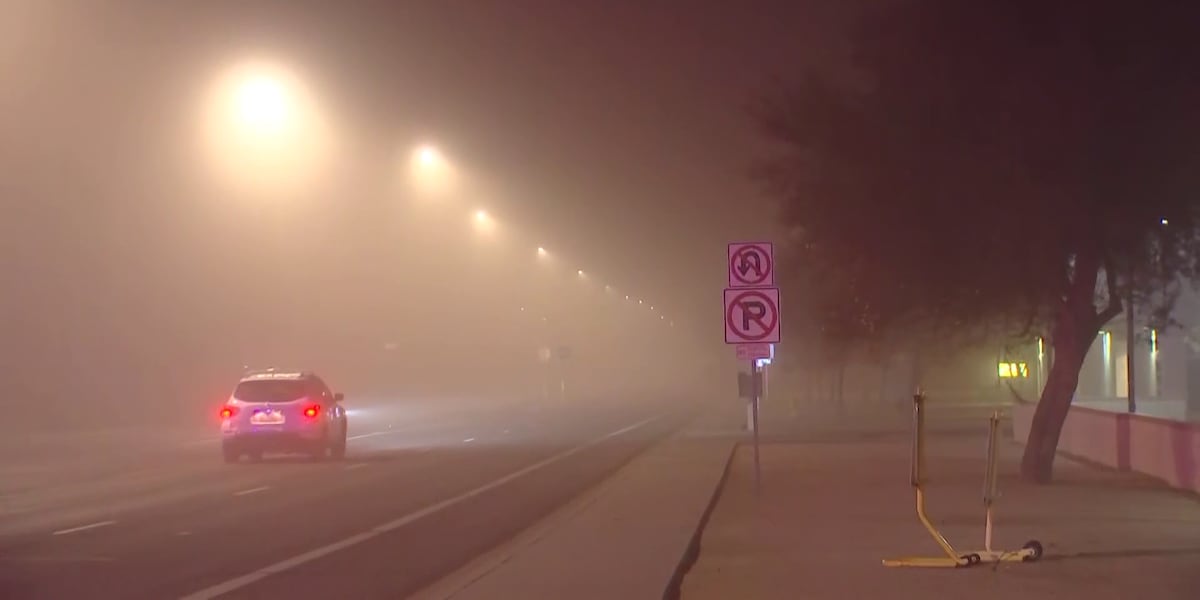
Quick Summary: A massive dust storm slammed the Phoenix Valley Monday night, earning the highest possible rating—Category 5—on a special scale created by Arizona State University. Unhealthy air lingered into Tuesday evening. Here’s what that means for you and your family.
On Monday night, a powerful dust storm rolled through the Phoenix metropolitan area (often called "the Valley"). Scientists at Arizona State University (ASU) measured it and gave it a Category 5 rating—the most severe level on their brand-new PHX Dust Storm Scale.
Think of it like a "spiciness meter" for dust—but instead of measuring heat, it measures how much dust is packed into the air you breathe.
| Feature | Details |
|---|---|
| Created by | ASU-led team (School of Geographical Sciences & Urban Planning) |
| Purpose | Identify high exposure to dust and tiny particles (particulate matter) |
| Scale range | Category 1 (lowest) → Category 5 (highest) |
| What it measures | Concentration of dust particles in the air |
| Particle size | Roughly 5 times narrower than a human hair (too small to see!) |
ELI5: Imagine a single strand of your hair. Now imagine something 5 times thinner. That’s how small these dust particles are. You can’t see them, but they float in the air—and you breathe them in.
Dr. Ryan Heintzman, an ASU professor who helped build the scale, breaks it down with a jaw-dropping comparison:
| Category | Dust Particles Inhaled (approx.) |
|---|---|
| Category 1 | 250,000 pieces |
| Category 5 | Over 1,250,000 pieces (5× more!) |
Key Takeaway: During a Category 5 storm, every hour you spend outside, you could inhale over a million tiny dust particles. That’s why officials urge people to stay indoors.
Dr. Frank LoVecchio, an ASU professor and emergency room doctor, warns that certain groups face much higher danger during severe dust events.
Important: If you or a loved one falls into any of these categories, stay inside, keep windows/doors closed, and run an air purifier if you have one. Contact a doctor if breathing gets difficult.
ASU didn’t just create a scale—they built a real-time dashboard so you can see exactly how bad the dust got near you.
What it shows:
Why this matters: Dust doesn’t hit every neighborhood equally. This tool lets you check your area—so you know when it’s safe to go out.
- Category 5 is rare – only 5 times in 15 years.
- Particles are microscopic – 5× thinner than a hair; you can’t see them.
- Breathing Category 5 air for 1 hour = 1.25+ million dust particles inhaled.
- High-risk groups: Lung/heart conditions, kids, seniors, immunocompromised.
- Stay indoors during and after the storm until air quality improves.
- Use the ASU dashboard to check conditions in your exact neighborhood.
| Topic | Key Fact |
|---|---|
| Storm Rating | Category 5 (highest on PHX Dust Storm Scale) |
| Scale Creator | ASU researchers (Dr. Ryan Heintzman’s team) |
| Particle Size | ~5× narrower than human hair |
| Dust Inhaled (Cat 5, 1 hr) | >1.25 million particles |
| High-Risk Groups | Lung/heart disease, young kids, elderly, immunosuppressed |
| New Resource | Real-time neighborhood dust dashboard (ASU) |
| Best Action | Stay inside, monitor local air quality, protect vulnerable people |
This storm was historic in severity—but thanks to ASU’s new tools, we can now see, measure, and respond to dust storms better than ever before.
A: It’s a fancy term for tiny solid or liquid particles floating in the air—like dust, soot, or smoke. The ones in this storm are PM2.5 (2.5 microns or smaller), which can go deep into your lungs and even enter your bloodstream.
A: Check the ASU Phoenix Dust Dashboard or your local air quality index (AQI) at AirNow.gov. Wait until the rating drops to Category 1 or 2 and AQI shows "Good" or "Moderate."
A: Cloth or surgical masks don’t block PM2.5 well. An N95 or KN95 respirator (worn tightly) filters out ~95% of these particles. Best option? Stay indoors with windows closed.
A: The PHX Dust Storm Scale was designed specifically for the Sonoran Desert environment, where dust storms (haboobs) are common and have unique characteristics. Other regions use different scales (like the EPA’s AQI).
A: Scientists say yes—hotter, drier conditions lead to more loose soil and stronger winds, fueling bigger, more frequent dust storms. That’s why tools like this scale and dashboard are so important for the future.
Stay safe, stay informed, and breathe easy—when the dust settles, you’ll be ready.