11
11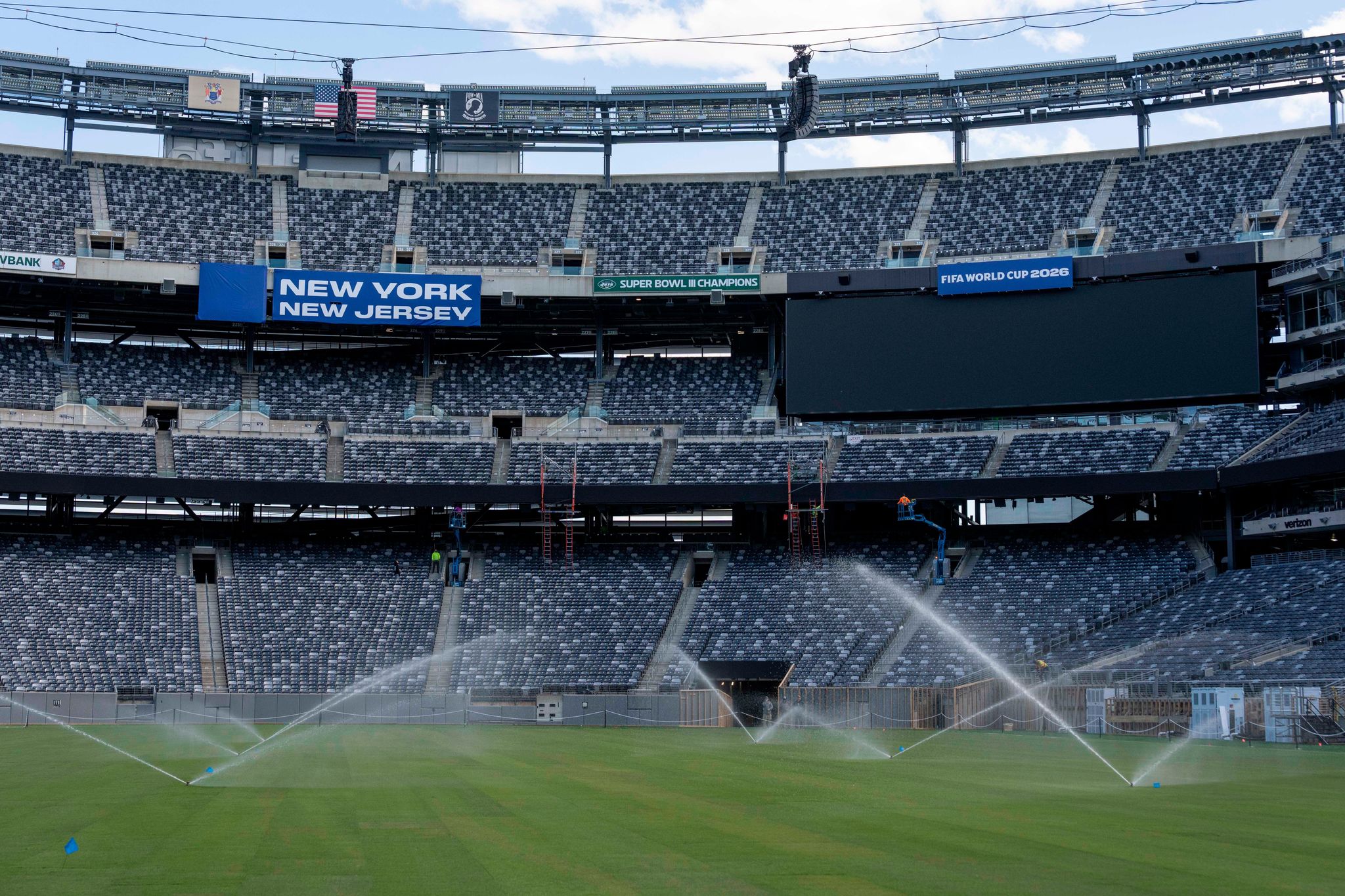
Imagine a giant outdoor playground where the biggest soccer teams in the world come to play. That playground is the MetLife Stadium in East Rutherford, New Jersey. During the World Cup, players and coaches have been asked a lot about the grass there — before and after games. And guess what? Everyone says something different!
Important Point: The field is not the fake plastic grass (artificial turf) that football (NFL) players complain about. It is real natural grass, but with tiny fake fibers sewn in to stop chunks from popping up and causing injuries.
The field is natural grass mixed with synthetic (fake) fibers. Think of it like real grass with invisible stitches that hold it together. This helps lower the chance of the ground ripping and players getting hurt.
In the first seven World Cup games there, people gave the field mixed reviews.
After those games, workers got almost two weeks to make the field as nice as possible. Why? Because the most important match — the final — is on Sunday, with Argentina vs. Spain.
Here’s a funny twist: the grass might actually be better when it’s wet!
Before Norway played Senegal in New Jersey, Coach Solbakken said the field felt like old-style fake grass (AstroTurf) because the grass was short and hard. Then it rained hard on June 22.
Solbakken said:
“The field was much better because of the rain. The ball didn’t stick to your foot. It went faster, smoother… with the rain today the field was much, much better.”
When it was dry (like during England vs. Panama), England’s coach Thomas Tuchel said:
Let’s meet the scoreboard of opinions:
FIFA (the group that runs the World Cup) spent over five years working on the grass. Here’s what they did:
FIFA said their goal was:
“To offer a surface that meets the highest possible standards in performance, consistency, and player safety.”
They also left 13 days between the Brazil–Norway round game and the final on purpose, so the grass could rest and get ready.
We don’t know exactly how the field will act during the final. It’s a mystery!
When soccer ends, the real grass will be pulled out and artificial turf will go back in for the NFL’s New York Giants on August 15.
The MetLife Stadium World Cup grass is real grass with fake fibers mixed in. Players and coaches have shared mixed feelings — some hated it dry, others loved it wet. FIFA spent years preparing it and even took a break before the final to fix it up. We still don’t know how it will play in the Argentina–Spain final, but rain could help. After the tournament, the real grass goes away and the NFL’s fake grass returns, which many football players are not happy about.
No. It is natural grass with synthetic fibers sewn in to keep it stable. The NFL normally uses fully artificial turf there.
Rain made the ball roll faster and not stick to feet, which helped teams play their style. Dry grass was short, hard, and bouncy.
They tested it for years, added hybrid fibers, watered it carefully, and gave it a 13-day rest before the final.
No. It will be removed and artificial turf will be reinstalled for NFL games.
Most NFL players prefer real grass, and they point to the World Cup as proof stadiums can use it successfully.