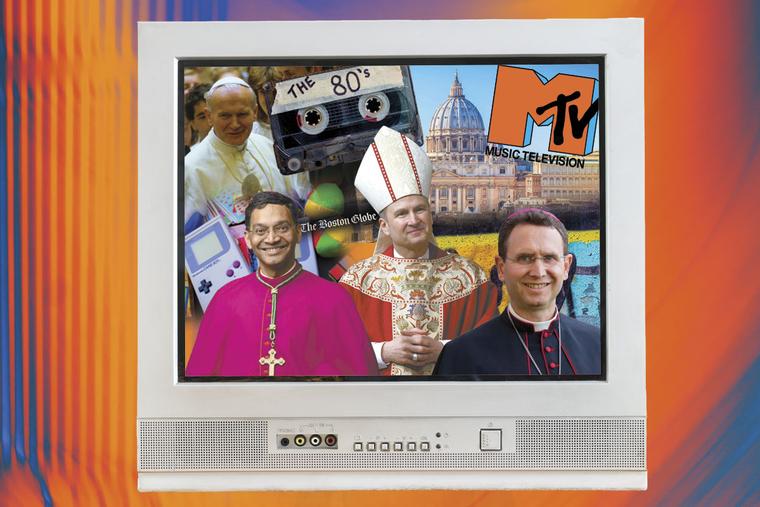
Why Gen X Is Suddenly Leading the Catholic Church
The New Generation of Catholic Leaders: Gen X Bishops Take the Stage
A Surprising Connection at a Cookout
Fun Fact: It all started with a simple question about music at a Fourth of July barbecue!
At a recent cookout in New Jersey, Bishop Joseph Williams (Camden, NJ) asked Bishop Erik Pohlmeier (St. Augustine, FL) what music he wanted to hear while grilling. The answer? "’80s music." Both bishops laughed and realized they were Gen Xers — the generation born roughly between 1965 and 1980.
But their connection went way deeper than shared memories of Bruce Springsteen or the TV show Cheers. They discovered they shared:
- The same papal hero (St. John Paul II)
- Similar seminary experiences in the 1990s
- A focus on catechesis (teaching the faith)
This isn’t just a coincidence — it’s a growing trend in the American Catholic Church.
By the Numbers: A Generational Shift
Important Point: Gen X bishops are rapidly becoming a major force in Church leadership.
| Statistic | Details |
|---|---|
| Gen X Birth Years | 1965–1980 (ages 46–61 by end of 2026) |
| % of U.S. Ordinaries (diocesan bishops) | 25% (1 in 4) |
| % Including Auxiliary Bishops | 28% |
| Appointments by Pope Leo XIV (since May 2025) | 74% are Gen Xers (20 of 27) |
| New Archbishops under Pope Leo XIV | 3 of 4 are Gen X |
Three new Gen X Archbishops:
- Archbishop James Checchio – New Orleans, age 60
- Archbishop James Golka – Denver, age 59
- Archbishop Ronald Hicks – New York, age 58
Archbishop Hicks says: "I think it’s an outward sign that the baton is being passed on."
What Shaped This Generation of Bishops?
1. A Post-Vatican II Upbringing
- Baby Boomer bishops lived through Vatican II (1962–1965) and the confusing years after
- Gen X bishops have no living memory of the Council — it ended the year the oldest were born
- They learned about Vatican II as history, not a lived rupture
- Result: They see Vatican II as in continuity with tradition, not a break from it
- Open-mindedness toward pre-Vatican II practices (like the Traditional Latin Mass)
Bishop Earl Fernandes (Columbus, OH): "We didn’t live through it ourselves. We learned about it as an event and have had an experience of the life of the Church after the council, with some challenges but many more blessings."
2. Growing Up in a Changing Culture
Unlike Boomers’ tight-knit ethnic Catholic neighborhoods, Gen X bishops often grew up in suburbs with:
- MTV as a major cultural force
- Rising divorce rates and cohabitation
- Declining religious practice
- A growing gap between faith and culture
Bishop Andrew Cozzens (Crookston, MN): "We were already beginning to experience the distance between our faith and the culture. If you were going to be a faithful Catholic, you were going to have to stand in the midst of the culture, which was changing dramatically around us."
3. The "JP2 Generation" — St. John Paul II’s Influence
Every single bishop interviewed cited St. John Paul II as their primary influence.
Why? His papacy (1978–2005) perfectly overlapped their young adulthood and seminary years.
Key impacts:
- Countercultural call: Reject mediocrity, become saints (vs. Gen X’s "whatever" attitude)
- New Evangelization: Transform the culture, don’t just hide from it
- World Youth Day (WYD): Major vocation catalyst — Bishop Williams attended six WYDs!
- Seminary reform: JP2 overhauled U.S. seminaries in the 1990s–2000s
- Theological identity: Gen X priests are more likely to identify as "orthodox" (2023 study)
Bishop Pohlmeier: "The day [JP2’s documents] would come out, we were reading them. And then you’re looking out the window at the papal audience and there he is. So there was a very direct connection."
4. Forged by the Sex Abuse Crisis (2002)
The Boston Globe investigation broke in January 2002 — right as many Gen X men were being ordained or in early priesthood.
How it shaped them:
- Transparency & vigilance became non-negotiable
- Listening to survivors is a top priority
- Saw firsthand how the Dallas Charter (2002 reforms) affected priest morale
- Two Gen X bishops (Fernandes & McKnight) recently pushed for more consultation before Charter revisions
- Clarified their vocation: service over status
Bishop Williams: "We were ordained to serve… clergy from my generation have a working-class mentality."
Bishop Cozzens: "I have never experienced as a bishop the idea that I’m living a privileged life. My experience has very much been of being present to the people, not separated from them by protocol or office."
Leadership style: "Hands-on," "roll up their sleeves," adaptable, full of zeal (per Dan Cellucci, bishops’ leadership coach).
5. "Francis Bishops" — Appointed by Pope Francis
Most Gen X bishops were named by Pope Francis, who changed selection criteria:
- Prioritized pastoral experience over academic/admin credentials
- "Not the usual suspects" — e.g., Bishop Williams (inner-city Latino ministry), Bishop DeGrood (no terminal degree), Bishop Ruggieri
Synthesis of papal visions:
- JP2 & Benedict XVI: Catechesis, sound teaching, truth
- Pope Francis: Encounter, mercy, going to the peripheries
- Gen X bishops: Bridge both — "propose the faith that attracts, without falling into culture wars" (Bp. Fernandes)
Bishop Williams: "And now we’re trying to say, boy, we’ve loved every one of these pontiffs. How do we live the reality together?"
What’s Next? The Road Ahead
The Math: A Potential Majority by 2028
- 20 U.S. ordinaries are already at retirement age (75)
- 17 more will hit 75 in the next two years
- If Pope Leo XIV appoints Gen Xers to fill all these spots → Gen X becomes the majority of ordinaries by August 2028
Expert Perspective
Joe Capizzi (McGrath Institute, Notre Dame):
- Every bishop is a "free agent" — don’t overgeneralize by generation
- But younger bishops show "great probity, seriousness and capacity" for this moment
- Context: Rising converts + liturgical renewal amid overall religious decline = "thrilling ecclesial moment"
Gen X Bishops’ Own Vision
- Not a break from Boomers — building on their foundation
- Natural fit for "maintenance to mission" shift
- Priorities: Vocations, evangelization, sound catechesis
- Unafraid to take risks
Archbishop Hicks: "My brother bishops and I who are the same age, we just kind of look at each other and say, ‘We have an opportunity here.’ It’s our beginning."
Summary: Key Takeaways
- Generational turnover is happening — Gen X bishops (born 1965–1980) now make up ~25% of U.S. diocesan bishops
- Pope Leo XIV is accelerating this — 74% of his U.S. appointments are Gen Xers
- Shared formative experiences unite them:
- Post-Vatican II, continuity mindset
- Suburban upbringing amid cultural shift
- St. John Paul II as defining papal hero
- Ordained during the 2002 abuse crisis — shaped by transparency & service
- Appointed by Pope Francis — pastoral experience valued over credentials
- Leadership style: Hands-on, evangelistic, bridging truth (JP2/Benedict) and encounter (Francis)
- Potential majority by 2028 if retirements are filled by Gen Xers
- They see this as "an opportunity" — not a power grab, but a call to be "Christ in the moment"
FAQ: Your Questions Answered
Q1: What exactly is "Generation X"?
A: People born roughly between 1965 and 1980. They’re currently in their mid-40s to early 60s. They grew up between the Baby Boomers and Millennials — often called the "latchkey generation" or "MTV generation."
Q2: What’s an "ordinary" vs. an "auxiliary bishop"?
A: An ordinary is a bishop who leads a diocese (like a CEO of a local Church area). An auxiliary bishop is a helper bishop assigned to assist the ordinary but doesn’t have his own diocese.
Q3: Why does the Vatican II distinction matter?
A: Baby Boomer bishops lived through the Council and the fights about what changed. Gen X bishops only studied it. This means Gen Xers tend to see Vatican II as normal Church life, not a revolution — making them more comfortable with both modern and traditional expressions of faith.
Q4: How did the 2002 abuse crisis affect these bishops personally?
A: Many were ordained that same year or were young priests. They didn’t read about it in history books — they lived it daily in parishes. It taught them that credibility requires transparency, survivors must be heard, and ministry means service, not status.
Q5: Does this mean the Church is becoming more "conservative" or "liberal"?
A: It’s not that simple. Gen X bishops tend to be theologically orthodox (shaped by JP2/Benedict) but pastorally outward-focused (shaped by Francis). They want to hold both together: clear teaching and radical welcome. As Bishop Fernandes said: "Propose the faith that attracts, without falling into culture wars."
Final Thought: The baton pass isn’t just about age — it’s about a generation shaped by cultural upheaval, papal inspiration, institutional crisis, and missionary urgency now stepping into leadership. As Archbishop Hicks put it: "It’s our beginning."