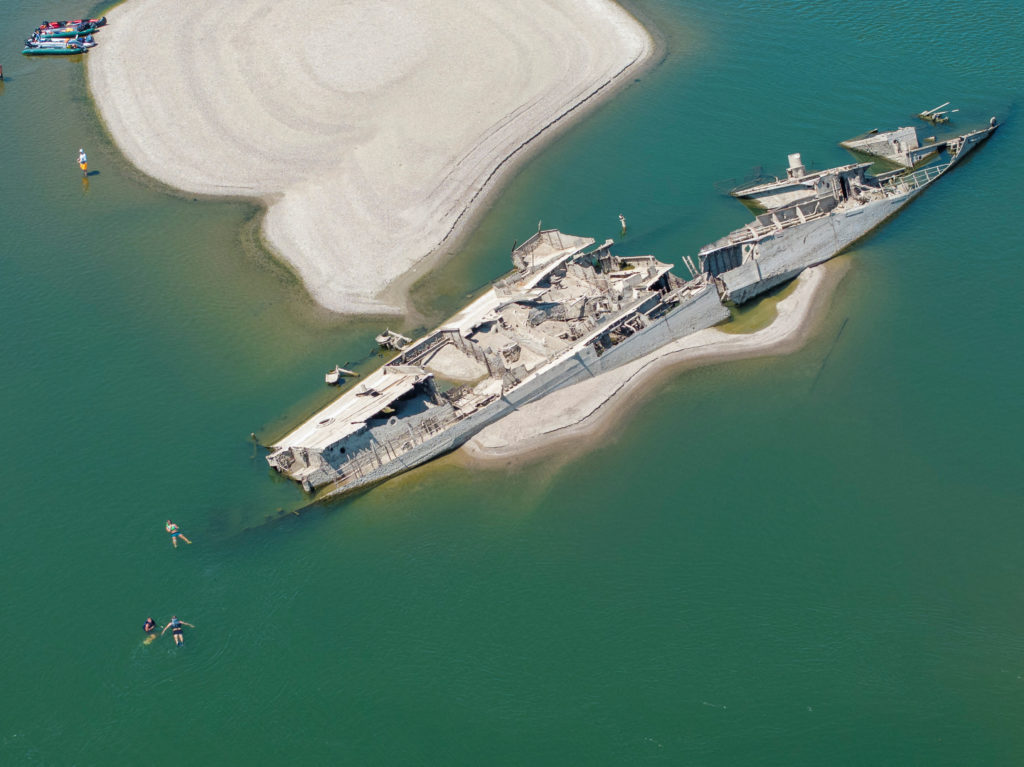
Sunken Nazi Warships Reappear as Europe’s Danube River Hits Record Lows
What’s Happening on the Danube?
Imagine a giant bathtub draining slowly until toys at the bottom suddenly become visible. That’s essentially what’s happening on the Danube River—Europe’s second-longest river—right now.
Because of a severe drought (a long period with very little rain), water levels have dropped so much that dozens of World War II German warships are rising from the depths near the Serbian port of Prahovo.
Important Point
These aren’t just old boats—they’re Nazi warships from Hitler’s Black Sea fleet, deliberately sunk in 1944. Some still carry live explosives and ammunition, making them dangerous even today.
Why Are These Ships There? A Quick History Lesson
The Story Behind the Sunken Fleet
- September 1944: Nazi Germany was losing the war. Soviet (Russian) forces were advancing through the Balkans.
- Retreat from Romania: German ships tried to escape up the Danube River.
- Under Fire: Soviet forces attacked the fleet in the Danube gorge near Prahovo.
- Deliberate Sinking: To stop the Soviets from capturing the ships—and to block the river and slow the Soviet advance—the Germans scuttled (intentionally sank) their own fleet.
- The Numbers: Historians estimate up to 200 warships went down.
- War’s End: Nazi Germany surrendered in May 1945, just months later.
Why This Matters Right Now
It’s Not Just About Old Ships
| Problem |
What It Means |
| Shipping Stopped |
Big cargo ships can’t pass through the shallow water |
| Power Plants at Risk |
Plants that use river water for cooling may have to shut down |
| Electricity Shortages |
Governments across Central & Eastern Europe are asking people to conserve power |
| Dangerous Waters |
Exposed wrecks create navigation hazards for remaining boat traffic |
Did You Know?
The Danube flows through 10 countries—Germany, Austria, Slovakia, Hungary, Croatia, Serbia, Romania, Bulgaria, Moldova, and Ukraine. What happens in one spot affects everyone downstream!
The Explosive Problem
Why Haven’t They Been Removed Before?
- Communist-era cleanup: Yugoslav authorities removed some ships after WWII
- But most remain because they’re loaded with live explosives, ammunition, and weapons
- Removing them is extremely dangerous and expensive
- The Serbian government has wanted to clear them for years, with EU financial support
Now that the ships are visible, there’s renewed pressure to deal with them—both for safety and to restore river traffic.
The Bigger Picture: Climate Change Connection
Experts link this extreme drought and heat to global warming. Here’s the simple version:
- Hotter temperatures → more evaporation from rivers and soil
- Less rain/snow → rivers don’t get refilled
- Result: Record-low water levels across Europe’s major rivers
This isn’t just the Danube—rivers like the Rhine in Germany and the Po in Italy have faced similar crises recently.
What Happens Next?
Steps Being Taken
- Monitor water levels constantly
- Dredge (dig out) critical shipping channels where possible
- Plan explosive removal of the most dangerous wrecks
- Coordinate across 10 nations for river management
- Reduce electricity use to prevent blackouts
- Long-term: Address climate change to prevent more frequent droughts
Summary
- Record drought has dropped Danube water to historic lows
- Nazi warships from 1944 are now visible near Prahovo, Serbia
- Ships were deliberately sunk by retreating Germans to block Soviet advance
- Many still contain live explosives—a danger for 80 years
- Shipping halted, power plants threatened, electricity conservation ordered
- Situation highlights climate change impacts on critical infrastructure
- International cooperation needed for both immediate fixes and long-term solutions
Frequently Asked Questions
Why did the Germans sink their own ships?
They were retreating from Romania under Soviet attack. Sinking the fleet prevented capture and blocked the river to slow the Soviet advance through the Balkans.
Are the ships dangerous today?
Yes. Many still carry live ammunition, explosives, and weapons. They also create navigation hazards for boats still using the river.
How many ships are we talking about?
Historians estimate up to 200 warships were scuttled in September 1944 near Prahovo.
Why does this affect electricity?
Many power plants use river water for cooling. When water gets too low or too hot, plants must reduce output or shut down completely.
Is this related to climate change?
Yes. Experts link the extreme heat and drought to global warming. Higher temperatures increase evaporation and change rainfall patterns, making severe droughts more frequent.
Source: Associated Press reporting from Prahovo, Serbia and Belgrade
 1
1