The Real Horror in ‘Widow’s Bay’? It’s Utilitarianism
The Trolley Problem, Devils, and Mayors: What Widow’s Bay Teaches Us About Hard Choices
SPOILER ALERT!
This article contains major spoilers for the Apple TV+ show Widow’s Bay. If you haven’t watched the full first season and plan to, you might want to bookmark this and come back later. If you’ve seen it—or don’t mind spoilers—read on!
What Is Widow’s Bay Anyway?
Widow’s Bay is a horror-comedy series on Apple TV+ that just finished its first 10-episode season. Think of it like Twin Peaks meets Shaun of the Dead.
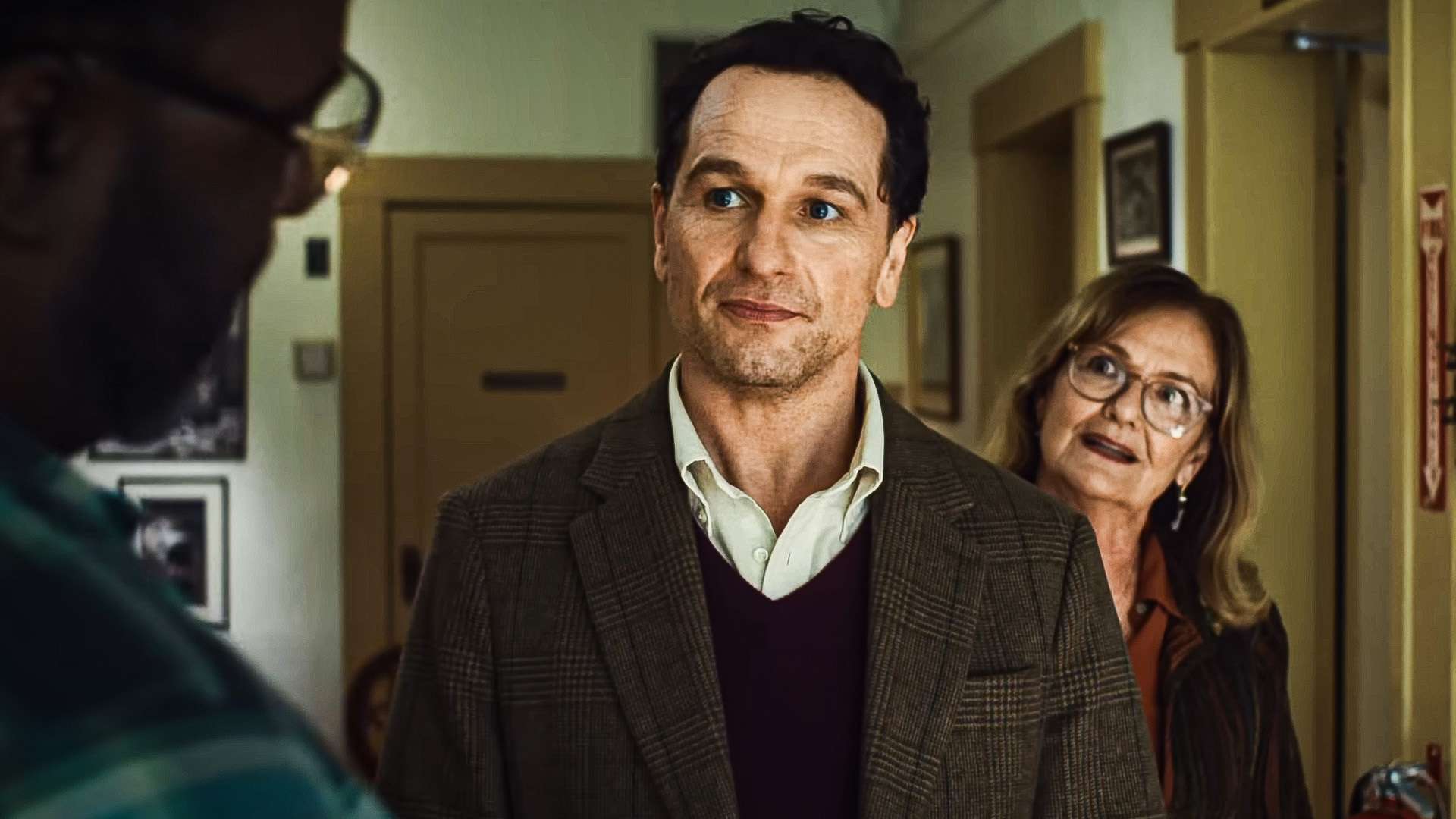
The show follows Tom Loftis (played by Matthew Rhys), the mayor of a cursed little island town off the coast of New England. The town is plagued by basically every horror trope you can imagine:
- Haunted hotels
- Masked slashers
- Clown killers
- Succubi (demons that drain life force)
- And much more…
Mayor Loftis just wants to boost tourism and save the town’s economy. But the supernatural chaos keeps getting in the way.
The Scene That Changes Everything
In the season finale, Mayor Loftis visits Ruth (played by K Callan), his elderly assistant. He’s figured something out: when Ruth dies, the centuries-old curse on the island will finally lift.
A massive supernatural storm is approaching. Loftis decides to speed things up by killing Ruth himself.
But when he’s actually face-to-face with the sweet old woman, he hesitates. To talk himself into it, he brings up a famous philosophy puzzle: the Trolley Problem.
What Is the Trolley Problem? (ELI5 Version)
Imagine this:
A runaway train is speeding down a track.
Five people are tied to the track ahead. They can’t move. They will die.You’re standing next to a lever. If you pull it, the train switches to a different track.
On that other track? Only ONE person.
The question: Do you pull the lever?
| Choice | Result |
|---|---|
| Do nothing | 5 people die |
| Pull the lever | 1 person dies (but 5 live) |
Most people say: "Yes, pull the lever." Fewer deaths = better outcome. Simple math, right?
Two Ways to Look at It
1. Consequentialism (Results Matter Most)
"The morality of an action depends on its consequences."
If pulling the lever saves more lives, it’s the right thing to do. Even though someone dies because of your action, the result is better.
2. Utilitarianism (Happiness Math)
"The morality of an action depends on the total happiness it creates."
This takes it further. Not just lives saved—but quality of life. A young person with 60 years ahead? More "happiness units" than an 85-year-old with maybe a few years left.
This is where it gets dark. Under strict utilitarianism, killing Ruth (elderly, fewer "quality-adjusted life years") to save the whole town? Easy call.
The "Fat Man" Twist (It Gets Weirder)
Philosophers love to torture-test ideas. Here’s a famous variation:
You’re on a bridge overlooking the track.
Train coming. Five people on track.
Next to you: a very large man.
You could push him off the bridge. His body stops the train. He dies. Five live.
Same math: 1 dies, 5 live.
But—most people say NO. Pushing someone feels different than pulling a lever.
| Perspective | Verdict |
|---|---|
| Utilitarian | Still yes. Math is math. |
| Christian Moralist | No. Pushing an innocent person is intrinsically wrong—regardless of outcome. |
The Show’s Big Reveal: Utilitarianism Is the Monster
The true villain of Widow’s Bay isn’t a clown or a demon. It’s utilitarianism.
Here’s the backstory: The town’s founder, Richard Warren, made a deal with the devil centuries ago to save starving settlers. The price? A curse that brings endless horror to the island.
Loftis thinks killing Ruth will break the curse—another "blood sacrifice for the greater good."
But he realizes: That’s exactly what Warren did. Another devil’s bargain. Another "utilitarian" calculation: one life for many.
Why the Trolley Problem Fails in Real Life
The show makes a brilliant point: Real life isn’t a thought experiment.
| Thought Experiment | Real Life |
|---|---|
| You know the outcomes for sure | You never know for sure |
| Clean, binary choices | Messy, unpredictable consequences |
| No ripple effects | Every action echoes forever |
"Better to do nothing and avoid causing immediate, knowable harm than to pull a lever and hope the wider consequences are generally positive."
Generations of Widow’s Bay leaders did terrible things "for the greater good." They corrupted themselves and didn’t even succeed in the long run.
Ruth’s Mic-Drop Moment
For plot reasons (we won’t spoil everything), killing Ruth wouldn’t have worked anyway. The curse wouldn’t lift. Loftis would’ve murdered an innocent woman for nothing.
Ruth refuses the utilitarian logic entirely. Her answer to the trolley problem?
"The runaway trolley is life. The lever is me. You can’t control the bad things that happen in life."
She wouldn’t even pull the lever.
KEY TAKEAWAY
Humility > Arrogance
Politicians (and all of us) think we can calculate our way to a perfect world. Widow’s Bay says: We can’t. Trying to play god with other people’s lives—even for "good reasons"—is how evil sneaks in.
Sometimes the most moral choice is admitting you don’t control the trolley.
Summary
- Widow’s Bay uses a horror-comedy setting to explore deep moral philosophy.
- The trolley problem asks: Kill one to save five?
- Utilitarianism says yes—maximize total happiness/lives.
- Christian ethics (and Ruth) say no—some acts are wrong in themselves.
- The show reveals utilitarianism as the real monster: it justifies any horror "for the greater good."
- Real life has no certain outcomes—leaders who think they can calculate morality end up making devil’s bargains.
- Ruth’s wisdom: You don’t control the trolley. Bad things happen. Don’t become a monster trying to stop them.
FAQ
Is Widow’s Bay a real show?
Yes! It’s an Apple TV+ original horror-comedy that aired its first 10-episode season recently. Matthew Rhys (The Americans) stars as Mayor Loftis.
What’s the trolley problem in simple terms?
It’s a philosophy puzzle: A train will kill 5 people unless you pull a lever to divert it to a track where it kills 1 person. Do you pull it? It tests whether you judge actions by results or by the act itself.
What’s utilitarianism?
The idea that the morally right action is whatever creates the most total happiness/well-being for the most people. It’s "the greatest good for the greatest number"—but taken to extremes, it can justify terrible things.
Why does the show say utilitarianism is the monster?
Because every generation of town leaders did evil things (sacrifices, cover-ups, deals with dark forces) claiming it was "for the greater good." The show argues this mindset corrupts you and rarely works.
What’s the lesson for real-life leaders?
Humility. You don’t know the future. You can’t control outcomes. Doing something knowingly evil because you think it’ll help later is dangerous arrogance. Sometimes the bravest thing is to not pull the lever.
Enjoyed this breakdown? Watch Widow’s Bay on Apple TV+—then come back and read this again. The finale hits different the second time around.