
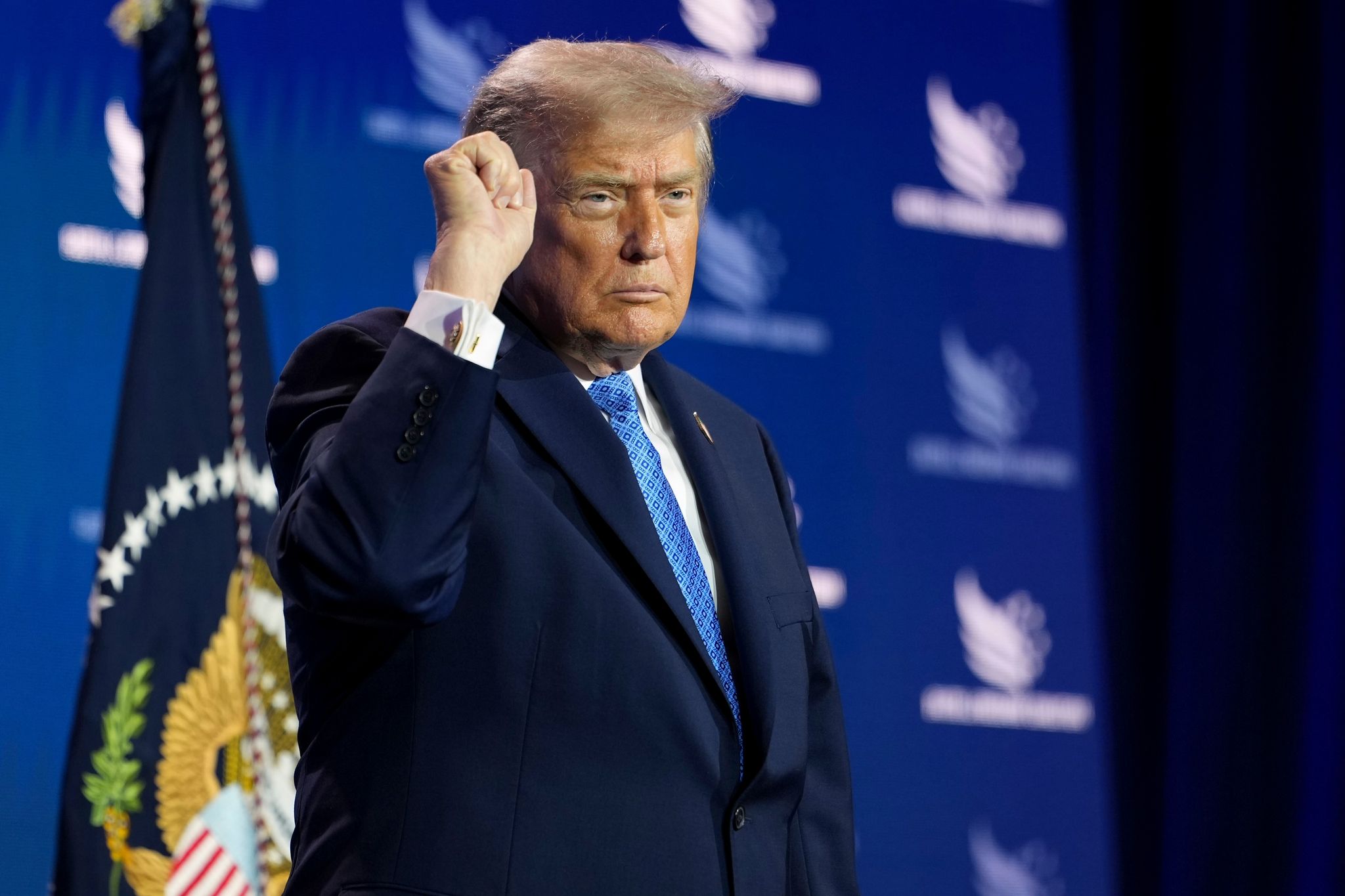
"Trump Obsessivo: Voto Dispar pero la Clave de Noviembre"
Trump’s Push to Change U.S. Election Rules: What’s Happening and Why It Matters
What’s Going On?
Imagine you’re playing a board game, and one player keeps trying to change the rules because they think the game is unfair. That’s kind of what’s happening in U.S. politics right now.
President Donald Trump has been trying really hard to change how elections work in America. He’s signed special orders, pushed for new laws, and asked his team to investigate voting. But here’s the thing: most of his attempts have been blocked by courts and Congress.
A law professor named Derek Muller put it simply: "It’s been a little bit of everything for Republicans. But the president, for the most part, hasn’t gotten anything done."
Why Is Trump Doing All This?
It goes back to the 2020 election. Trump has repeatedly claimed — without evidence — that he lost because the election was rigged. This false belief has driven almost everything he’s tried to do with election rules since then.
He’s been so frustrated that he even refused to sign a bipartisan housing bill because the Senate wouldn’t pass his preferred election law.
Important Point: Voting rights groups and Democrats say Trump is abusing his power and trying to make it harder for legal voters to cast their ballots, all to gain an advantage in the upcoming midterm elections.
What Has Trump Actually Tried to Do?
Let’s break it down step by step:
1. Focusing on Non-Citizens and Voter Data
- Trump insists that non-citizens are voting in large numbers and causing fraud.
- The reality: Studies show this is extremely rare. Out of tens of millions of ballots cast, only a handful of fraud cases result in convictions.
- His administration tried to collect detailed voter files from states, including birth dates and partial Social Security numbers.
- Result: Democratic and some Republican state officials pushed back. The government has lost every court case so far.
2. Using a Government Tool to Check Citizenship
- Trump’s Department of Homeland Security, with help from Elon Musk’s DOGE initiative, updated a government tool called SAVE (Systematic Alien Verification for Entitlements).
- This tool was used to scan at least 67 million voter registrations, mostly in Republican-controlled states.
- Tens of thousands of voters were flagged as potential non-citizens or deceased people — but some were wrongly identified.
- Result: A federal judge blocked the program, saying it "deliberately trampled on the privacy rights of American citizens in a way that threatens the sacred right to vote."
3. Signing Executive Orders When Congress Says No
When Congress wouldn’t pass the laws he wanted, Trump did what many presidents do — he signed executive orders instead.
First Executive Order:
- Wanted voters to prove their citizenship when registering to vote.
- A judge blocked it, writing that the Constitution "does not grant the president any specific power over elections."
Second Executive Order (March):
- Called for a national voter list using data from immigration and Social Security agencies.
- Would have let the Postal Service decide who gets a mail ballot.
- Threatened local election officials with criminal prosecution.
- Result: Another judge blocked it, saying it "unconstitutionally violates the separation of powers."
Important Point: Trump has used mail-in voting himself, even though he claims it enables fraud. A 2025 Brookings Institution report found mail-in fraud occurred in just 0.000043% of all mail ballots cast.
4. Pushing the SAVE Act Through Congress
- The SAVE Act would eliminate nearly all absentee voting, require citizenship documents to register, and impose photo ID requirements nationwide.
- Trump called the Senate’s failure to pass it "insanity" and even accused Republican Senator Lisa Murkowski of having "Trump derangement syndrome."
- The problem: Four Republican senators oppose the bill, meaning it likely can’t pass even if the filibuster were eliminated.
- Trump himself admitted on Monday that the SAVE Act "probably isn’t going to happen."
What Has Trump Actually Accomplished?
While most of his big efforts have failed, he has had some wins:
- Redistricting: Republican-controlled states have redrawn congressional district lines, supported by a Supreme Court decision that struck down a key section of the Voting Rights Act.
- DOJ Investigations: He’s ordered the Department of Justice to investigate voting and election operations, which Democrats worry could be a preview of interference in the November midterms.
What Could Still Happen Before November?
Even with all these setbacks, Trump and his allies still have options:
- Both parties have national teams monitoring elections, with lawyers ready to file challenges.
- The Republican National Committee says it won’t be discouraged by court losses and will keep fighting to end voting on Election Day.
- Trump’s federal prosecutor in Los Angeles has opened multiple election fraud investigations.
- The FBI previously seized ballots and records from the 2020 election in Fulton County, Georgia.
- Local election officials are already preparing for disputes over ballot chain of custody — the process of tracking ballots from printing to counting to storage.
Important Point: Legal experts say court orders would be needed for aggressive actions like the Fulton County seizure, and the bar would be even higher during an actual election.
The Bigger Picture
Law professor Rick Hasen from UCLA summed up the situation perfectly:
"Republicans believe him when he says the election is rigged. And then when Republicans try to change the voting rules to make them stricter, that makes Democrats also think the election system is being manipulated. So if what he’s trying to do is undermine voters’ confidence in the election process, he seems to have succeeded spectacularly."
Summary
- Trump has tried many ways to change U.S. election rules — executive orders, legislation, data collection, and investigations.
- Most attempts have been blocked by courts, which say the Constitution gives election authority to states and Congress, not the president.
- The SAVE Act is stalled in the Senate due to opposition from within his own party.
- Some efforts have succeeded, including redistricting and DOJ investigations into elections.
- The biggest impact may be on public trust — both parties now question the fairness of the system, which could have lasting consequences for American democracy.
Frequently Asked Questions
Q: Can the president change election rules on his own?
A: No. The Constitution gives the power to run elections to the states and Congress, not the president. That’s why courts have repeatedly blocked Trump’s executive orders on voting.
Q: Is voter fraud by non-citizens a real problem?
A: Research shows it’s extremely rare. Out of tens of millions of ballots cast, only a small number of fraud cases result in convictions. Experts say it’s not a widespread issue.
Q: What is the SAVE Act?
A: It’s a proposed law that would require proof of citizenship to register to vote, eliminate most mail-in voting, and require photo ID nationwide. It’s currently stuck in the Senate.
Q: What does "chain of custody" mean for ballots?
A: It’s the process of tracking ballots at every step — from when they’re printed, to when voters receive and return them, to when they’re counted and stored. It’s important for making sure no ballots are lost or tampered with.
Q: Could Trump still affect the November midterm elections?
A: Yes, through DOJ investigations, legal challenges, and support from Republican state officials. However, any aggressive actions would likely require court approval, which could be difficult to obtain.