
Popular Posts

Shocking Study: San Andreas Fault Hits 1,000-Year High in Quake Strain

Shocking Study: San Andreas Fault Hits 1,000-Year High in Quake Strain

The San Andreas Fault Is Quiet — Maybe Too Quiet

What Is the San Andreas Fault?

Imagine a giant crack in the ground that stretches across California. That’s the San Andreas fault.

  • It’s been called “the mother of all earthquake faults.”
  • It helped create California’s landscape and could also cause huge destruction one day.
  • It is California’s longest fault: about 800 miles long.
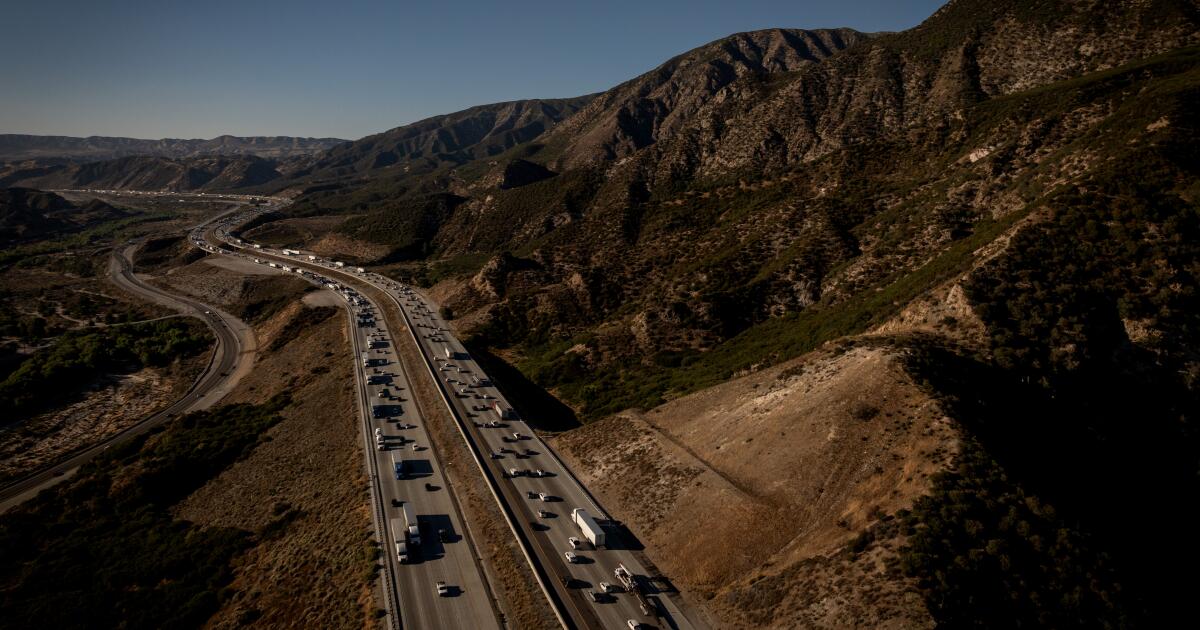
  • It travels from the Coachella Valley, through the San Gabriel Mountains, past Silicon Valley, and beyond the Golden Gate.

Important: The scariest thing right now is how quiet the fault has been. Scientists are still trying to figure out why.

The Fault Is “Locked, Loaded, and Inevitable”

The San Andreas hasn’t caused many big earthquakes in the last 100 years. But that doesn’t mean it’s safe.

  • The long quiet time is like stretching a rubber band tighter and tighter.
  • A new study says key parts of the fault in Southern California now have the highest level of tectonic strain in 1,000 years.
  • “Tectonic strain” is just a fancy way of saying the ground is being pushed and pulled and storing up energy.

A map from the study shows these stressed areas in red. At a spot called Cajon Pass, the strain is the highest it’s been in 1,000 years.

Ticking Tectonics

Some Californians have never felt a big San Andreas quake.

Big past quakes include:

  • 1857: A huge quake hit the then-sparsely populated state.
  • 1906: A massive quake flattened San Francisco (author Simon Winchester called it “a crack in the edge of the world”).

Modern Californians mostly see the fault in movies, where it’s a villain.

But scientists say: sooner or later, the fault will rupture in a big way.

Important: “We keep accumulating that earthquake energy, and it has to be released. And the only way it gets released is through large earthquakes,” said USGS geologist Kate Scharer. Small quakes don’t do the job.

What the New Study Did

The study was published in the Journal of Geophysical Research: Solid Earth.

Researchers built a computer model to calculate strain on three key fault segments where the San Andreas and San Jacinto faults meet at Cajon Pass in San Bernardino County.

The model used:

  1. Records of past earthquakes over the last 1,000 years
  2. Satellite data on how fast Earth’s plates move
  3. Estimates of how stiff Earth’s crust is

The result: tectonic stress is now higher than any point in that 1,000-year record.

How Bad Could It Be?

  • The 1994 Northridge quake (magnitude 6.7) killed about 60 people and hit a small part of LA.
  • A hypothetical magnitude 7.8 quake on the southern San Andreas could shake LA, Orange, Riverside, San Bernardino, Ventura, and Imperial counties at once.
  • USGS estimated such a quake could cause 1,800 deaths.

USGS also says:

  • 60% chance of a magnitude 6.7+ quake in the LA region by 2045
  • About 1 in 5 chance of such a quake on the San Andreas in LA County and the Inland Empire

Why the Drought?

The long time without big quakes is called an “earthquake drought.”

  • It’s an unusually long quiet period.
  • Stress has been building the whole time.
  • Scientists made a 28-second animation showing 1,000 years of strain building, then releasing in quakes, then building again.

Strain Levels Found

  • San Andreas northwest of Cajon Pass: 2.8 megapascals (previous high: 2.7 before quakes in 1469 and 1691)
  • San Jacinto fault: 3.6 megapascals (previous high: 2.9 before a 1249 quake)

Cajon Pass is about 50 miles northeast of downtown LA.

Normally:

  • San Andreas northwest of the pass: big quakes every 100–150 years
  • San Andreas southeast of the pass: big quakes every 200–250 years (last one near Salton Sea was ~300 years ago)

Note: The model assumes all stress resets to zero after a big quake. Scientists aren’t 100% sure that’s true.

Tectonic Risks

When the “Big One” hits, it will be like nothing living Californians have seen.

  • The 1857 quake (mag 7.9) had 63 times more energy than Northridge and shook a much bigger area.
  • In Northridge, “violent shaking” hit only part of the San Fernando Valley.
  • A mag 7.8 San Andreas quake could cause that level of shaking across all of Southern California.

In 1994, helpers could focus on one area. In a regionwide quake, that wouldn’t be possible.

Don’t tune out! Big disasters do happen — like SF in 1906, New Orleans in 2005, or tsunamis in 2004 and 2011.

Tectonic Rewards

Earthquakes are part of the deal of living in California. The same forces that cause quakes also made the state beautiful.

  • You can ski and surf on the same day thanks to these forces.
  • The Sierra Nevada mountains were formed by old volcanoes and plate crashes.
  • Gold in the Sierra foothills formed because of these forces.
  • The Central Valley (farmland) was once ocean, then inland sea, then lake — moved by tectonics.

As Cal State Northridge professor Julian Lozos said: without these forces, California would be like Nebraska.

But the risks are real:

  • The San Andreas runs through Inland Empire cities.
  • If a quake goes south-to-north, it sends shaking “right into downtown” LA.
  • Geologically, LA is “a bowl of Jell-O” — soft ground that shakes easily for 2–3 minutes.

Why So Quiet? (Still a Mystery)

No one knows for sure why it’s been calm.

  • A 2023 study suggested less floodwater reaching the old Lake Cahuilla (ancestor of Salton Sea) might be a reason.
  • Scharer says the study is a reminder to get prepared.

Important: The model is NOT a prediction. But the fault being “more loaded than at any point in 1,000 years” is “a finding worth taking seriously” (Burkhard). The main message: Let’s make sure we are prepared.

Summary

The San Andreas fault is California’s giant 800-mile earthquake maker. It’s been unusually quiet for over a century, but that silence is storing up energy. A new study shows parts of the fault have the highest strain in 1,000 years. A big quake is inevitable, could be huge, and we should all get ready — while also remembering the same forces gave us California’s amazing landscapes.

FAQ

1. What is the San Andreas fault?
It’s a massive 800-mile crack in California’s ground where Earth’s plates meet. It causes earthquakes and shaped the state’s scenery.

2. Why are scientists worried right now?
Because the fault has been quiet for a long time, and a study found the strain is the highest in 1,000 years — like a rubber band stretched too far.

3. Does this mean a big earthquake will happen tomorrow?
No. The study is not a prediction. But it shows the risk is high and we should be prepared.

4. How bad was the 1857 quake compared to Northridge?
The 1857 quake had 63 times more shaking energy and affected a much larger area than the 1994 Northridge quake.

5. What can I do to prepare?
Make an emergency kit, have a plan, and consider earthquake insurance. Being ready is the best defense.

Leave a Reply

Your email address will not be published. Required fields are marked *