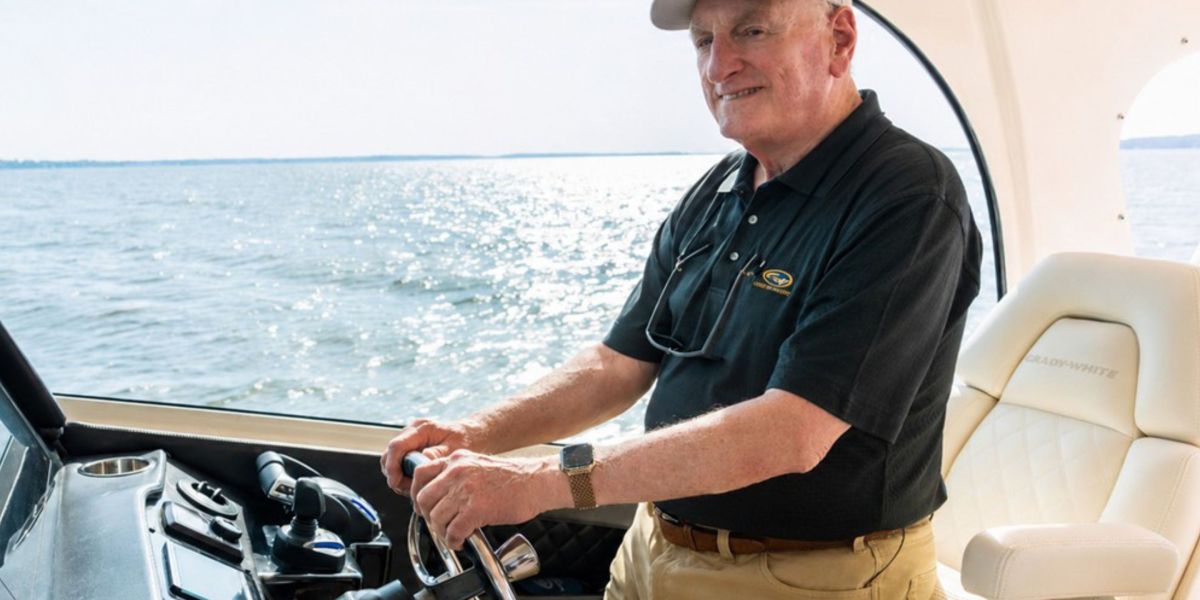
At 83, He Saved a Bankrupt Boat Empire & Rejected $400M
How a Boat Builder Gave Away His $400 Million Company to Help Others
Imagine working 100-hour weeks for 58 years to build something amazing—then giving it all away for free. That’s exactly what Eddie Smith Jr. did.
The Big Decision: Giving It All Away
At 83 years old, Eddie Smith Jr. made a choice that surprised everyone. He had spent nearly six decades building Grady-White Boats from a nearly bankrupt company into a business making hundreds of millions of dollars a year.
People offered him “way north” of $400 million (that’s over $400,000,000!) to buy the company. But Smith said no.
Instead, he gave the company to a special kind of trust that will:
- Never sell the company
- Give all future profits to charity
- Keep the company’s values alive forever
[!IMPORTANT]
Key Point: Smith didn’t want a big payday. He wanted his life’s work to keep helping people long after he’s gone.
From Spam Sandwiches to 100-Hour Weeks
Eddie Smith didn’t start rich. In fact, he grew up poor in North Carolina.
His Early Life
- His dad lost both parents by age 10 during the Great Depression
- The family ate Spam three times a day because money was so tight
- His dad worked odd jobs (like driving a taxi) before starting a small mail-order sock business
- Smith lied about his age to get a paper route as a kid
- He was the first in his family to go to college (University of North Carolina, class of 1965)
The Big Gamble
At 26 years old, Smith saw Grady-White Boats was about to go under. He borrowed a little money and bought it.
“I had an unhealthy desire to prove to myself that I could do something on my own.” — Eddie Smith
The first 5–6 years were brutal:
- No days off for years
- 80–100 hour work weeks
- Gave up golf for decades (he belonged to 3 clubs but never played!)
- Poured his life savings into keeping the boats afloat
But he didn’t quit. And eventually, the company became a huge success.
Building a Company Culture Worth Keeping
Smith didn’t just build boats—he built a workplace where people actually want to be.
Unique Perks at Grady-White
- $350,000–$400,000/year paid to employees to read self-improvement books
- Every Friday morning: Company-wide sessions on health, family, money skills, and more
- Profit sharing — workers get a piece of the success they help create
- Corporate chaplain — someone to support employees’ personal lives, not just work
Smith’s belief: A business should make employees’ lives better—inside AND outside the workplace.
Why He Didn’t Sell
As Smith got older, he watched friends sell their lifelong companies. Every single one regretted it.
“All of them were really disappointed in what happened to their companies after the sale. They lost their way. They lost their culture… I just couldn’t bear the thought of that happening.” — Eddie Smith
Then life hit hard:
- 2021: His wife Jo passed away
- 2022: His son Chris died from ALS (a terrible nerve disease)
- No family successor left to take over
He realized: If he sold, the culture he built would vanish. If he gave it away the right way, it could live forever.
How the “Perpetual Purpose Trust” Works
This sounds complicated, but think of it like a forever promise written in legal stone.
The Structure (Simple Version)
| Piece | What It Does | Who Runs It |
|---|---|---|
| Perpetual Purpose Trust | Holds the voting shares (the power to make big decisions) | Independent board (NOT Smith) |
| 501(c)(4) Nonprofit | Holds the non-voting shares (the money-making part) | Independent board (NOT Smith) |
What This Means in Practice
- Company can NEVER be sold — the trust owns the voting rights forever
- Profits go to charity — tens of millions per year to:
- Education
- Healthcare
- Conservation
- Local community
- Values are locked in — profit sharing, reading program, chaplain—all stay
- Smith stays as “Chief Executive Emeritus” — honorary advisor, but no control
Inspired by: Yvon Chouinard, founder of Patagonia, who did the same thing in 2022 with his $3 billion outdoor company.
What This Means for the Future
Smith hopes other business owners will think twice before selling.
“I think there’s room for a lot more [philanthropy] in our country.” — Eddie Smith
The Ripple Effect
- Employees keep their jobs and culture
- Kids get better schools (education donations)
- Families get better healthcare
- Nature gets protected (conservation)
- Local community thrives
All because one man chose purpose over profit at the finish line.
Summary
| What Happened | Why It Matters |
|---|---|
| Eddie Smith built Grady-White Boats over 58 years | From near-bankruptcy to $100M+ revenue |
| He worked 100-hour weeks, gave up golf, risked savings | Shows incredible grit and belief |
| He created a unique, caring company culture | Reading program, profit sharing, chaplain |
| He turned down $400M+ offers to sell | Culture > cash |
| He donated the company to a Perpetual Purpose Trust | Company stays independent forever |
| All future profits go to charity (education, health, etc.) | His life’s work helps people forever |
| He hopes other entrepreneurs follow his lead | Could start a new wave of purpose-driven business |
FAQ
What is a “Perpetual Purpose Trust” in simple terms?
Think of it as a legal safe that holds the company’s steering wheel. It can never be opened, never sold, and must always drive toward the purpose Smith set: take care of employees + give profits to charity. It lasts forever (perpetual).
Does Smith still make money from the company?
No. He gave away all ownership. He keeps the title “Chief Executive Emeritus” (like a wise elder advisor), but he has zero voting power and takes zero profits.
Why not just leave the company to his kids?
His wife and son both passed away. He had no family successor. Even if he did, he saw friends’ kids lose the company culture after inheriting. He wanted a guarantee, not a hope.
Is this a tax loophole?
Some critics say yes. But experts like Natalie Reitman-White (founder of Purpose Owned) say it’s a legitimate alternative for owners who care more about legacy than taxes. The structure is legally binding and overseen by independent boards—not Smith.
Could other companies do this?
Absolutely. Patagonia did it in 2022. Newman’s Own has done it for decades. Smith hopes more entrepreneurs will consider it—so their life’s work keeps doing good long after they’re gone.
Final Thought: Eddie Smith proved you don’t have to be a billionaire to change the world. You just have to build something with heart—and have the courage to let it go for the right reasons.