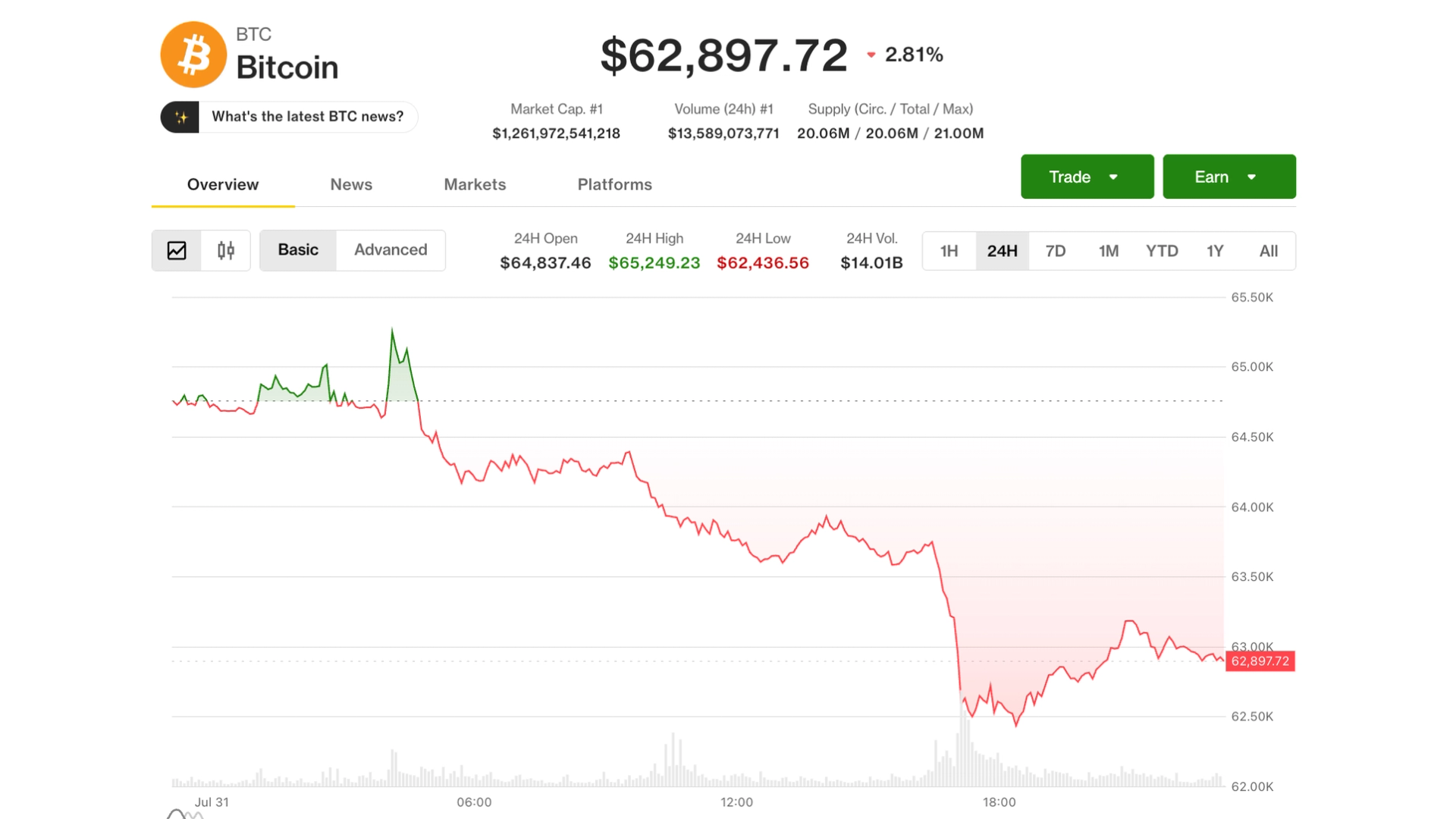
Bitcoin Defies Fed, AI Meltdown & Coldcard to Keep July Gains
Crypto Market Stays Calm Despite Big Security Scare and Economic Uncertainty
What Happened Recently in Crypto?
Imagine you’re at a playground. Usually, when a loud noise scares everyone, kids start running and dropping their toys (selling their crypto). But lately, something interesting happened: a big scary noise went off, but hardly anyone dropped their toys.
Here’s the simple breakdown of what’s going on in the crypto world right now.
Forced Selling Has Already Happened
Important Point
Liquidation = When someone borrowed money to buy crypto, but the price dropped so much the exchange forces them to sell to pay back the loan.
- Normal days: $400–500 million worth of crypto gets force-sold daily
- Lately: Way less than that — almost nothing!
- Why? According to Bitfinex analysts: "The forced-selling fuel was already spent."
Translation: The big sell-off already happened earlier. Now the "tank is empty" — there’s no more forced selling left to push prices down.
Big Security Scare: The Coldcard Hack
What is Coldcard?
A hardware wallet — a physical device (like a USB stick) that keeps your Bitcoin safe offline. People use it for self-custody (being your own bank).
What happened?
- $38+ million in Bitcoin stolen from Coldcard users
- The hackers haven’t sold the stolen Bitcoin yet
- But experts worry they will sell soon, which could push prices down
Why this matters:
| Concern | Simple Explanation |
|---|---|
| Self-custody risk | "Be your own bank" sounds great — but if you mess up or get hacked, no one can help you |
| Trust shaken | Some investors might switch to ETFs (easy-to-buy funds that hold Bitcoin for you) instead |
| Operational risk | Even tech-savvy people can lose money if their tools have bugs |
Important Point
Self-custody = You hold your own keys (passwords). No customer support. No "forgot password" button. If it’s gone, it’s gone forever.
What’s Next? Jobs Data & ETF Flows
The Big Picture: "A New Volatility Regime"
Jeff Anderson from STS Digital says we’re entering a new phase of unpredictability.
Why?
- Interest rates — Will they go up? Down? Stay same? Nobody knows.
- Investors keep changing their minds — One day they’re hopeful, next day scared.
- High-beta assets (like Bitcoin) move MORE than regular stocks when uncertainty is high.
What to watch:
- Upcoming jobs report — Tells us if the economy is strong or weak
- ETF flows — Are big investors putting money into Bitcoin ETFs or pulling out?
- Price swings — Expect bigger ups and downs until the economic picture clears up
Simple Summary: Where Are We Now?
| Topic | Status | What It Means for You |
|---|---|---|
| Forced selling | Mostly done | Less sudden price crashes from margin calls |
| Coldcard hack | Ongoing risk | Stolen Bitcoin might be sold soon → price pressure |
| Self-custody debate | Heating up | More people may choose ETFs over hardware wallets |
| Macro outlook | Very unclear | Expect choppy, volatile prices until jobs/inflation data improves |
Key Takeaways (TL;DR)
- No panic selling right now — The "forced selling fuel" is already gone.
- $38M+ stolen from Coldcard — A reminder that self-custody has real risks.
- Hackers haven’t sold yet — But if they do, Bitcoin price could dip.
- Economy is confusing everyone — Rate cut hopes vs. inflation fears = volatile crypto.
- Watch jobs data & ETF flows — They’ll give clues on where Bitcoin heads next.
FAQ: Your Questions Answered
1. What is a "liquidation" in simple terms?
It’s when you borrow money to buy crypto (leverage), the price drops, and the exchange automatically sells your crypto to get their money back. You don’t get a choice.
2. Why does the Coldcard hack matter if I don’t use Coldcard?
It’s not about this specific device — it’s a wake-up call. Any self-custody tool can have bugs. If you hold your own keys, you are 100% responsible for security.
3. What’s a Bitcoin ETF and why would someone choose it over self-custody?
An ETF (Exchange-Traded Fund) lets you buy Bitcoin through your regular stock brokerage (like Fidelity or Robinhood).
Pros: Easy, insured, no technical skills needed.
Cons: You don’t actually hold the Bitcoin — a company does it for you.
4. What does "high-beta asset" mean?
Beta measures how much an asset moves compared to the overall market.
- High-beta (like Bitcoin): Moves way more than stocks — up and down.
- Low-beta (like utilities): Barely budges.
So when uncertainty hits, Bitcoin swings wildly.
5. Should I sell my crypto now because of all this uncertainty?
Not financial advice!
But remember: Volatility is normal in crypto. If you’re investing long-term (years, not days), short-term chaos often looks like a tiny blip on a 5-year chart. Always decide based on your goals and risk tolerance.
Stay curious. Stay safe. And never invest more than you can afford to lose.