Cuba’s Electricity Crisis: A Simple Explanation of a Complicated Mess
What Is Happening With Cuba’s Power?
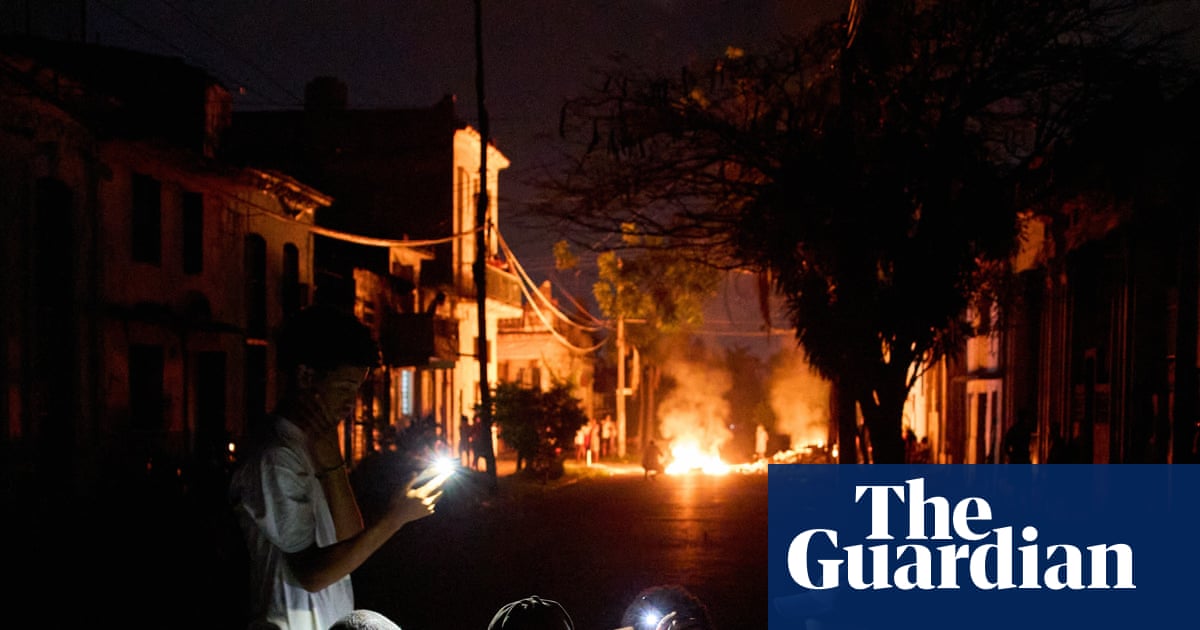
Imagine you are on a small island where the lights keep going out — not just for a few minutes, but for days. That is life in Cuba right now.
- Cuba is an island about 777 miles long with around 9.5 million people.
- On Tuesday, its national power grid (the big system that brings electricity to the whole country) failed for the third time in 10 days.
- When the grid collapses, people across cities groan and worry: “Will our old electricity system ever recover?”
Important Point: The national grid is the backbone that sends power everywhere. When it breaks, the whole island goes dark.
Why Is the Electricity So Bad?
Cuba’s power problems are like a very old car that keeps breaking down.
- The system still relies on big power plants built long ago.
- Jorge Piñon, an energy expert at the University of Texas, says: “They’re old, broken and tired.”
- The island has had a six-month oil blockade from the US, meant to pressure its communist government.
- But the crummy infrastructure (roads, plants, pipes) was a problem long before that.
Blackouts are now a normal part of life. Photograph: Adalberto Roque/AFP/Getty
How Are People Coping?
Right now, summer is hot — around mid-30s Celsius — with 80% humidity. That makes no cooling or fan extra awful.
- Local blackouts were already happening; now nationwide ones pile on top.
- Instead of salsa music, you hear pots and pans banged in the streets — called cacerolazos — to show shared misery.
- Electricity comes back only now and then.
- One man named Alberto said: “An hour isn’t enough to run the pump for water or charge phones.”
- People want the government to act right now.
What Does the Government Say?
The government says its hands are tied.
- Vicente de la O Levy, the energy minister, said: “There is a total absence of fuel.”
- They also cannot get spare parts for their thermoelectric (heat-based power) units.
How Did We Get Here? (The Bigger Picture)
The US has been turning the screws on Cuba for a while.
- Since January 3, after the US military took Venezuela’s president Nicolás Maduro, Donald Trump promised Cuba “will fall.”
- Washington uses sanctions (punishments that block trade) to hurt Cuban industries.
- Foreign companies — hotels, airlines, miners, shippers — have left or made plans to sell out.
- An electric car importer said: “We have 7 containers in Kingston and 40 in China, but no idea when they’ll arrive.”
- In May, a Florida court charged 95-year-old Raúl Castro with murder from an old 1996 plane incident, opening talk of a Venezuela-style removal.
Fuel shortages have left streets like Havana almost empty. Photograph: Ramón Espinosa/AP
Life Is Getting Harder
Even before the US pressure, Cuba was weak from pandemic hyperinflation (prices soaring super fast).
- Services are failing.
- Once very safe, crime is now rising: street fights, break-ins, violent muggings.
- Police are rare and slow to arrive.
But the government still arrests people:
- Prisoners Defenders (a Madrid group) says political prisoners rose to 1,306.
- Example: Héctor Ochoa Vergara was detained after a peaceful protest about blackouts.
- Famous artist Luis Manuel Otero Alcántara finished 5 years for disorderly conduct and is stuck in an unknown US location awaiting a visa.
Family Drama Inside the Government
The Cuban government tries to look united, but cracks show.
- The US has leaked talks about a deal, via Raúl Guillermo Rodríguez Castro (grandson of Raúl Castro).
- He gave an interview wearing fancy Hermès sneakers, a Rolex, and a Ferragamo bag, saying: “It pains me many can’t live like me.”
- People were furious — including pro-government youth like Michel Torres Corona, who asked: “Would anyone else be allowed to pretend to speak for the country?”
From left: Cuba’s National Assembly president, Esteban Lazo Hernández, president Miguel Díaz-Canel, commander José Ramón Machado Ventura, prime minister Manuel Marrero Cruz, and Raúl Guillermo Rodríguez Castro. Photograph: Adalberto Roque/AFP/Getty
An expert, Michael Bustamante, thinks the interview was a “cry for relevance,” not a real negotiation.
War Talk and Drones
The US, just 90 miles north, is rattling swords again.
- At the Biltmore hotel, ex-Florida governor Jeb Bush stood by an Iranian drone and claimed Cuba may have bought 300 attack drones (unconfirmed).
- Trump said: “We’re not going to allow that.”
- Cuba announced 176 measures to open its economy, but the US state department called them “superficial smoke signals.”
Rubbish fills the street in Havana. Photograph: Yamil Lage/AFP/Getty
The Latest Blackout
- The grid reconnected at 7am Wednesday; people cheered.
- But everyone knew it was temporary.
- Since then, blackouts are worse than before.
Laura Garcia, a single mom and illustrator, went 72 hours without power. She said neighbors live only in the present from desperation, muttering: “What has to fall doesn’t fall.”
Summary
Cuba’s old power system is collapsing under US blockades, fuel shortages, and weak infrastructure. People bang pots in frustration, crime is up, political arrests continue, and internal government drama grows. The US talks of invasion and drones while Cuba’s small openings are dismissed. For now, the lights flicker back only to fail again, leaving families stuck in daily struggle.
FAQ
1. What is a “national grid collapse”?
It means the main system that sends electricity to the whole country stops working, so everyone goes dark at once.
2. Why doesn’t Cuba just fix the power plants?
They are very old and need spare parts, but sanctions and fuel blockades make it hard to get them.
3. What are cacerolazos?
They are when people bang pots and pans in the street to show they are unhappy — here, about blackouts and shortages.
4. Is the US going to invade Cuba?
Some leaders talk tough and mention drones, but it is not confirmed; experts say negotiations are messy and unclear.
5. Are things getting better after the grid restarted?
No. The government reconnected it briefly, but blackouts became worse than before across Cuba.
 1
1