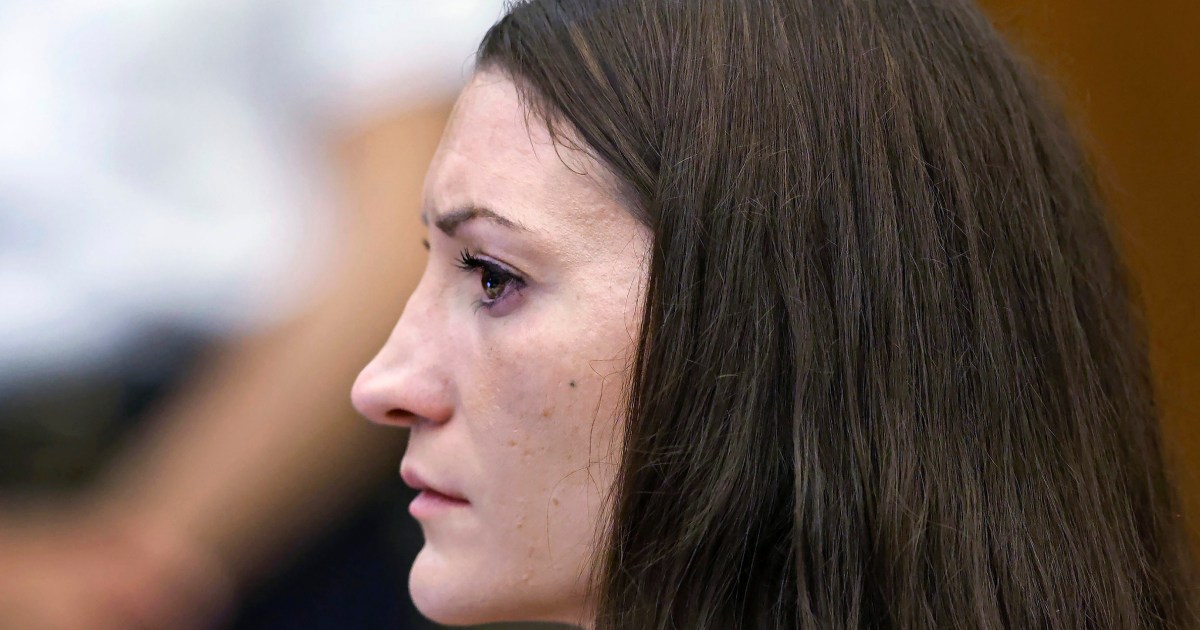
Lindsay Clancy’s Diary Exposes Harrowing Spiral Before Triple Killing
The Lindsay Clancy Trial: A Simple Explanation of a Heartbreaking Case
Important Note: This article discusses a tragic case involving the deaths of three children. It includes details about mental health crises and violence. Please read with care. If you or someone you know is struggling, help is available at 988 (call or text) or 988lifeline.org.
What Happened?
In January 2023, in the coastal town of Duxbury, Massachusetts, a mother named Lindsay Clancy strangled her three young children:
- Cora, age 5
- Dawson, age 3
- Callan, just 8 months old
Afterward, she jumped from a second-story window. She survived but is now paralyzed from the waist down.
Her husband, Patrick Clancy, came home to find the children in the basement and his wife on the ground outside. He called 911, saying, "She killed the kids!"
Why Is There a Trial?
Lindsay Clancy has been charged with murder. The big question in court is not whether she did it — both sides agree she did. The question is: Was she criminally responsible?
There are two possible outcomes:
| If the jury decides… | Then… |
|---|---|
| She was responsible (acted intentionally) | She faces life in prison without parole |
| She was not responsible due to mental illness | She will be committed to a state mental health facility |
The Defense: "She Was Overmastered by Illness"
Lindsay’s lawyers say she was a loving mother who was taken over by a severe mental illness called postpartum psychosis.
What Is Postpartum Psychosis? (ELI5)
Think of it like this: After having a baby, most moms feel tired or emotional. That’s normal.
But postpartum psychosis is rare and dangerous — it affects about 1 or 2 out of every 1,000 moms.
It makes a person lose touch with reality. They might hear voices, believe things that aren’t true, or feel commanded to do things they’d never do when well.
It’s a medical emergency, not a character flaw.
Her lawyers also say:
- She had bipolar disorder that wasn’t properly diagnosed until after the tragedy.
- She was on a changing mix of psychiatric medications — some of which can make bipolar symptoms worse.
- She begged for help in her diary and from doctors.
The Prosecution: "She Acted Intentionally"
The prosecutors (the lawyers representing the state) argue:
- Lindsay planned the killings.
- She asked her husband to leave the house on errands — they say this was a ploy to be alone with the children.
- They want the jury to focus on her actions, not her doctors or the mental health system.
Prosecutor Shanan Buckingham said:
"This is not a public debate about women’s mental health and how the medical system treats women."
Her Diary: A Window Into Her Mind
In the months before the tragedy, Lindsay kept a diary. Both sides read from it in court. Here’s what it shows:
Excerpts from Her Journal
- "I’m so desperate to get a mental break from taking care of everyone that my mind is trying to find something physically wrong with me." (Nov. 18, 2022)
- "I want help. I want to be well."
- "I have crazy brain fog. I feel like I can’t make a plan. I live moment to moment waiting for the next nap time."
- She was obsessed with her baby Callan’s sleep schedule.
- She felt "incredibly sad and guilty" about not breastfeeding.
- She felt disconnected from her children and her husband.
- She dreaded going back to work as a labor and delivery nurse.
She Tried to Get Help — Multiple Times
This is one of the most troubling parts of the case. Lindsay repeatedly sought care:
Timeline of Her Search for Help
-
Late December 2022 — She went to a postpartum depression program.
→ Clinicians noted her symptoms might be from medication.
→ They told her to taper off an antipsychotic and sent her home after one day. -
New Year’s Eve 2022 — She checked herself into a psychiatric hospital.
→ Stayed several days. -
January 23, 2023 — Her psychiatrist saw her for 17 minutes.
→ This was the last time a doctor saw her before the killings. -
January 24, 2023 — She told her lawyers she heard a commanding voice say:
"Kill the children so you can kill yourself."
- That evening — She asked Patrick to run errands. He left. The killings happened soon after.
The Aftermath: What Happened to the Children?
| Child | Age | What Happened |
|---|---|---|
| Callan | 8 months | In cardiac arrest when EMTs arrived. Taken to Boston Children’s Hospital. On a ventilator. Had a heartbeat but died after 3 days. |
| Dawson | 3 years | Found in basement. Did not survive. |
| Cora | 5 years | Found in basement. Did not survive. |
All three were strangled with exercise bands.
The Lawsuits: Blaming the Providers
Both Lindsay and Patrick Clancy have filed medical malpractice lawsuits against her healthcare providers. They claim:
- Doctors failed to recognize how sick she was.
- They didn’t hospitalize her when she was a clear risk.
- Medication choices were inappropriate for bipolar disorder.
The providers deny these claims. They say she did not clearly tell them she planned to harm the children.
Patrick Clancy: A Father’s Unimaginable Loss
Patrick Clancy has become a public figure in this case. He:
- Testified in court, describing the horrific scene he found.
- Has spoken publicly about forgiveness and mental health awareness.
- Started a foundation in his children’s memory.
He said in a 911 call played in court:
"She killed the kids!" — his voice breaking with grief.
What Happens Next?
The trial is ongoing. Here’s what to expect:
Next Steps in the Trial
- More witness testimony — doctors, family, first responders.
- Expert opinions — psychiatrists for both sides will explain her mental state.
- Closing arguments — each side sums up their case.
- Jury deliberation — the 12 jurors decide: Guilty of murder? or Not guilty by reason of insanity?
- Sentencing or commitment — based on the verdict.
Summary: Key Points to Remember
100% of the facts below come directly from the original reporting.
- Lindsay Clancy killed her three children in January 2023.
- She admits it but says postpartum psychosis made her lose touch with reality.
- She had undiagnosed bipolar disorder and was on multiple medications that may have made things worse.
- She wrote in her diary about desperation, guilt, brain fog, and wanting help.
- She sought help repeatedly — outpatient program, psychiatric hospital, regular psychiatrist visits.
- Her last doctor visit was 17 minutes the day before the killings.
- She heard a voice commanding her to kill the children and herself.
- Her husband found the scene and called 911.
- She is now paralyzed from the waist down.
- The jury must decide: Criminally responsible or not?
- Life in prison vs. mental health facility — those are the only two outcomes.
FAQ: Questions You Might Have
1. Is postpartum psychosis the same as postpartum depression?
No. Postpartum depression is common (affects ~1 in 7 moms) and involves sadness, anxiety, exhaustion. Postpartum psychosis is rare (1–2 in 1,000) and involves losing touch with reality — hallucinations, delusions, confusion. It’s a psychiatric emergency.
2. Why wasn’t she hospitalized if she was so sick?
That’s the core of the lawsuits. Her lawyers say doctors missed the signs, misdiagnosed her, and used medications that worsen bipolar disorder. The providers say she didn’t clearly say she’d hurt the kids. The jury will hear both sides.
3. What does "not guilty by reason of insanity" mean in Massachusetts?
It means the person did the act but lacked criminal responsibility due to mental illness. They don’t go to prison — they go to a secure psychiatric hospital until doctors and a court say they’re no longer a danger. It can be longer than a prison sentence.
4. Why is the husband not on trial?
There’s no evidence Patrick Clancy knew or participated. He was out of the house on errands his wife asked him to run. He has been fully cooperative and is a prosecution witness.
5. How can I help prevent this from happening to others?
- Learn the signs of postpartum psychosis (sudden confusion, hallucinations, believing things that aren’t true, talking about harming self/baby).
- Believe moms when they say something is wrong.
- Advocate for better maternal mental health screening, longer hospital stays, and provider training.
- Share resources: 988 (Suicide & Crisis Lifeline), Postpartum Support International (1-800-944-4773), Postpartum.net.
Final Thought
This case isn’t just about one woman or one family. It’s about how we care for mothers when their brains turn against them after childbirth. It’s about whether our medical system catches people before they fall — and what justice looks like when it doesn’t.
If you’re pregnant, postpartum, or love someone who is: Please know that help exists, and asking for it is brave — not weak. You matter. Your baby needs you well. Call 988. Text 988. Go to the ER. Keep asking until someone listens.
Source: Associated Press reporting on the Lindsay Clancy murder trial in Plymouth, Massachusetts. All facts preserved from original coverage.