11
11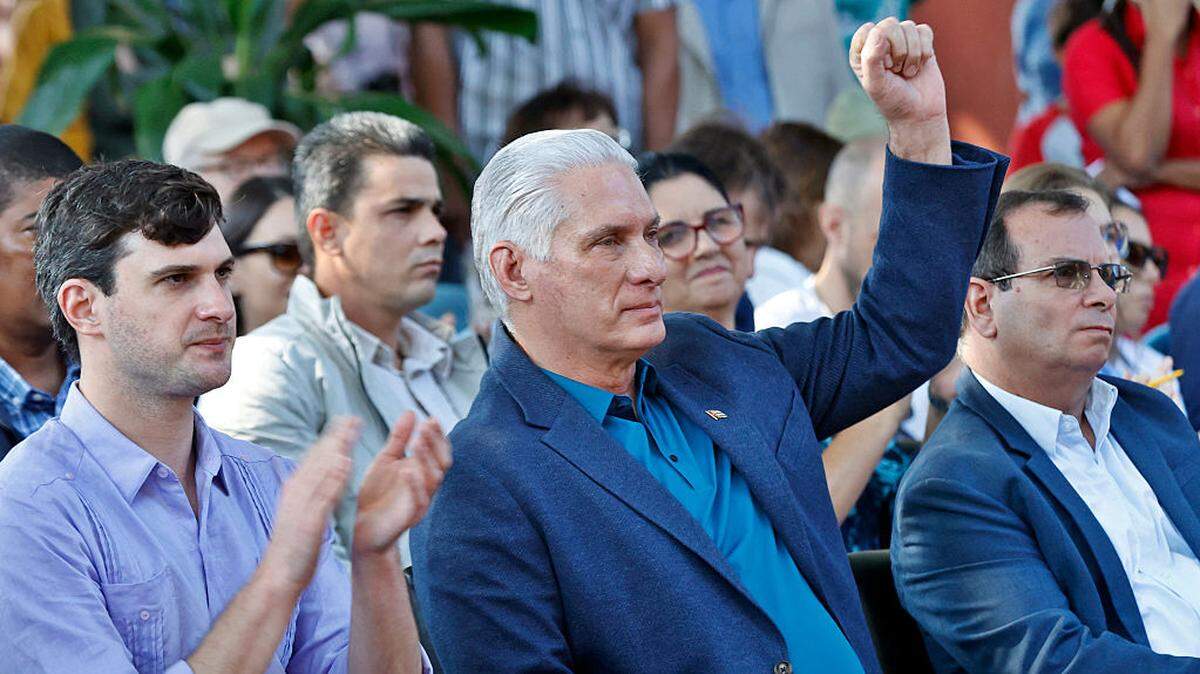
Photo: ERNESTO MASTRASCUSA / POOL/AFP via Getty Images
Imagine two neighbors who don’t trust each other. The U.S. government just shared a big report (like a school book report, but about another country) saying that Cuba has been trying to stir up trouble inside the United States for a very long time.
Here is the super simple version:
A State Department official said the report found that for almost 70 years, Cuba’s leaders have helped almost every big far-left uprising, revolution, and militant group in and around the Americas.
At a meeting with officials from over 60 countries about far-left extremism, Secretary of State Marco Rubio said:
The U.S. government is turning up the heat on Cuba to make economic and political changes.
Important Point: The report says Cuba’s weak economy (a “failed state” economy) hides one of the best foreign spy and influence operations in modern history. But the report uses public info only—it does not reveal anything brand new.
The 64-page document (seen early by the Miami Herald) says:
What makes Cuba special and hard to understand, the report says, is that it mixes spying with “soft” influence (like ideas and friendships).
Though Cuba spies well, the report says its bigger win is on the ideas battlefront (changing how people think).
The report puts Cuba at the center of a broader anti-American coalition that includes:
It calls Havana (Cuba’s capital) “the ideological capital of the modern radical left.”
The report even says many big U.S. upheavals—like the George Floyd protests, the rise of Antifa, and pro-terrorist activism on college campuses—can be linked in some way to Cuban influence.
The report details Cuba’s history of bonding with Black radical activists and lists several U.S. far-left groups that traveled to Cuba, aligned ideas, and built cozy relationships with the Cuban government:
These groups have also joined pro-Palestinian and anti-ICE (Immigration and Customs Enforcement) protests. The U.S. sees this as a sign of Cuba’s influence in shaking up U.S. politics.
A special document by the National Network on Cuba called the National Rapid Response Plan says if the U.S. attacks Cuba, they will protest at federal buildings, military bases, and ICE facilities. The plan says protesting ICE connects “Cuba solidarity to anti-ICE/immigrant defense work happening nationwide.”
Last March, several American and international far-left groups and influencers went to Cuba on a trip publicized as the “Nuestra America flotilla.”
Last month, the State Department sanctioned (penalized) the institute and Amistur for helping Cuban intelligence. It also ended the legal status of Carlos Antonio Lloga Dominguez, a former institute official accused of ties to a “transnational communist subversion network.” He and his family were detained in New York on June 26.
The U.S. statement says the institute spreads anti-American propaganda, cultivates pro-Cuba activists and politicians, and lobbies politicians on Cuba’s behalf.
The report says Cuba tried hard to sneak into the U.S. government. It names famous Cuba spies caught by U.S. intelligence:
The report says: “Cuba created one of the most sophisticated and adept espionage and subversion operations in the world – almost singularly focused on penetrating and undermining the United States.”
It argues Cuba’s Directorate of Intelligence is “far more skilled and sophisticated” than the Soviet KGB ever was. Cuba spies not just for politics but to hand info to rivals like Russia, China, and Iran.
Cuba’s intelligence thinks in decades (very long term). Usually, they recruit Americans who already believe in Cuba’s ideas instead of paying for secrets.
The spy agency:
Important Point: That integrated approach is the bridge between Cuba’s spy service and its much wider political network.
In short, the U.S. State Department says Cuba has spent decades building a mix of spy operations and idea-spreading to weaken the U.S. and support far-left movements at home and abroad. The report uses only public sources, names specific groups and trips, and comes as the U.S. increases pressure on Cuba. Cuban officials deny they are a threat.
1. What is the State Department report about?
It is a 64-page public report saying Cuba encourages left-wing extremism in the U.S. and runs a sophisticated spy and influence network against U.S. interests.
2. Does the report share new secret information?
No. It uses public sources and does not make new disclosures about Cuba’s activities.
3. Why does the U.S. say Cuba is a threat now?
The administration is increasing pressure on Cuba for reforms and expanded sanctions in May, calling Cuba an unusual and extraordinary threat. Cuba denies this.
4. What is the “National Rapid Response Plan”?
It is a document by the National Network on Cuba outlining nationwide protests at federal buildings, military bases, and ICE facilities if the U.S. takes military action against Cuba.
5. Who is Fernando Gonzalez Llort?
He is a convicted Cuban spy who led the Wasp Network, served 15 years in U.S. prison, and now heads the Cuban Institute of Friendship with Peoples involved in the flotilla trip.