11
11
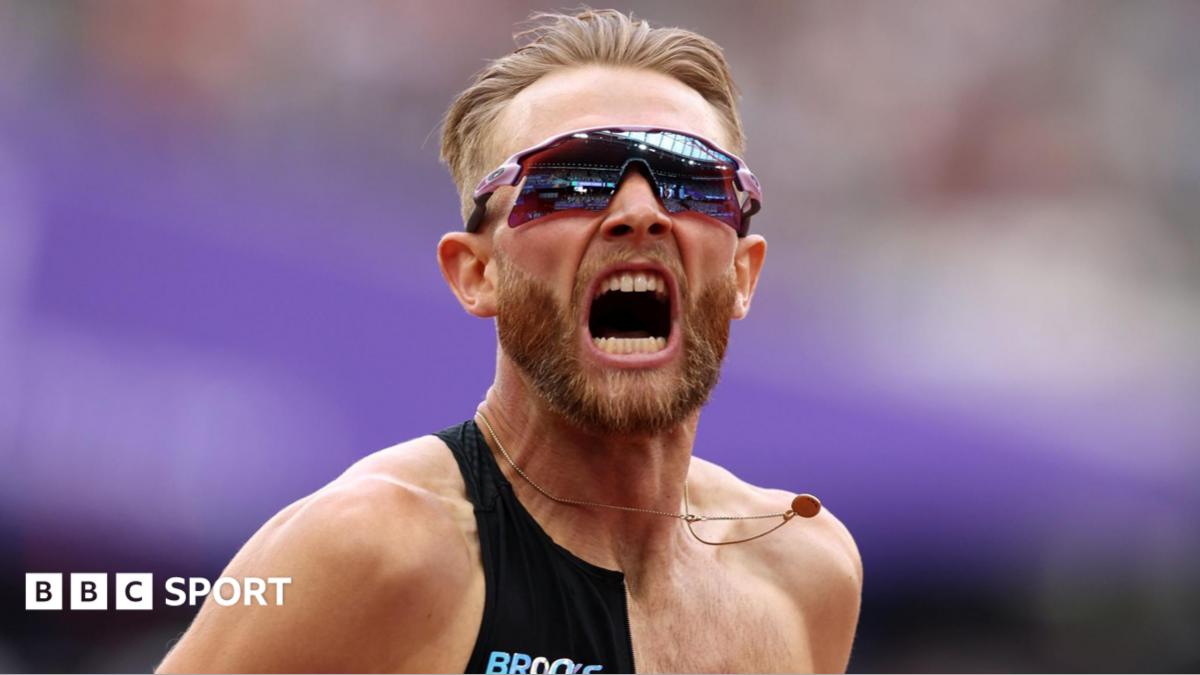
Imagine your friend says, "I’m going to run a mile faster than anyone in history—this Saturday, in a real race." That’s exactly what Olympic silver medalist Josh Kerr is doing. Here’s the super simple breakdown of how he and his team are making it happen.
Josh Kerr is a British runner. He won a silver medal in the 1500-meter race at the Olympics. Now, he wants to break the world record for the mile (that’s four laps around a standard track, or about 1609 meters).
Important Point: This Saturday is at the London Diamond League. Kerr is trying the record in an actual race, not a special setup—which his coach Danny Mackey says "is not something that happens."
Kerr has a rare chance: this year has no big global championship (like Olympics or World Champs). The last such off-year was Covid-affected 2020, and there won’t be another until 2030.
The Athletic talked to these smart folks to understand the science:
Kerr’s shoe and suit are like superhero gear, built just for him.
The result is the Hyperion 222 spike:
Kerr says of the spikes: "You feel like you can’t slow down. They’ve taken the brakes off."
They also made a bespoke speed suit:
Important Point: Brooks says they left "nothing on the table" that could help Kerr by even a fraction of a percent.
Kerr gave his whole year to this.
The training is simplified:
On a simple level, Kerr must run as fast as his Olympic 1500m (3:27.79) then keep going 109m more.
Brad Wilkins explains three must-haves:
His fast 800m races show all three are there. Brooks tested him on a special treadmill with spikes to measure oxygen use and muscle work.
Important Point: Wilkins is cautiously optimistic but says we know less about the "mechanics and nuance" that might limit an athlete.
Kerr says best records happen with close competition: "There’s only been one or two races I’ve seen as fast as this without any kind of competition."
This is also a spotlight moment for Brooks (who had no "super spike" when Kerr won bronze in 2021) and step one toward 2028 Olympics.
Josh Kerr is attempting to break the 26-year-old mile world record (3:43.13) this Saturday in London as "Project 222." With custom Hyperion 222 spikes, a bespoke suit, simplified target-pace training after injury, and the right physiology, he aims to run 222 seconds. A small field and pacemakers help. It’s a big bet for Kerr and Brooks—less than four minutes will show if 8 months of work paid off.
Q: What is a "mile" in track running?
A: It’s four laps of a standard 400m track, about 1609 meters. Kerr runs it in just over 3.5 minutes normally.
Q: Why is the record so hard to beat?
A: Hicham El Guerrouj set 3:43.13 in 1999. No one has beaten it since—longer than any previous men’s mile record.
Q: What does "Project 222" mean?
A: Kerr wants to run the mile in 222 seconds (3:42-something), so they named the attempt after that number.
Q: What are "spikes" in running?
A: Lightweight shoes with pin-like bottoms for grip on the track. Kerr’s are custom-made with carbon plate and titanium pins.
Q: Why use pacemakers?
A: They run in front at record speed so Kerr doesn’t have to think about pacing and gets dragged along fast.