 11
11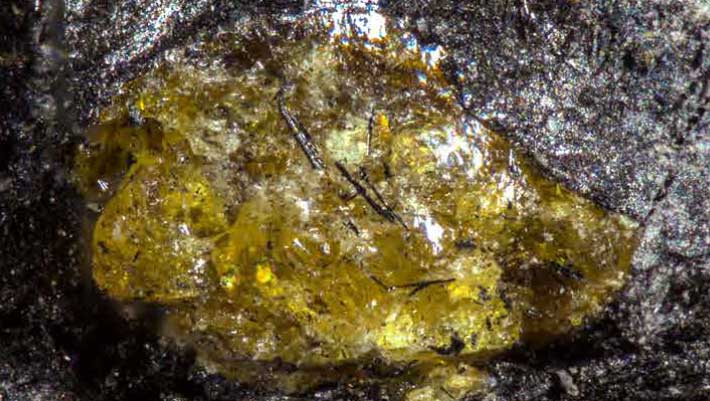
Paleontologists (scientists who study ancient life) in China discovered what they say is the earliest confirmed pieces of amber ever found. Amber is just fossilized tree resin — like the sticky sap that oozes out of trees, but turned to stone over millions of years.
Important Point: This find pushes back the known origin of amber by a huge leap and changes what we thought we knew about plant evolution!
“Amber, specifically fossilized resin, is thought to be one of the ancient exudates of seed plants,” said Dr. Cihang Luo, a researcher with the Nanjing Institute of Geology and Palaeontology and colleagues.
Let’s break that down like you’re five:
Dr. Luo and the team did some detective work:
The coal layer they came from is Middle Devonian — about 385 million years old.
Until now, the oldest confirmed amber was from the Late Carboniferous period, about 320 million years ago.
But this new Hujiersite amber is older — and here’s the kicker:
Important Point: Seed plants had NOT evolved yet when this resin formed! Seed plants only showed up later in the Late Devonian (372–359 million years ago). So the resin must have come from non-seed plants.
The scientists used fancy machines (Fourier transform infrared spectroscopy and gas chromatography with mass spectrometry — basically tools that smell and see chemicals) to check the amber’s recipe.
So the team thinks the resin most likely came from:
Both plant types were found as fossils in the same area. But because no plant bit was stuck in the amber, they can’t be 100% sure who made it.
The findings show that the “recipe” to make complex resin was already in place in some non-seed plants by the Middle Devonian.
The researchers propose that early resin probably helped plants:
They don’t think it was for stopping insect bites, because we don’t see proof of lots of insects eating plants until later (Carboniferous). Also, big wildfires were common back then, and those may have pushed plants to evolve wound-sealing resin.
Important Point: This is the earliest confirmed amber and likely the earliest fossil resin from non-seed plants — rewriting the resin story!
The team’s paper was published online July 15 in the journal Science Advances.
Chinese scientists found the oldest confirmed amber ever — about 385 million years old. It came from a time before seed plants existed, meaning non-seed plants were already making resin. The tiny pieces were pulled from coal with UV light and microscopes. This changes our understanding of when and why plants started making sticky, healing sap.
Q1: What is amber in simple words?
A: Amber is old tree sap that hardened into stone over millions of years. Sometimes it traps bugs or bits of plants inside.
Q2: Why is this amber special?
A: It is the oldest confirmed amber (385 million years) and shows plants made resin before seed plants evolved.
Q3: How did scientists get the amber out?
A: They used UV light to find glowing bits in coal and then picked 241 tiny pieces out by hand under a microscope.
Q4: What kinds of plants probably made it?
A: Likely progymnosperms or tree-like lycopsids — both are extinct non-seed plants.
Q5: What did the resin help plants with?
A: It probably helped seal wounds and block fungal infections, especially after wildfires.