
Popular Posts

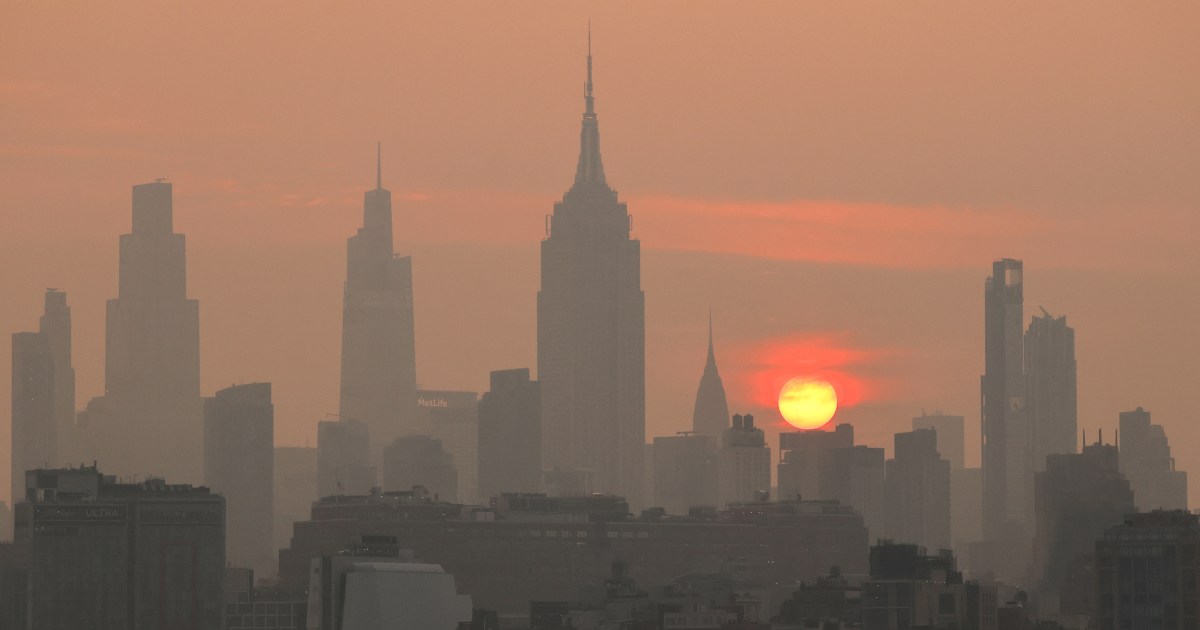
Canada Wildfire Smoke Chokes Midwest: Map Reveals Hidden Health Risks Near You

Canada Wildfire Smoke Chokes Midwest: Map Reveals Hidden Health Risks Near You

What Wildfire Smoke Does to Our Air (and How to Stay Safe)

What Cities Are Doing Right Now

Because of the smoky air from wildfires, some cities are taking quick action to keep people safe.

  • Public health officials have put out air quality advisories (think of these like weather warnings, but for the air you breathe).
  • Some government operations have been paused.
  • New York launched emergency operations on Wednesday. They are:
    • Giving out free KN95 masks
    • Opening shelter spaces
  • Philadelphia suspended trash pickup and closed public pools on Friday because the air got worse.

Important: When officials close things or give out masks, it’s because the air is not safe to treat like a normal day.

Why Wildfire Smoke Is Dangerous

Wildfire smoke is not just “smelly air.” It can make people sick.

  • People who are extra sensitive include:
    • Children
    • Pregnant individuals
    • Older adults
    • People with asthma or heart conditions
  • But even healthy people should be careful. Suzanne Paulson, who runs the Center for Clean Air at UCLA, says higher smoke levels are dangerous for anyone breathing it.

Paulson also shared a simple rule:

“No particles are good to breathe, but wildfire particles seem to be more toxic than regular city particles. Whatever the air quality color is, pretend it’s one step worse if there’s lots of wildfire smoke.”

What Exactly Is in the Smoke?

Wildfire smoke is made of tiny stuff you usually can’t see:

  • Microscopic particulate matter (tiny solid bits)
  • Ash
  • Trace minerals
  • Water vapor (which makes the haze you see)

The most dangerous kind is called PM2.5. Here’s what that means in kid terms:

  • PM2.5 is so small it can go deep into your lungs
  • It can even slip into your blood
  • It is smaller than a grain of sand
  • It is about 30 times smaller than the width of one hair strand

Serap Erdal, a professor at the University of Illinois Chicago, explained this while talking about a city air sensor project called Open Air Chicago.

How to Protect Yourself

Experts say the best plan is to act like the smoke is a “stay inside” kind of guest.

Steps to stay safer at home

  1. Stay indoors as much as possible.
  2. Avoid exercising or playing hard outside.
  3. Keep kids inside and calm so they breathe in less smoke.
  4. Use an air purifier if you have one.
  5. Set your air conditioner to “recirculate” so it reuses indoor air instead of pulling in smoky outdoor air.

Important: Being indoors does NOT automatically mean you’re safe. Outdoor air can still sneak inside.

If you must go outside

  • Wear a high-quality particle mask like an N95 or KN95.
  • A regular surgical mask is better than nothing, but it does NOT block the tiny PM2.5 particles.

Why You Shouldn’t Ignore It

Even if you feel fine, the smoke can cause problems later.

  • Healthy people may recover quickly
  • But many people can feel effects in the short term, middle term, or long term
  • Erdal says it’s important for everyone to take simple protective steps

Important: Protecting yourself from smoke is not “overreacting”—it’s basic self-care on bad-air days.

Summary

Wildfire smoke has tiny, toxic particles that can hurt your lungs and body. Cities like New York and Philadelphia are already responding with masks, shelters, and service changes. The safest move is to stay inside, use clean air tools, and wear N95/KN95 masks outside. Even if you feel healthy, the smoke can still affect you, so it’s smart to take it seriously.

FAQ

What does PM2.5 mean in simple words?

PM2.5 means “tiny particles in the air that are 2.5 micrometers or smaller.” They are so small they can enter your lungs and bloodstream.

Are surgical masks good enough for wildfire smoke?

Not really. They give a little barrier but do not filter the smallest, most dangerous particles. N95 or KN95 masks are much better.

Why are cities giving out free masks?

Because the air quality is bad from wildfire smoke, and masks help people breathe safer air when they must be outside.

Can I just stay inside and be 100% safe?

Mostly safer, yes—but smoke can enter homes. Using air purifiers or recirculating AC helps keep indoor air cleaner.
Leave a Reply

Your email address will not be published. Required fields are marked *