11
11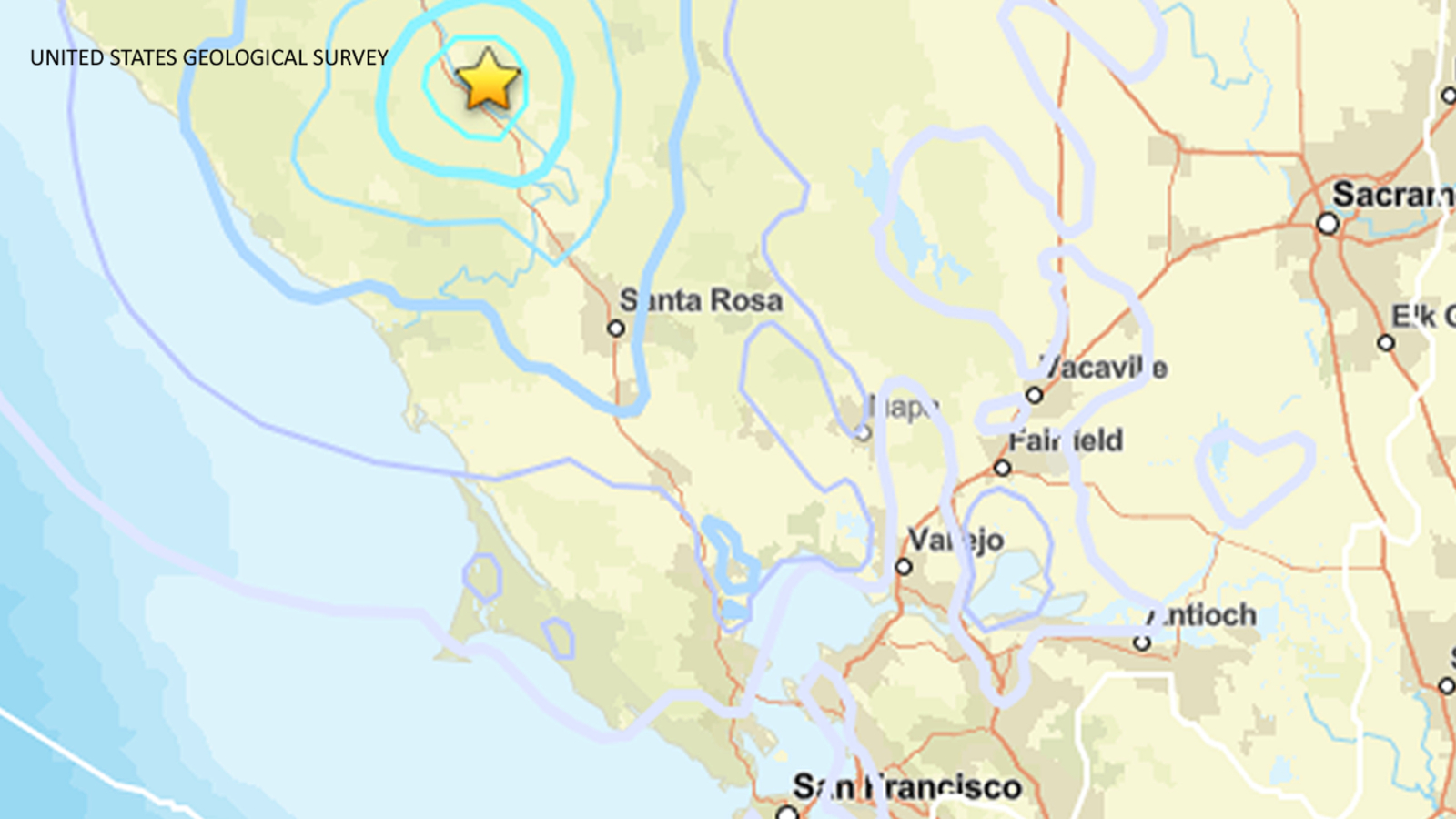
When: Tuesday night, July 28, 2026 at 7:40 p.m.
Where: Near Cloverdale, California (North Bay region)
Magnitude: 4.3 on the Richter scale
Depth: 3.42 miles underground
Aftershock: A smaller 2.5 magnitude quake followed
Good News: No injuries or major damage reported
Imagine the Earth’s crust like a giant puzzle made of massive pieces called tectonic plates. These pieces are always slowly moving — but sometimes they get stuck. When they finally break free, the ground shakes. That’s an earthquake.
On Tuesday night, one of those sudden shifts happened near Cloverdale, a town in Northern California’s wine country. The U.S. Geological Survey (USGS) — the official government agency that tracks earthquakes — confirmed it was a magnitude 4.3 quake.
Important Point:
No damage doesn’t mean “no risk.”
This quake is a reminder that the Bay Area sits on active fault lines. Small quakes help scientists understand where stress is building — and where a bigger one might happen someday.
ABC7 has an interactive map showing:
| Detail | Info |
|---|---|
| Event | Magnitude 4.3 earthquake |
| Location | Near Cloverdale, North Bay, CA |
| Time | Tuesday, July 28, 2026 · 7:40 PM |
| Depth | 3.42 miles (shallow = felt more strongly) |
| Aftershock | 2.5 magnitude (minor) |
| Impact | Felt widely, no injuries or major damage |
| Source | U.S. Geological Survey (USGS) |
| Coverage | ABC7 Bay Area (KGO-TV) — live 24/7 streaming |
Bottom Line: This was a moderate, shallow quake that gave the North Bay a good shake — but caused no harm. It’s a great chance to review your earthquake readiness!
It’s moderate — strong enough to feel clearly, but rarely causes damage. For comparison, the 1989 Loma Prieta quake was 6.9 (over 500x stronger!).
Because it was shallow (3.42 miles deep). Shallow quakes send more shaking energy to the surface — like a speaker on the floor vs. in the ceiling.
The Bay Area will have a major quake someday — but no one knows when. Small quakes like this don’t prevent big ones, but they don’t mean one is coming tomorrow either. Best move? Be prepared.
Aftershocks are smaller quakes that follow the main one as the ground settles. There might be more — but they usually get smaller and less frequent over time.
Stay safe, stay informed — and keep an emergency kit ready. The ground might shake again, but you’ll be ready.