 11
11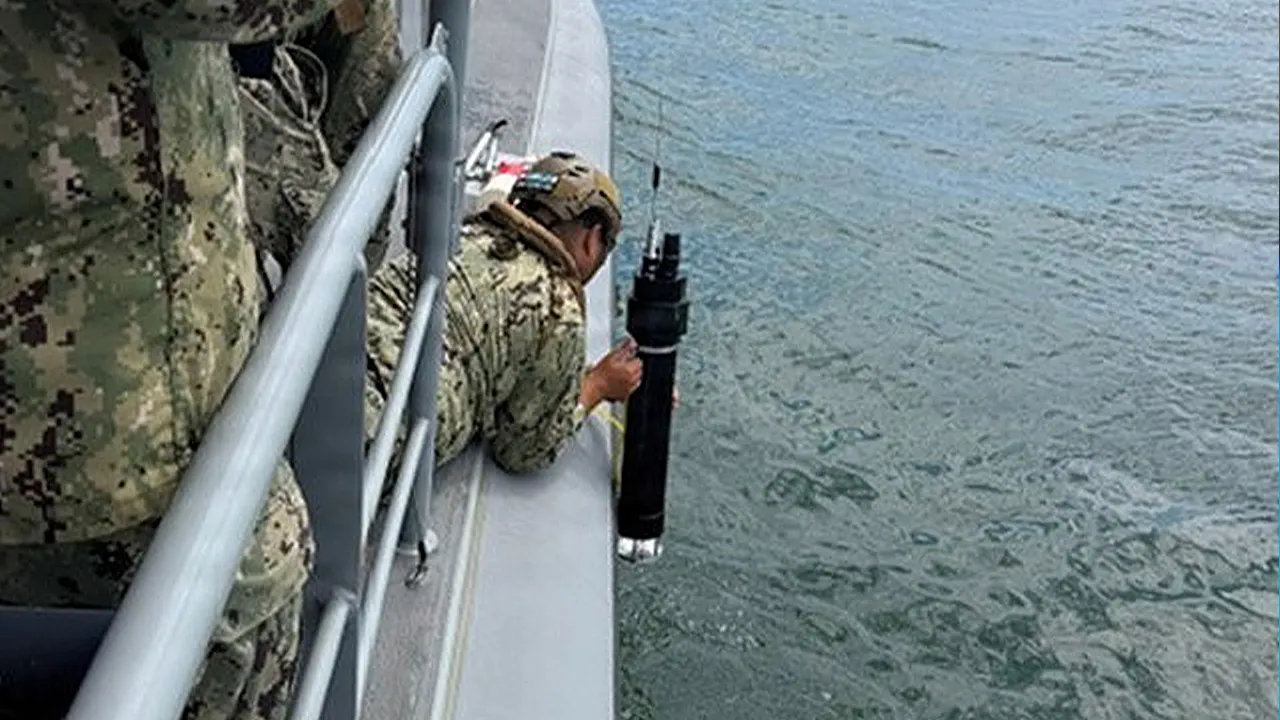
In mid-July 2026, the U.S. Army took a powerful new tool out for its first-ever ocean test. The system—nicknamed "Hammer of the Gods"—was tested off the West Coast of the United States as part of a big military experiment called Project Convergence Capstone 6 (PC-C6).
Important Point: This was the first time the maritime (sea-based) version of this system was tested in the real world. Land versions have been tried out over the last two years, but now the Army knows it works on ships too.
Think of it like a super-powered radio jammer—but smarter and more focused.
Imagine you’re playing tag in the dark. The enemy has night-vision goggles (GPS). "Hammer of the Gods" turns on a thick fog that only their goggles can’t see through—while your team still has walkie-talkies that work perfectly.
Modern weapons don’t just fly straight—they need GPS to hit exactly where they’re aimed.
If you scramble that signal, the missile gets lost or misses by a lot.
Result: Missed targets, wasted ammo, and safer U.S. troops and ships.
At the same time, the system builds a tough, jam-proof network for U.S. forces.
So even in a "electronic war zone," soldiers can still:
Until now, this tech was mostly tested on land.
This test proved it can be launched, run, and recovered from a ship at sea.
That means the Navy and Marines can use it too—not just the Army.
This wasn’t just an Army show. It was a team effort across multiple branches:
| Branch / Group | Role |
|---|---|
| U.S. Army | Led the system development |
| U.S. Navy | Provided ships and sea expertise |
| U.S. Space Force | Helped with space-based signals & tracking |
| U.S. Space Forces Pacific | Regional space support |
| Naval Base San Diego | Hosted the test |
| Army Space and Missile Defense Command | Technical oversight |
Key Idea: This is joint warfare—Army, Navy, and Space Force working together, sharing data across space, cyber, and traditional battlefields.
Result: Success. The system launched, operated, and was recovered without a hitch.
In wars like Ukraine, we’ve seen how drones, missiles, and artillery all depend on GPS.
Whoever controls the electronic spectrum—signals, satellites, comms—has a huge edge.
| Hurts Enemy | Helps Friends |
|---|---|
| Jams their GPS | Keeps our comms alive |
| Makes missiles miss | Lets us share targeting data |
| Forces them to get closer (dangerous) | Lets us stay hidden longer |
"Hammer of the Gods" fits into the Army’s Project Convergence—a long-term effort to connect every sensor, shooter, and decision-maker across all domains (land, sea, air, space, cyber) at machine speed.
Positioning, Navigation, and Timing—basically, the signals (like GPS) that tell a weapon where it is, where it’s going, and what time it is. Without good PNT, smart weapons get dumb fast.
No. It doesn’t explode or shoot. It’s a non-kinetic tool—it fights with radio waves, not bullets. It "soft kills" enemy accuracy by confusing their guidance systems.
Yes—and they do. That’s why the second half of this system matters: it builds a protected comms network so U.S. troops don’t lose contact even when under heavy electronic attack.
Because future fights—especially in the Pacific—will happen across oceans. Ships and Marines need the same protection as soldiers on land. This test proved the gear survives salt water, waves, and ship movement.
No exact date yet, but successful tests like this move it closer to deployment. The Army will now refine it based on test data, then decide how and where to field it—possibly on Navy ships, Army transport vessels, or forward bases.
Want to hear more? You can now listen to Fox News articles—including this one—using the audio player at the top of the original story.