 11
11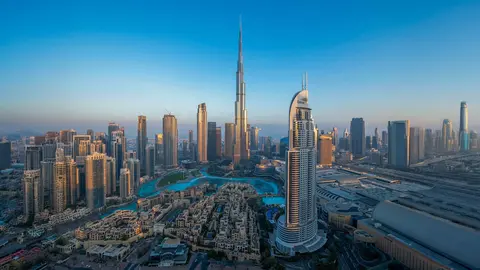
Have you ever wondered who decides which building is really the tallest? It’s not as simple as measuring from the ground to the tip. Let’s break down the fascinating story of how we rank the world’s skyscrapers—and meet the current champions.
Back in 1996, a friendly rivalry heated up between two iconic towers:
| Building | Location | Claim to Fame |
|---|---|---|
| Petronas Towers | Kuala Lumpur, Malaysia | Had decorative spires on top |
| Sears Tower (now Willis Tower) | Chicago, USA | Had antennas on top |
The Petronas Towers had a lower roof, but their spires reached higher. The Sears Tower had a higher roof, but "only" antennas. Who was taller?
Enter the Council on Tall Buildings and Urban Habitat (CTBUH)—a non-profit organization that stepped in to settle the score once and for all.
Important Callout: In October 2025, the CTBUH changed its name to the Council on Vertical Urbanism, but their database (The Skyscraper Centre) remains the industry’s gold standard.
The CTBUH established clear criteria that are still used today. Think of these as the "official rulebook" for skyscraper height.
Spires count, antennas don’t
Measure from the main pedestrian entrance
Before a tower enters the rankings, it must pass all three tests:
Construction sites don’t count—no matter how tall they’ve grown.
| COUNTS Toward Height | DOESN’T Count Toward Height |
|---|---|
| Architectural spires | Antennas & aerials |
| Parapets (low protective walls) | Signage & logos |
| Permanent architectural features | Flagpoles |
| Lightning rods | |
| Window-washing equipment | |
| Any technical apparatus |
Here’s where it gets interesting. Because spires count but antennas don’t, architects started adding extra-tall spires purely to boost rankings.
Callout: What is "Vanity Height"?
The portion of a building that serves no functional purpose—no offices, no apartments, no elevators—existing only to claim a higher spot on the tallest-buildings list.
The Burj Khalifa is the poster child: 244 meters (800+ feet) of its height is pure vanity—that’s almost a third of the entire building!
Rankings as of the latest CTBUH data. Only finished, occupiable buildings included.
The 1,000-meter (1 km) barrier has been architecture’s "Holy Grail" for a century. Two contenders are supposed to break it—but both are stuck in construction limbo:
| Tower | Target Height | Status |
|---|---|---|
| Jeddah Tower (Kingdom Tower) | 1,008 m | Halted 2017 → Resumed 2023 |
| Dubai Creek Tower | ~1,300 m (est.) | Multiple interruptions |
The Burj Khalifa has held the #1 spot since January 2010—over 16 years. That’s the longest reign since the Empire State Building (1931–1970).
| Concept | What You Need to Know |
|---|---|
| Who decides? | Council on Vertical Urbanism (formerly CTBUH) via The Skyscraper Centre |
| How is height measured? | Main entrance → architectural top (spires count, antennas don’t) |
| What qualifies as a "building"? | ≥50% occupiable space + finished structure + cladding + open doors |
| What is vanity height? | Non-functional height added purely for ranking bragging rights |
| Current #1? | Burj Khalifa (828 m) since 2010—longest reign since Empire State Building |
| Next milestone? | The 1 km tower—still a dream awaiting completion |
Simple answer: Spires are permanent architectural choices—part of the building’s design from day one. Antennas are add-ons that can be changed, removed, or upgraded without altering the building’s identity. Think of it like a hat (spire) vs. a headset (antenna).
Because it’s a tower, not a building. The CTBUH requires at least 50% occupiable floor space. The Skytree is essentially a giant broadcast stick with observation decks—it doesn’t have offices, apartments, or hotels filling half its height.
The building with the spire wins. The antenna is invisible to the rankings. This is exactly why the Petronas Towers beat the Sears Tower in 1996—the Sears Tower’s antennas were taller, but didn’t count.
Only if it’s demolished or structurally altered (like removing a spire). Rankings are based on completed, existing buildings. A taller building simply takes the spot above it.
Money, politics, and physics. Supertall towers cost billions, require stable economies, and push engineering to its limits. Both planned "kilometer towers" have faced funding crises and construction pauses. The Burj Khalifa itself was rescued by a royal bailout during the 2008 crash.
Want to explore more? Check out the official database at The Skyscraper Centre—the only industry-recognized source for tall building data.
Article based on CTBUH / Council on Vertical Urbanism ranking criteria and publicly available building data.