 11
11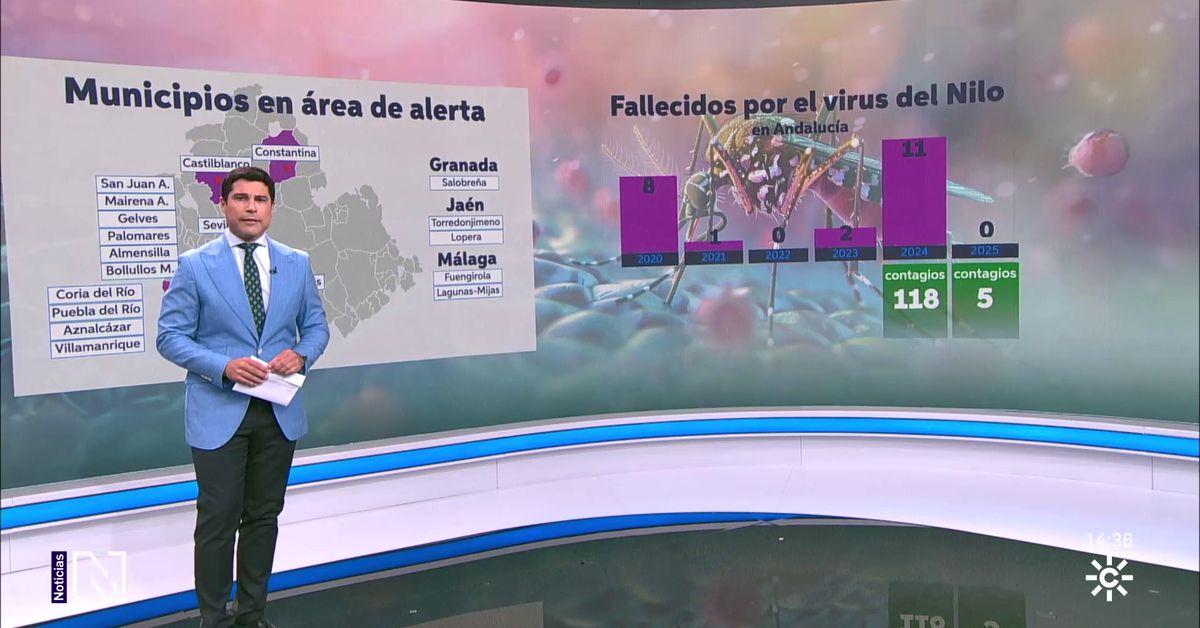
About 20 municipalities in Andalusia are currently on alert due to the spread of the West Nile Virus this year. The virus is transmitted by mosquitoes, and certain areas are seeing much higher activity than others.
The highest concentration of cases is in the province of Seville, specifically in towns around the Guadalquivir River valley. This stretch runs from Constantina in the north down to La Puebla del Río and Coria del Río in the south.
Other Provinces on Alert
While Seville is the main hotspot, health authorities have also identified alert points in:
- Jaén
- Granada
- Málaga
Since 2020, the virus has taken a serious toll in Andalusia:
| Year | Deaths | Infections |
|---|---|---|
| 2020–2023 (combined) | 12 | Data not specified |
| 2024 | 11 | 118 |
| 2025 (so far) | 0 | 5 |
Important Point
2024 was the worst year on record for West Nile fatalities in the region. However, after authorities strengthened preventive measures, the following year saw zero deaths and only five infections — proof that early action works.
This week, the Seville Provincial Council (Diputación de Sevilla) activated a scheduled phase of aerial biocide treatments targeting adult mosquitoes. The goal: control populations that can transmit the virus.
Key details about the operation:
The operation coincides with the peak mosquito activity season. Enhanced monitoring has allowed authorities to:
Authorities emphasize that public cooperation is essential. Mosquitoes breed in standing water — even small amounts in private yards.
Experts recommend these simple, effective habits — especially during dawn and dusk, when mosquitoes are most active:
Self-Protection Checklist
- Use insect repellent on exposed skin (follow label instructions).
- Wear light-colored, long-sleeved shirts and long pants — even in summer heat.
- Avoid strong perfumes, scented lotions, or soaps when outdoors — they attract mosquitoes.
- Install or repair window/door screens to keep mosquitoes out of your home.
- Use mosquito nets over beds or baby strollers if needed.
The Doñana Biological Station (Estación Biológica de Doñana) is studying two critical questions:
Key Takeaway from Scientists
While research continues, prevention remains the single most effective tool against West Nile Virus. Community action + personal protection + targeted public health measures = the best defense.
It’s a disease spread by infected mosquitoes. Most people (80%) have no symptoms. About 20% get fever, headache, body aches. Less than 1% develop serious neurological illness (encephalitis, meningitis), which can be fatal — especially in older adults or those with weakened immune systems.
No. It does not spread person-to-person through casual contact. Only via mosquito bites (or rarely, blood transfusion/organ transplant).
Rice paddies are ideal mosquito nurseries — warm, shallow, stagnant water. High mosquito density there increases the risk of virus transmission to nearby towns.
Yes. The ultra-low volume (ULV) method uses very small doses of approved biocides, applied at night when fewer people are outdoors. It’s designed for rapid breakdown and low environmental impact. Still, it’s wise to stay indoors during spraying and keep windows closed.
See a doctor — especially if you have high fever, severe headache, neck stiffness, confusion, or muscle weakness after a mosquito bite in an alert area. Early medical care improves outcomes.