Wildfire Smoke and Heat Wave Hit the Pacific Northwest: What You Need to Know
Where the Fires Are Burning Right Now
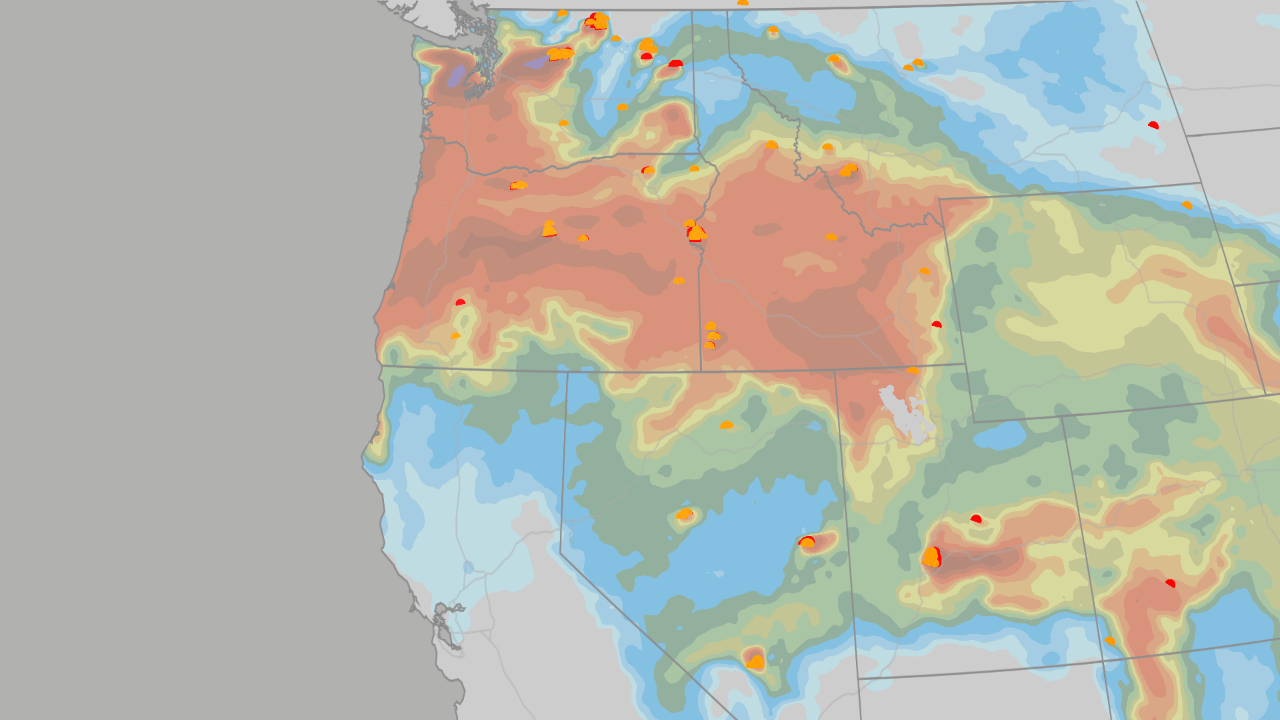
Imagine a giant campfire that got way out of control—that’s what’s happening across the Northwest right now. Here’s the situation:
- Most fires are burning in the eastern two-thirds of Oregon and Washington (the dry side of the mountains)
- Near Spokane, Washington: Three big fires have already destroyed hundreds of homes and businesses
- Central and eastern Oregon: 30 large fires are burning right now
- Other states with large fires: Idaho, Montana, and Utah
Important: This isn’t just a few small fires—this is a "rash of wildfires" meaning many large fires burning at the same time.
Where the Smoke Is Headed (And When It Might Clear)
Think of smoke like water—it flows wherever the wind pushes it. Here’s the forecast:
Through Wednesday: Smoke Comes West
- Offshore winds (blowing from east to northeast) are pushing smoke toward the coast
- Affected areas:
- Washington: Seattle, Tacoma, Olympia (the whole I-5 corridor)
- Oregon: Portland, Salem, Corvallis, Eugene (the Willamette Valley)
- Also smoky: Boise, Idaho and possibly as far south as Salt Lake City, Utah
Thursday: Winds Shift, Smoke Moves East
- Normal west-to-east winds return
- Smoke layer thins out over western cities
- Smoke spills across the Rocky Mountains toward Yellowstone and Aspen
Heads Up: If you were planning a trip to Yellowstone or Aspen late this week, you might want to reconsider—it’s going to be smoky there too!
It’s Not Just Smoke—It’s Really Hot Too!
The same weather pattern bringing smoke is also bringing record heat:
| City |
Expected Highs |
Could Break Records? |
| Seattle |
Near 90°F |
Yes |
| Portland |
Upper 90s°F |
Yes |
| Eugene/Medford, OR |
Over 100°F |
Yes |
Silver lining: Thick smoke might block some sun and knock a few degrees off the highs—but don’t count on it!
When Will We Get Relief?
Good news and bad news:
Good News (This Weekend)
- Temperatures will gradually cool down across the Northwest
Mixed News (Next Week)
- Monsoon thunderstorms may reach the northern Rockies
- Rain is desperately needed for firefighting
- BUT: Rain on freshly burned ground = dangerous flash floods and mudslides
- Some storms might bring only lightning and wind (which could start new fires) without rain
Why Wildfire Smoke Is Dangerous (ELI5 Version)
Imagine breathing in tiny invisible splinters—that’s basically what wildfire smoke does to your lungs.
What’s in the smoke?
- Microscopic particles (called PM2.5) — 30 times smaller than a human hair!
- These particles go deep into your lungs → enter your bloodstream → travel through your whole body
Short-term effects (feel like a bad cold):
- Coughing
- Shortness of breath
- Scratchy throat
- Runny nose
- Burning eyes
Long-term risks (with prolonged exposure):
- Chronic lung problems
- Increased inflammation → higher risk of heart attacks and strokes
Most at risk: People with asthma/COPD, heart conditions, elderly, children, and pregnant people
How to Check Your Air Quality (Step-by-Step)
On The Weather Channel App:
- Open your local forecast
- Tap the "Breathing" button
On weather.com:
- Go to your local forecast page
- Click "Air Quality" at the top
Understanding the Color Code:
| Color |
Level |
What to Do |
| Green |
Good |
Enjoy the outdoors! |
| Yellow |
Moderate |
Sensitive people: take it easy |
| Orange |
Unhealthy for Sensitive Groups |
Sensitive people: limit outdoor time |
| Red |
Unhealthy |
Everyone: limit outdoor time |
| Purple |
Very Unhealthy |
Everyone: avoid outdoors |
| Maroon |
Hazardous |
Everyone: stay inside! |
Your Safety Checklist: What to Do Right Now
If Air Quality is ORANGE (Code Orange):
- Sensitive groups: Stay inside as much as possible
- Keep windows/doors closed
- Run AC on "recirculate" if you have it
If Air Quality is RED, PURPLE, or MAROON:
- Everyone should limit time outdoors
- Exercise indoors (no outdoor runs, bike rides, etc.)
- Walk pets quickly—just long enough for business, then back inside
- Use an air purifier if you have one (or make a DIY one for $65)
- Wear an N95 mask if you must go outside (cloth masks don’t filter smoke particles!)
Summary
- Many large wildfires burning in eastern Oregon/Washington + other western states
- Smoke blowing west through Wednesday → unhealthy air in Seattle, Portland, and the I-5/Willamette Valley corridor
- Thursday: Winds shift, smoke moves east toward Rockies
- Record heat also likely (90s-100s°F)
- Relief coming: Cooler weekend, possible storms next week (but with flood risks)
- Protect yourself: Check AQI daily, stay inside when air is bad, use N95 masks and air purifiers
FAQ
Q: Why is the smoke coming west when winds usually blow west-to-east?
A: Right now there’s a special weather pattern with "offshore winds" blowing from the east/northeast toward the ocean. This is temporary—normal winds return Thursday.
Q: My air quality app says "Moderate" (Yellow). Is it safe to go for a run?
A: For most healthy people, yes—but listen to your body! If you feel coughing or tightness in your chest, stop. Sensitive groups should still be cautious at Yellow.
Q: Do cloth masks or surgical masks protect against wildfire smoke?
A: No. Smoke particles are too tiny. You need an N95 or KN95 respirator that seals tightly to your face.
Q: My AC doesn’t have a "recirculate" setting. What do I do?
A: Close all windows/doors. If you have a window unit, close the fresh-air vent. Consider a portable air purifier (or the DIY box fan filter linked above).
Q: When will the fires actually be out?
A: Summer is the dry season in the Pacific Northwest—no soaking rains until fall. Firefighters work to contain fires (stop them spreading), but many large fires burn until heavy rain or snow arrives in October/November.
 1
1