 11
11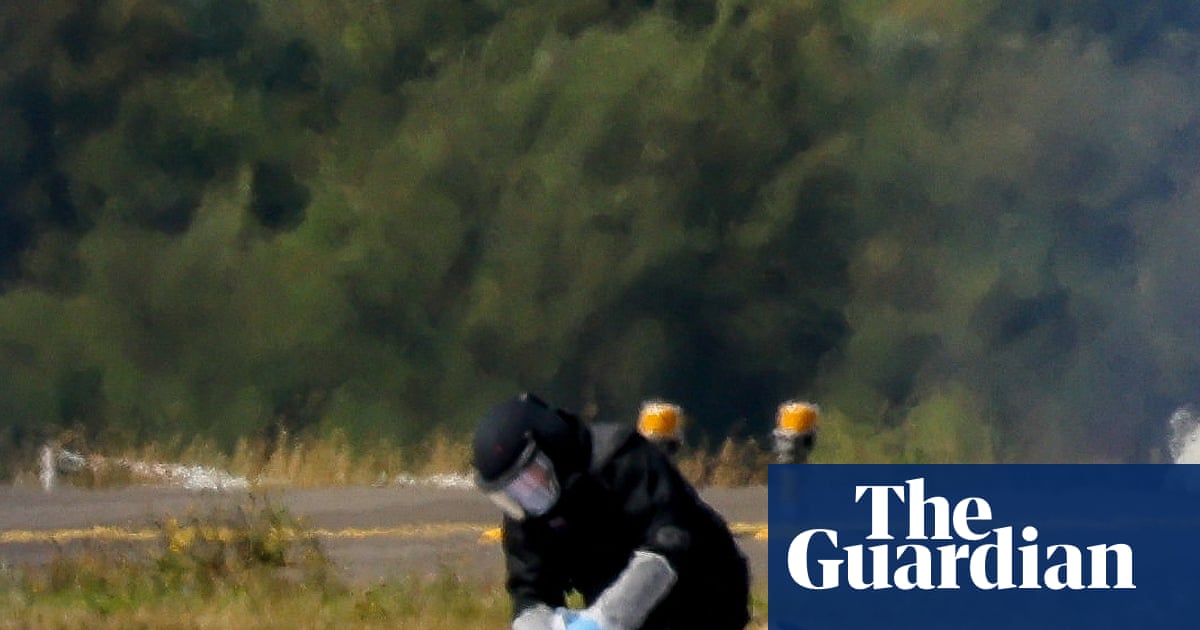
Imagine you’re at a busy international airport. Suddenly, security finds a small flying robot—a drone—sitting on the ground in a highly restricted area where huge cargo planes park. This isn’t a toy. It’s carrying a real bomb.
That’s exactly what happened on a Wednesday in August 2026 at Leipzig Airport in Germany. Here are the key facts:
IMPORTANT POINT
This is the first time a drone carrying explosives has been found in Europe far from the Ukrainian border. Previous incidents happened much closer to the war zone.
German newspapers reported the bomb contained two very dangerous materials:
How much? Local newspaper Leipziger Volkszeitung said police found up to 800 grams (about 1.75 pounds) of explosive material.
Trevor Lawrence, an explosives expert at Cranfield University, explains it simply:
"Aeroplane bodies are ridiculously thin, often only 3mm aluminium."
Translation: Plane skins are about as thick as two credit cards stacked together. Even a relatively small explosion right next to a plane could tear a hole in it, cause a fire, or bring it down.
Here’s a crucial clue: Plastic explosives like Semtex are typically only available to militaries or well-organized terror groups. They’re not something you can buy online or make in a garage. This strongly suggests professional involvement—not some amateur playing around.
Leipzig isn’t just any airport. It’s a strategic hub for several important operations:
| User | What They Do There |
|---|---|
| Ukrainian Antonov Airlines | European base for heavy cargo jets (those yellow-and-blue planes) |
| NATO & German Military | Transport flights and logistics |
| DHL | Major global shipping hub |
| Possible supply route | May be a key node for sending supplies to Kyiv |
This makes it a high-value target for anyone trying to disrupt Western support for Ukraine.
Leipzig has been hit before. Here’s the timeline:
A pan-European investigation uncovered:
This Leipzig incident isn’t isolated. It’s part of a growing pattern of Russian drone operations across Europe:
The International Institute for Strategic Studies (IISS) found Russia ran a concerted drone surveillance campaign targeting:
Charlie Edwards, senior fellow at IISS, puts it bluntly:
"A drone carrying a charge with a detonator that failed is a different proposition to what we have seen before. It is likely, though not yet certain, that this was intended to function rather than to be found."
Translation: This wasn’t a warning shot or a test. It was likely a real attack that only failed because of a technical malfunction.
Russia is already under heavy sanctions for invading Ukraine. The concern? Moscow may believe the West has run out of meaningful punishments. If there’s no new cost for these actions, they may continue—or escalate.
The system has holes. And someone is probing them.
| Key Takeaway | Why It Matters |
|---|---|
| Armed drone found at major European airport | First time far from Ukraine border |
| Real explosives (Semtex + PETN), 800g | Enough to severely damage/destroy a plane |
| Detonator failed—bomb didn’t explode | Pure luck prevented a catastrophe |
| Leipzig is a strategic NATO/Ukraine hub | High-value target for disrupting aid |
| Part of a pattern: previous fire bombs, drone swarms, surveillance | Not isolated—coordinated campaign |
| Suspects linked to Russian intelligence | State-sponsored, not random actors |
| West struggling to detect/stop these drones | Current defenses have significant gaps |
No. The drone was found on the ground by an employee. The bomb didn’t explode because the detonator was faulty. A second object (possibly another drone) hit a DHL cargo plane in the air, but the plane only had minor damage and landed safely.
While no one has officially claimed responsibility, the evidence points strongly to Russia:
Semtex is a plastic explosive—invented in Czechoslovakia, used by militaries and terror groups. It’s moldable like clay, hard to detect, and very powerful. It was used in the 1988 Lockerbie bombing that killed 270 people. Finding it on a drone at an airport is extremely serious.
It’s harder than it sounds. Small drones:
New counter-drone systems are being developed, but it’s an arms race.
Expect:
The situation is developing. Authorities are investigating, and NATO is "aware of the incident." One thing is clear: the rules of security in European airspace are changing—and the West is playing catch-up.