11
11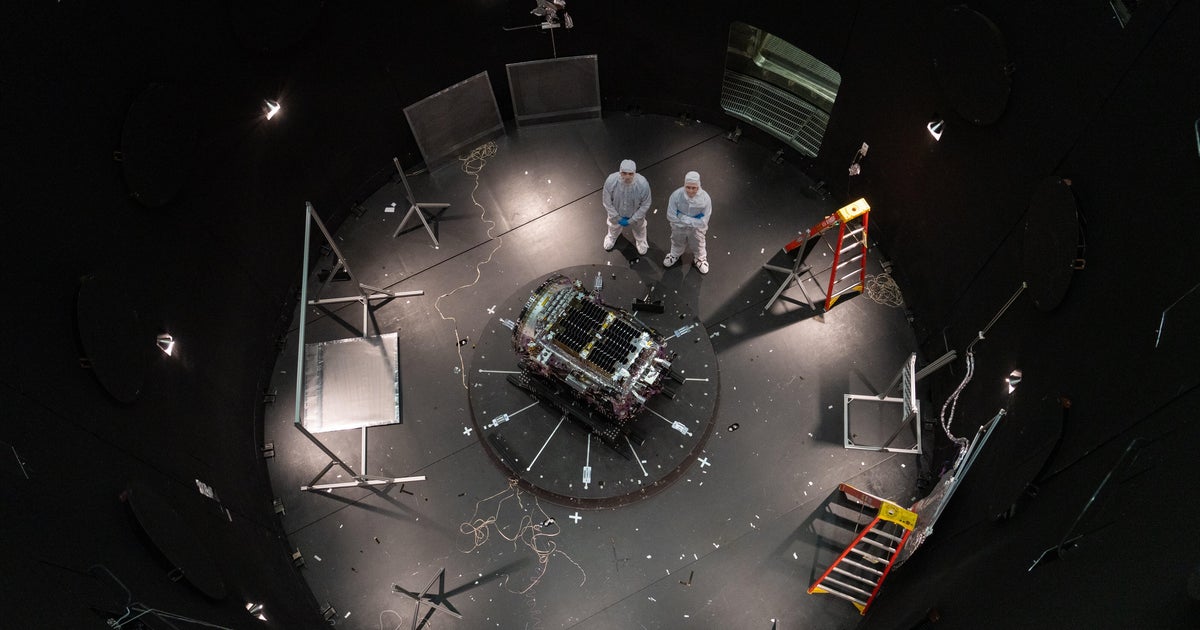
Imagine you have a really expensive toy that’s slowly falling off a shelf. Now imagine that toy is a telescope worth hundreds of millions of dollars, floating in space, and the "shelf" is actually the Earth’s atmosphere pulling it down faster and faster. That’s exactly what’s happening right now, and NASA has come up with a wild plan to save it.
NASA is spending $30 million on a daring rescue mission. They’ve hired a small space startup called Katalyst Space Technologies to send up a robotic spacecraft that will chase down a falling telescope called the Swift Observatory, grab it, and push it higher into space where it can keep working.
The launch could happen as early as this Tuesday, taking off from a tiny island in the Pacific Ocean called the Marshall Islands, riding on a special rocket called a Pegasus that launches from underneath an airplane. Yes, you read that right — a rocket that drops from a plane!
The Swift Observatory (also called the Swift Gamma-Ray Burst Mission) is a space telescope that has been orbiting Earth since 2004 — that’s over 20 years! Its job is to scan the sky for some of the most powerful explosions in the universe, called gamma-ray bursts. These are like cosmic fireworks — incredibly bright flashes of energy that happen when massive stars explode or when incredibly dense objects crash into each other.
Think of Swift as NASA’s first responder. When something dramatic happens in space, Swift is one of the first to spot it and alert other telescopes to take a look.
Here’s the problem: the Sun has been acting up lately.
The Sun goes through cycles of activity, and right now it’s going through a particularly intense phase. All those solar flares and eruptions (giant bursts of energy and particles from the Sun) are actually pushing against Earth’s upper atmosphere, making it expand a little bit. When the atmosphere expands, it reaches higher into space, and that creates drag on satellites and telescopes orbiting close to Earth — kind of like how wind pushes against your hand when you stick it out of a moving car.
This drag is slowly pulling Swift downward, and it’s been speeding up. Every day, Swift sinks a little lower. If nothing is done, it will eventually fall too low and burn up in Earth’s atmosphere — like a shooting star, except this one is a priceless telescope.
Important Point: Swift is currently orbiting at about 224 miles above Earth. It needs to be pushed up to about 373 miles to be safe. If it drops below 185 miles, it will reach a "point of no return" — meaning it will be impossible to save. Scientists estimate that point of no return hits around October.
This is where things get really cool. Katalyst has built a small, autonomous (self-driving) spacecraft called Lift. Here’s the plan, step by step:
Important Point: Swift was never designed to be repaired or grabbed by anyone — human or robot. That’s what makes this mission so incredibly difficult. There is no guarantee it will work.
NASA isn’t just sitting around waiting. They’ve already taken one important step: they turned off all of Swift’s scientific instruments back in February. This reduces the telescope’s energy use and, more importantly, slows down its descent — giving the rescue team more time to get Lift ready and launched.
Swift’s science observations have been paused since February, which means it’s not doing its main job right now. But that’s a calculated sacrifice — better to pause the science and save the telescope than to keep it running and lose it forever.
You might be wondering: why spend $30 million to save an old telescope? Why not just build a new one?
The answer is simple: NASA doesn’t have the budget to replace Swift.
"If we let Swift reenter, we would lose that telescope. We would lose a lot of capability. We don’t currently have the budget to build another one to replace that."
— Nicky Fox, NASA’s Science Mission Chief
Swift is special because of how fast it can move. True to its name, Swift is designed to pivot and point at sudden cosmic events in seconds. With new telescopes like the James Webb Space Telescope and the upcoming Roman Space Telescope expected to discover more and more of these events, Swift would actually be busier than ever if saved. It would continue serving as NASA’s rapid-response scout in the sky.
Sort of — but only once, and only by China.
Four years ago, China successfully boosted one of its satellites into a higher "graveyard orbit" (a disposal orbit where old satellites are moved so they don’t cause problems). But what NASA and Katalyst are attempting is completely different and much harder: they’re trying to rescue and extend the life of a working telescope that was never meant to be touched.
"This is the first American space robot to go up and do anything like this."
— Ghonhee Lee, CEO of Katalyst Space Technologies
You’ve probably heard of the Hubble Space Telescope — one of the most famous and beloved telescopes in history. Well, Hubble has the same problem as Swift. It’s also losing altitude because of increased solar activity.
But Hubble is much bigger and heavier than Swift, so saving it will require a more advanced robot. Katalyst says its next-generation robotic rescuer — still in development — could potentially give Hubble a life-extending boost around 2028.
"It’s a national treasure. People love Hubble."
— Nicky Fox, NASA’s Science Mission Chief
Hubble is about 36 years old and was famously serviced multiple times by astronauts during the Space Shuttle era. But the shuttle program ended years ago, so a robotic rescue might be the only option going forward.
This mission about much more than just saving one telescope. Katalyst sees Swift as the first step toward a whole new industry in space: satellite servicing.
Think of it like this: right now, when a satellite runs out of fuel or breaks down, it’s basically trash. It either falls back to Earth or becomes space junk. But what if we could send up robots to fix, refuel, and reposition satellites — the way mechanics fix cars here on Earth?
That’s exactly what Katalyst wants to build. Their vision includes:
"NASA has all these big senior observatories … all of them can benefit from a service like this. So what we’re proving with this mission is this is a new play in the playbook that’s available."
— Ghonhee Lee, CEO of Katalyst Space Technologies
Katalyst’s next-generation robot, scheduled to fly next year, will be able to reach satellites as high as 22,300 miles up — opening up the possibility of servicing satellites in much higher orbits, including communication satellites that TV and internet companies rely on.
Even the people involved are a little amazed that this is actually happening.
"I have to be honest. No one thought it was going to be possible. No one thought we would get as far as we’ve already gotten today."
— Shawn Domagal-Goldman, NASA’s Astrophysics Director
NASA signed the contract with Katalyst in September 2025 with just two instructions: hurry up, but please don’t make things worse. Just nine months later, the mission is ready to launch — an incredibly fast timeline for a space mission.
Here’s the key takeaway from everything above:
If Lift fails to grab or boost Swift, the telescope will continue to fall and eventually burn up in Earth’s atmosphere — likely around October or shortly after. NASA would lose a unique and irreplaceable scientific instrument, since there isn’t enough funding to build a replacement.
The Space Shuttle program, which carried astronauts to service Hubble, ended in 2011. There is currently no spacecraft capable of carrying astronauts to Swift’s orbit for a repair mission. That’s why a robotic solution is the only realistic option right now.
The mission costs $30 million, which is being paid by NASA. While that sounds like a lot, it’s a fraction of what Swift is worth (hundreds of millions of dollars) and far less than it would cost to build a replacement telescope.
Gamma-ray bursts are the most energetic explosions in the universe — often caused by massive stars collapsing or ultra-dense objects like neutron stars colliding. They can release more energy in a few seconds than our Sun will produce in its entire lifetime. Swift is specially designed to detect these bursts quickly and point at them so other telescopes can study them too.
Potentially, yes! The same robotic arms and rendezvous technology used to grab Swift could be adapted to capture and deorbit dangerous space debris — old satellites and rocket parts that are cluttering up Earth orbit and posing collision risks. Katalyst’s long-term vision includes robots that can service, refuel, and even remove objects from orbit.