 11
11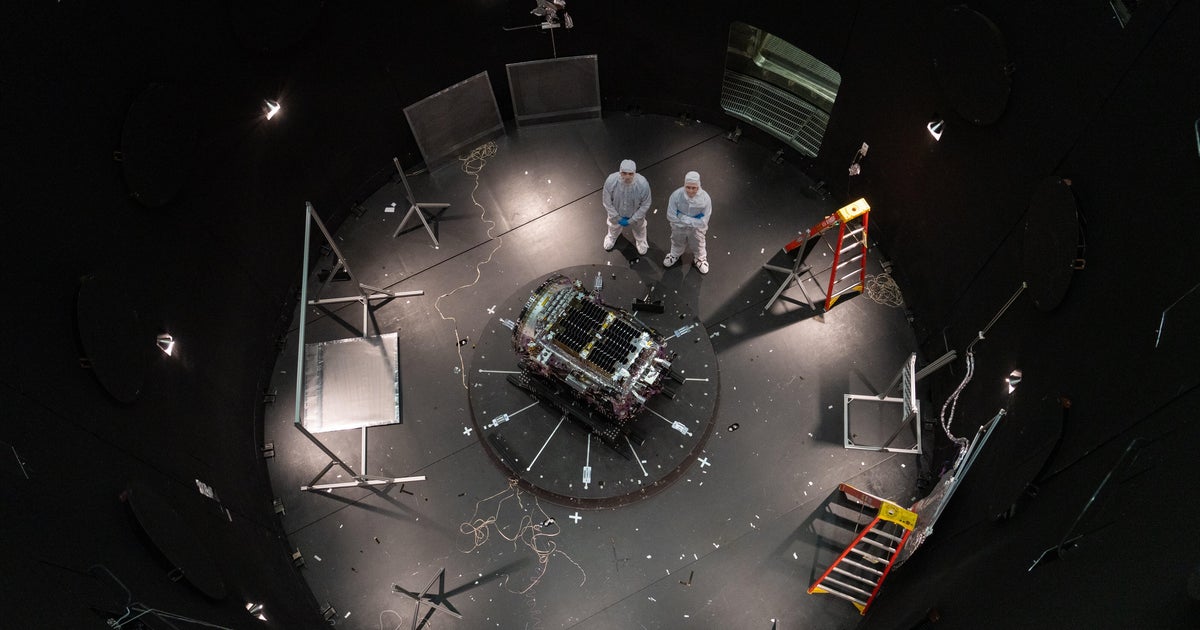
Imagine you have a really expensive toy that’s slowly falling off a shelf. Now imagine that toy is a telescope worth hundreds of millions of dollars, floating in space, and the shelf is Earth’s atmosphere pulling it down. That’s basically what’s happening right now, and NASA is scrambling to do something about it.
NASA is spending $30 million on a daring rescue mission to save an aging space telescope called the Swift Observatory before it falls back to Earth. They’ve hired a small space startup called Katalyst Space Technologies to pull it off — and the mission could launch as early as this week.
The Swift Observatory is a special telescope that has been floating in space since 2004 — that’s over 20 years! Its job is to scan the universe for some of the biggest, most dramatic explosions out there, like:
Think of Swift as NASA’s "first responder" in space. When something explodes out there, Swift is the first one to swing into action and take a look.
Here’s the problem: the Sun has been acting up lately.
The Sun goes through cycles of activity, and right now it’s going through a particularly intense phase. All those solar flares and eruptions cause Earth’s upper atmosphere to puff up a little bit, which creates more drag on satellites flying low overhead.
Think of it like this: Imagine you’re riding a bicycle through a swimming pool. The water slows you down, right? That’s what the puffed-up atmosphere is doing to Swift — it’s slowing the telescope down, and as it slows, it sinks lower and lower toward Earth.
Swift has been sinking faster and faster, and if nothing is done, it will fall into Earth’s atmosphere and burn up. Scientists estimate Swift will reach the "point of no return" — about 185 miles above Earth — by October.
To survive, Swift needs to be boosted up to a higher, more stable orbit at about 373 miles above Earth.
NASA’s plan is pretty wild. They’re sending up a robotic spacecraft to chase Swift through space, grab it, and physically push it to a higher orbit. Here’s how it works:
Katalyst built an autonomous (self-flying) spacecraft called Lift. Here’s what it looks like:
Important Point: Swift was never designed to be repaired or grabbed by a robot. It wasn’t built with handles or docking ports. That’s what makes this mission so incredibly difficult — and so impressive if it works.
You might be wondering: why go through all this trouble? Why not just build a new telescope?
The answer is simple: money and time.
NASA’s science mission chief, Nicky Fox, put it bluntly:
"If we let Swift reenter, we would lose that telescope. We would lose a lot of capability. We don’t currently have the budget to build another one to replace that."
Swift is worth hundreds of millions of dollars, and building a replacement would take years and cost even more. So saving the one we have makes a lot more sense.
You’ve probably heard of the Hubble Space Telescope — it’s one of the most famous telescopes ever built. Well, guess what? Hubble is in the same trouble as Swift.
The Sun’s activity is dragging Hubble down too. But Hubble is much bigger and heavier than Swift, so it will take a more advanced robot to save it.
Katalyst’s CEO, Ghonhee Lee, says his company is already working on a next-generation robotic rescuer that could give Hubble a boost by 2028.
Fun Fact: Hubble is 36 years old! It was last serviced by astronauts during the Space Shuttle era, when brave spacewalking astronauts physically went up and fixed it. This time, robots would have to do the job.
This isn’t just about saving one telescope. If this mission works, it opens up a whole new chapter in space exploration.
Katalyst sees this as the beginning of a space repair and servicing industry. Here’s what the future could look like:
Ghonhee Lee, CEO of Katalyst, said: "This is the first American space robot to go up and do anything like this. NASA has all these big senior observatories … all of them can benefit from a service like this. So what we’re proving with this mission is this is a new play in the playbook that’s available."
Only once — and by China. Four years ago, China successfully boosted a satellite into a higher "graveyard orbit" (a faraway orbit where old satellites are parked). If the U.S. pulls this off, it will be the first time an American robot has grabbed and moved a satellite in orbit.
While waiting for Lift to launch, NASA has already taken one important step:
NASA signed the contract with Katalyst in September 2025 with just two instructions:
Nine months later, Katalyst is ready to go.
Important Point: NASA’s astrophysics director, Shawn Domagal-Goldman, admitted: "I have to be honest. No one thought it was going to be possible. No one thought we would get as far as we’ve already gotten today."
Even after 20+ years, Swift is still incredibly important. Here’s why:
As NASA’s Domagal-Goldman put it: "While everything cannot be saved in space, Swift is special."
Here’s the quick version of everything you just read:
If Lift can’t catch Swift or something goes wrong, Swift will continue to sink and eventually burn up in Earth’s atmosphere around October. NASA would lose a critical telescope with no immediate replacement.
The Space Shuttle program, which carried astronauts to Hubble, ended in 2011. There’s currently no spacecraft capable of carrying astronauts to Swift’s orbit for a repair mission. That’s why NASA is turning to robots instead.
The mission costs $30 million. That sounds like a lot, but it’s a fraction of what Swift is worth (hundreds of millions) and far less than building a replacement telescope.
Absolutely! That’s the whole point. Katalyst envisions a future where hundreds of repair robots orbit Earth, fixing, refueling, and repositioning satellites. This mission is the first step toward making that a reality.
The launch could happen as early as this week (the week of the article’s publication), from the Marshall Islands in the Pacific Ocean, using an airplane-launched Pegasus rocket.

