What’s Happening with Caitlin Clark and the Government? A Super Simple Explainer
Sometimes big news can feel like a confusing grown‑up movie. Let’s break down a recent story about sports, politics, and a famous basketball player named Caitlin Clark in a way that’s easy for anyone to understand.
What Recently Happened? (The Events Step‑by‑Step)
Here are the main things that took place, in order:
- The White House released a 162‑page report. The White House is the main office of the U.S. president. The report said a famous history museum group (the Smithsonian) was doing “anti‑White activism” – meaning they claimed the museum was being unfair to white people on purpose. It also said the museum exhibits were made by “people who don’t want you to love your country.”
- Republican lawmakers sent a warning about basketball. Two days later, about a dozen Republican politicians led by a man named August Pfluger told the WNBA (the Women’s National Basketball Association, where professional women play basketball) that unless the league “protects” Caitlin Clark from rough play by Black players, they would ask the Department of Justice (the big government law‑enforcement group, or DOJ) to step in. Pfluger hinted that hard fouls against Clark “may be racially motivated” (done because of her skin color) and said a civil rights lawsuit (a court case about fair treatment) on her behalf could happen.
- This was the third time in a month the government mixed into sports. Earlier in June, the DOJ said it would investigate whether Major League Baseball’s “Pride Night” (a fun event celebrating LGBTQ+ people) discriminated against Christian players. Then, just last week, President Trump called the head of FIFA (the world soccer group) to undo a one‑game suspension of a Black U.S. soccer player named Folarin Balogun before an important loss to Belgium.
Important: All these actions show the government putting the DOJ on alert against anything they call “anti‑white, anti‑straight, anti‑Christian.” They are using sports as a stage in a “culture war” – a fight over beliefs and identity, not with weapons.
Who Is Caitlin Clark and Why Is She Special?
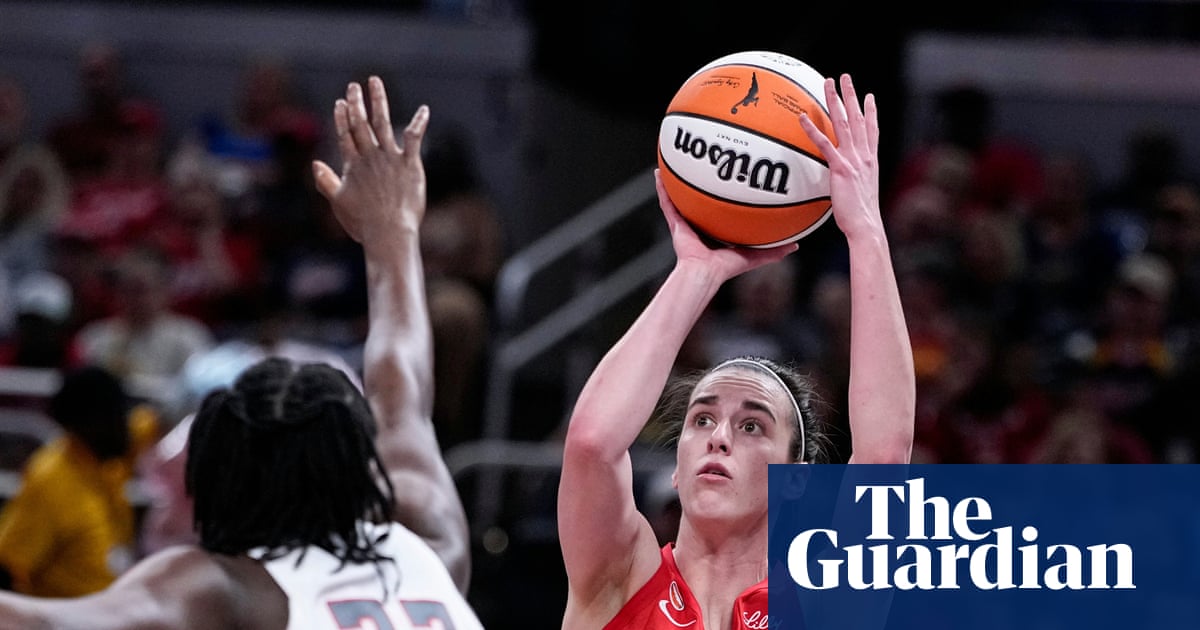
- Caitlin Clark is a tough, skilled guard (a player who handles the ball a lot) for the Indiana Fever, a team in the WNBA.
- She plays a style similar to Stephen Curry, a famous male player who shoots from very far away. Because of her, women’s basketball (which is usually played more on the ground, not with high jumps like the men’s game) now looks familiar and professional to many new fans, especially men who used to mock it as a “high‑school gym” game.
- Her success opened new doors to big money that female athletes rarely saw before.
- But the WNBA has its own culture: many players are Black and/or LGBTQ+, with a strong community feeling. Clark is white and straight, so some people see her as different.
For five years, Clark has been a superstar. Lately she talks about how mean social media can be, but she has carefully avoided saying whether she agrees with the racist parts of her fan base that loudly claim her as “their” player.
Callout: The government now says she needs federal protection from Black opponents. This forces her to either speak up clearly about being used as a target, or stay quiet.
How Is Clark Being Used Like a Pawn?
A “pawn” is a game piece pushed around by others. Clark is being used by several groups:
- Racist fans: Some people like her only because she is white, and they use her to support their unfair hate of Black people.
- People who dislike women (misogynists): This includes some couch potatoes and even Black male NBA players who never liked women’s sports or Black women. They pretend to cheer Clark while putting those women down.
- Wealth‑focused “classists”: They see Clark as a “gentrifier” (someone who moves in and changes a neighborhood) who can erase the league’s queer culture and make women’s sports profitable by absorbing it into the usual white, straight, male sports‑talk shows that never respected it.
- The government: As described, they made her a symbol that a lone white woman needs saving from Black players.
Key Point: Clark never asked for this. But the Republican party and Trump’s DOJ decided she is a valuable asset – or a pawn – in their bigger fight.
A Look at History: Larry Bird and Other Symbols
This isn’t the first time a white athlete became a symbol.
- Larry Bird played in Indiana (like Clark) and later Boston in the 1980s. He once said, “I just wanted to prove that a white boy who couldn’t run and couldn’t jump could play in this league,” not realizing other white stars (Jerry Lucas, Bob Pettit, Dave DeBusschere, Dave Cowens) had already proven it. Boston was still angry from school race fights, and the NBA was seen as “too Black” to be profitable. Bird became a “Great White Hope” – a symbol that Black people were ruining the country.
- Bird didn’t fall for the racial trap. He focused on basketball, helped teammates of all races, and rejected the “white savior” label – even after rivals Dennis Rodman and Isiah Thomas said in 1987 that if Bird were Black he’d be “just another player.” He stayed respected by Black players.
- Other athletes like Colin Kaepernick, Michael Jordan, Billie Jean King, and O.J. Simpson were also born into times where they became symbols without asking. Clark is now the most recognizable and dividing star in a very split country.
Why the League’s Political Voice Went Quiet
The WNBA used to speak out. In 2020, players like Maya Moore, Sue Bird, and Renee Montgomery wore T‑shirts and acted as citizen‑athletes. The Atlanta Dream team helped elect Raphael Warnock to the Senate in 2021. But four years later – even with a Black woman running for president – the league went silent. Now the DOJ thinks it must protect Clark from something as normal as a moving screen (a legal block in basketball).
What Could Clark Do Now?
She has a few paths:
- Stay silent – people may think she agrees with the government’s use of her.
- Speak against the government – she could earn respect from fellow players but anger some fans and the president.
- Follow Larry Bird’s example – just play hard, build up teammates, and reject the unfair “white savior” story.
Important: Today’s culture demands you pick a side; silence is seen as agreement. Clark’s biggest risk is losing her right to keep politics private, thanks to a government that either wrongly thinks it helps her or wants to sacrifice her to further divide the country through sports – something that used to unite people.
Summary
In short, the U.S. government and some politicians have stepped into sports claiming white, straight, Christian people need protection. They targeted a museum, baseball, soccer, and now WNBA star Caitlin Clark. Clark is a great player who changed women’s basketball and brought money, but she is now used as a symbol by racist fans, misogynists, profit‑seekers, and a highly partisan government. History shows Larry Bird faced a similar label and avoided it. Clark must decide how to handle the spotlight. The league that was once political is now quiet. The story is about much more than basketball – it’s about fairness, race, gender, and unity.
This article is based on the writing of Howard Bryant, author of 11 books including The Heritage and Kings and Pawns.
FAQ
1. What is the WNBA?
It’s the Women’s National Basketball Association, the main league where professional women play basketball in the United States.
2. Why do some lawmakers think fouls against Clark are “racially motivated”?
They hinted that Black players are being extra rough on her simply because she is white, but they offered no proof – they just suggested it to threaten the league.
3. What does “avatar” mean in this story?
An avatar is like a mask or character that people project their own beliefs onto. Clark is an avatar because others pour their feelings about race, class, and gender onto her without her choosing it.
4. How did Stephen Curry and Clark change the women’s game?
Curry showed that shooting from far away (a “horizontal” style) could win in men’s basketball. Clark did the same in women’s ball, making it look pro and easy to watch for fans who used to ignore it.
5. What can we learn from Larry Bird’s story?
Even when fans wanted to make him a racial symbol, he just played basketball, supported teammates, and didn’t encourage hate – showing a player can reject being a pawn.
 1
1