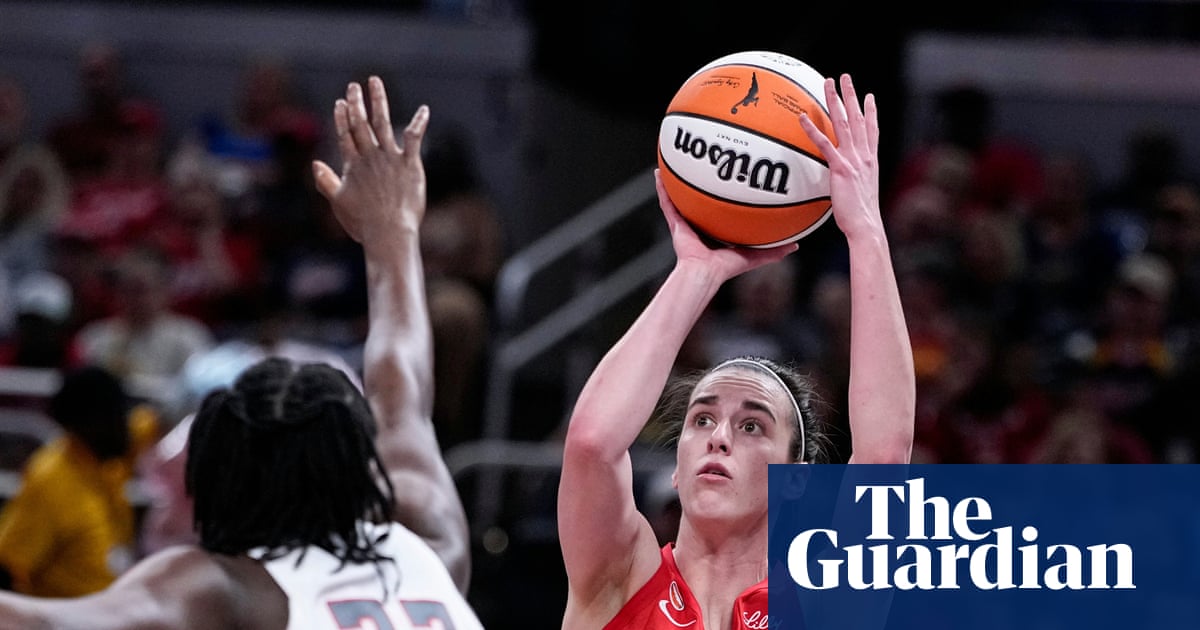
Caitlin Clark Didn’t Ask—Trump’s Allies Made Her a Political Symbol
Why Is the Government Getting Involved in Basketball? A Simple Story About Caitlin Clark
What Is the Big Picture?
Imagine a big argument between groups of people about race, religion, and who should have rights. Some leaders in the United States government think that white people are losing their rights and need special protection. They are using museums and sports leagues as places to fight this argument.
Important: The article says the White House believes "the rights of white people are in peril and require government protection." This means they think white people are being treated unfairly and need the government to step in.
Recent Events: A Simple Timeline
Here are the things that happened, step by step:
- White House Report: The White House released a 162‑page paper. It said the National Museum of American History (a big museum that teaches US history) was doing "anti‑White activism" (working against white people). It also said the museum’s exhibits were made by "people who don’t want you to love your country."
- Letter About the WNBA: Two days later, about a dozen Republican lawmakers (people who help make the country’s laws) led by a man named August Pfluger sent a warning. They threatened to ask the Department of Justice (DOJ – the big team of law enforcers) to go after the WNBA (a league where women play professional basketball). They said the WNBA wasn’t protecting a player named Caitlin Clark from rough play by Black players. They hinted that hard fouls (pushy or rough moves) against Clark "may be racially motivated" (done because of her skin color). They even said they might file a civil rights lawsuit (a legal complaint saying someone’s fair‑treatment rights were broken) against the WNBA on Clark’s behalf.
- Pattern of Interference: This was the third time in less than a month that the Trump administration (the people running the country) stuck its nose into sports. Twice they used sports as a front in their "culture war" (a fight over beliefs and values). They told the DOJ to be on the lookout for anything they consider anti‑white, anti‑straight, or anti‑Christian.
- Earlier in June: The DOJ said it would investigate whether Major League Baseball’s "Pride Night" (a special event celebrating LGBTQ+ people) was unfair to Christian players.
- Trump and Soccer: Last week, the president called the head of FIFA (the big boss of world soccer) to undo a one‑game suspension (a temporary "you can’t play" penalty) for a US soccer player named Folarin Balogun right before an important game the US lost to Belgium.
Who Is Caitlin Clark?
Caitlin Clark is a tough, skilled guard (a position in basketball) who plays for the Indiana Fever in the WNBA. On the court, she gives as much rough play as she gets. She may just want to play basketball, but the government is pulling her into a bigger fight.
For five years, she has been a national superstar. She has kept her own political opinions vague and avoided directly separating herself from fans who are anti‑Black (who dislike Black people) but loudly claim her as their favorite because she is white.
Now the government says she needs federal protection from her Black opponents. This pushes her to finally speak clearly about being used as a target.
Callout: Time is running out for Clark to stay quiet. The government putting her in this spotlight forces her to either say what she believes or let others define her.
How She Changed Women’s Basketball
Long ago, people thought men’s basketball was exciting because players jump high (an "aerial" game, often with Black athletes leaping). Women’s basketball was more ground‑based (a "horizontal" game) and was made fun of for not being above the rim.
Then a man named Stephen Curry showed that shooting from far away could be amazing. Clark copied that style in the women’s game. Suddenly, new viewers – especially men who used to ignore women’s basketball – thought it looked professional and fun. She opened the door to new money.
But this caused tension: college basketball with Clark felt like a "straight, white woman with a ponytail" league, while the WNBA is mostly Black and queer (LGBTQ+) with its own strong culture.
The WNBA’s Quieted Voice
Before Clark, in 2020, WNBA players like Maya Moore, Sue Bird, and Renee Montgomery spoke up about political issues. The Atlanta Dream team even helped Raphael Warnock get elected to the US Senate in 2021. But now, with Clark and bigger revenues, the league went silent. Even when a Black woman ran for president, the activist league said nothing. Today the DOJ is watching the league, acting like the most powerful law enforcement agency in America must protect one white woman from a normal basketball move (a moving screen).
Who Is Using Caitlin Clark?
The article says Clark is being used like a tool by many groups:
- Racist fans: Some fans need her whiteness to reinforce their racism (they use her to say bad things about Black people).
- Misogynists: People who never liked women’s sports or Black women – including "couch potatoes" and even some Black male NBA players – now pretend to support Clark as an excuse to keep putting down others.
- Classists: People who see Clark as a "gentrifier" who can undo the league’s queer culture and make women’s sports profitable by absorbing it into the white, straight, male‑driven sports machine that never respected it.
- The Government: The article calls this the most unapologetic, outwardly racist, sexist, and homophobic government the country has seen in a century. They are now using her as a pawn (a piece in a game).
Important: Whether Clark asked for this attention or not, the Republican party and Trump DOJ have decided she will be a valuable asset – or a pawn.
A Similar Story From the Past: Larry Bird
A long time ago, there was another white basketball star from Indiana named Larry Bird. He once said, "I just wanted to prove that a white boy who couldn’t run and couldn’t jump could play in this league." He didn’t realize that other white players like Jerry Lucas, Bob Pettit, Dave DeBusschere, and Dave Cowens had already proven that. He also didn’t see the racial trap.
Bird started in Boston in 1979, when the city was still angry and violent about school desegregation (making schools include all races). The NBA was thought of as "too Black" to make money. Bird became a "Great White Hope" – a symbol that Black people were ruining the country, much like Clark is seen today.
Clark was born into a similar time, just like Colin Kaepernick, Michael Jordan, Billie Jean King, and OJ Simpson were born into theirs. None of these athletes asked to be symbols, but Clark is now the most recognizable and dividing star in a very split country.
Bird, by mid‑career, did not fall for the racial labels. He focused on basketball, helped teammates of all colors, and rejected the "white savior" story. Even after the 1987 NBA playoffs when Dennis Rodman and Isiah Thomas said if Bird were Black he’d be "just another player," Bird didn’t encourage that talk. He stayed respected by the Black basketball community.
Clark is in a harder spot because today’s culture demands you pick a side. Silence is seen as agreement. If she speaks against the government, she may earn peers’ respect but anger the president and some fans. Her greatest risk is losing her right to keep her politics private, thanks to a blundering government that either wrongly thinks it’s helping her or is happy to sacrifice her to divide the country through sports.
Summary
The government and some lawmakers believe white people need protection and are using sports and museums to fight a cultural battle. Caitlin Clark, a brilliant basketball player, has become a symbol for arguments about race, money, and gender. She didn’t ask for this, but history shows another star, Larry Bird, avoided the trap by focusing on the game and teamwork. Clark now faces a choice that could shape her legacy and the future of women’s basketball.
This article is based on the writing of Howard Bryant, author of 11 books including The Heritage and Kings and Pawns.
FAQ
Q1: What is the WNBA?
A: The WNBA is a professional basketball league for women, similar to the NBA but with female players.
Q2: Why does the government say Caitlin Clark needs protection?
A: Some Republican lawmakers claimed that rough fouls by Black players against Clark might be because of her race, and they threatened to send the DOJ after the league if it doesn’t make itself "accountable."
Q3: What does "culture war" mean here?
A: It’s a big fight between groups over beliefs about race, religion, and gender, where each side uses things like sports to push their view.
Q4: How did Clark make women’s basketball more popular?
A: She used long‑distance shooting (like Stephen Curry) to make the ground‑based women’s game look familiar and exciting, especially to men who once ignored it.
Q5: What can Clark learn from Larry Bird?
A: Bird was also a white star in a mostly Black sport and was used as a racial symbol, but he stuck to basketball, built up teammates of all races, and rejected racist labels – keeping respect from everyone.