 11
11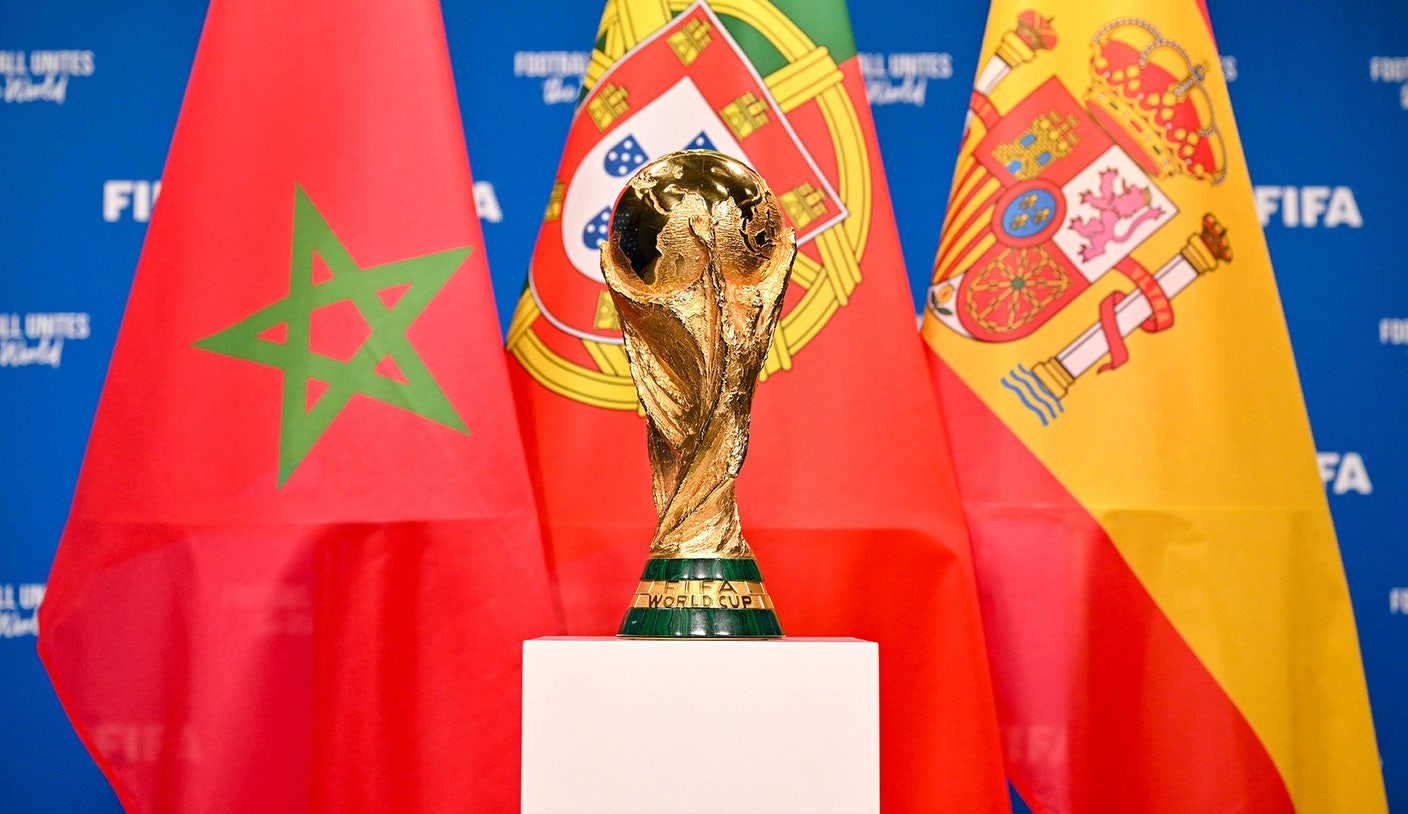
Imagine the entire planet coming together to play the world’s favorite game — soccer (or "football," as most of the world calls it). That’s the FIFA World Cup: a massive tournament held every four years where national teams from all over the globe compete to be crowned the best of the best.
Now, the 2030 World Cup is going to be truly special. Why? Because it’s turning 100 years old, and the celebration is going to be bigger than anything we’ve ever seen! Let’s break it all down in a super simple way.
2030 marks the centenary — that means the 100th birthday — of the FIFA World Cup! The very first World Cup took place in 1930 in Uruguay, and FIFA (the organization that runs world soccer) wanted to do something absolutely legendary to honor that history.
So they came up with a plan that had never been done before: host the tournament across three different continents and six different countries!
The 2030 World Cup will be hosted by three nations:
This is only the second time ever that three countries have shared hosting duties. The first time was the 2026 World Cup, which was co-hosted by Canada, Mexico, and the United States.
Here’s the timeline of how it all happened:
Important Point: Morocco, Portugal, and Spain didn’t just randomly get picked. They went through a multi-year process where FIFA evaluated their plans, stadiums, and ability to host such a massive event.
The tournament will run from June 8, 2030 to July 21, 2030.
That’s a total of 44 days, making it the longest World Cup in history! For comparison, the 2026 World Cup will last 39 days. The extra time is needed because teams and fans will be traveling across continents for the centenary celebrations.
Here’s where things get really emotional and cool. To honor the 100th anniversary, FIFA created a beautiful tribute to the very first World Cup in 1930.
Three special opening matches will be played in South America:
Important Point: These three special matches are separate from the main tournament. After these opening celebrations, the rest of the World Cup will be played in Morocco, Portugal, and Spain.
The 2030 World Cup is expected to use 21 stadiums across 18 cities in 6 countries. The official list hasn’t been formally approved yet (that deadline is December 2026), but here are the finalist cities and stadiums:
Important Point: Spain has the most stadiums (10) and cities (8) on the list, which means it will likely host the most matches. Morocco comes second with 6 stadiums across 6 cities.
Great question — and nobody knows yet!
The location of the final match hasn’t been announced. All official tournament locations need to be submitted and approved by December 2026, but the final venue might be revealed even later than that.
Given that Spain has the most stadiums and the biggest venues (like the Santiago Bernabéu in Madrid and Camp Nou in Barcelona), many people expect the final will be held there. But for now, it’s still a mystery!
Here’s everything you need to know in a nutshell:
Q1: Why is the 2030 World Cup being held in so many countries?
Because it’s the 100th anniversary! FIFA wanted to make it a truly global celebration. The opening matches in South America honor where the first World Cup was held, while the main tournament in Morocco, Portugal, and Spain represents the three continents of Africa and Europe coming together.
Q2: Is this the first time the World Cup has been hosted by multiple countries?
No! The 2026 World Cup (hosted by Canada, Mexico, and the United States) was the first time three nations co-hosted. Before that, 2002 was co-hosted by Japan and South Korea — the first time two countries shared hosting duties.
Q3: How is the 2030 World Cup different from the 2026 World Cup?
The 2026 World Cup was the first to be hosted by three nations (Canada, Mexico, USA). The 2030 World Cup is the first to be played across three different continents (South America, Europe, and Africa) and in six different countries, making it the most spread-out World Cup in history.
Q4: Will the 2030 World Cup have more teams than previous tournaments?
The content doesn’t specify this, but the 2026 World Cup will expand to 48 teams (up from 32). It’s likely the 2030 tournament will also feature 48 teams, but FIFA hasn’t confirmed this yet.
Q5: When will we know where the 2030 World Cup final will be held?
The official tournament locations must be submitted and approved by December 2026, but the final venue could be announced even later. Stay tuned!