3 Cash Flow Picks Below Fair Value: Xero Leads
Undervalued Stocks Based on Cash Flows: A Beginner-Friendly Look at Three Companies
Why Look at Cash Instead of Headlines?
When prices of everyday things (like food or gas) rise at different speeds in different parts of the world, we call that inflation diverging. The groups that control a country’s money (called central banks) watch every wiggle in energy costs and the returns on government loans (bond yields). Because all this can be confusing, many people who invest money are looking at two simpler things to guide them:
- Cash flow: the actual money a company brings in and pays out (like your allowance minus what you spend).
- Valuation: a smart guess of what a company is truly worth.
A tool called the Undervalued Stocks Based On Cash Flows screener looks for companies where the current price tag is lower than a fair value calculated by a method called SWS DCF valuation (which stands for Discounted Cash Flow—a way to add up future cash after adjusting for time). This highlights cases where the money a company makes and the price people pay for its stock seem out of step.
In this article, we will meet 3 stocks from that screener. They show how carefully studying cash can help research value across different types of businesses and places.
Xero (ASX:XRO)
Overview
Xero is a software company based in Wellington (New Zealand). It provides online tools (think of them as apps on the internet) for small businesses and their helpers to manage:
- Cloud accounting (keeping books online)
- Payroll (paying workers)
- Payments and daily operations
Its family of add-on tools includes:
- Planday for scheduling staff
- Hubdoc for bills and receipts
- Syft for reports and forecasts
- Melio for automating paying bills and getting paid
Operations
Xero makes NZ$2.75 billion from providing these online solutions. Here is where that money comes from:
- Australia: NZ$1.15b
- United Kingdom: NZ$726.8m
- United States: NZ$331.7m
- New Zealand: NZ$243.6m
- Rest of World: NZ$302.6m
Market Cap
The total value of all its shares is A$12.52 billion (that’s like adding up the price of every tiny ownership slice).
Why It Catches the Eye
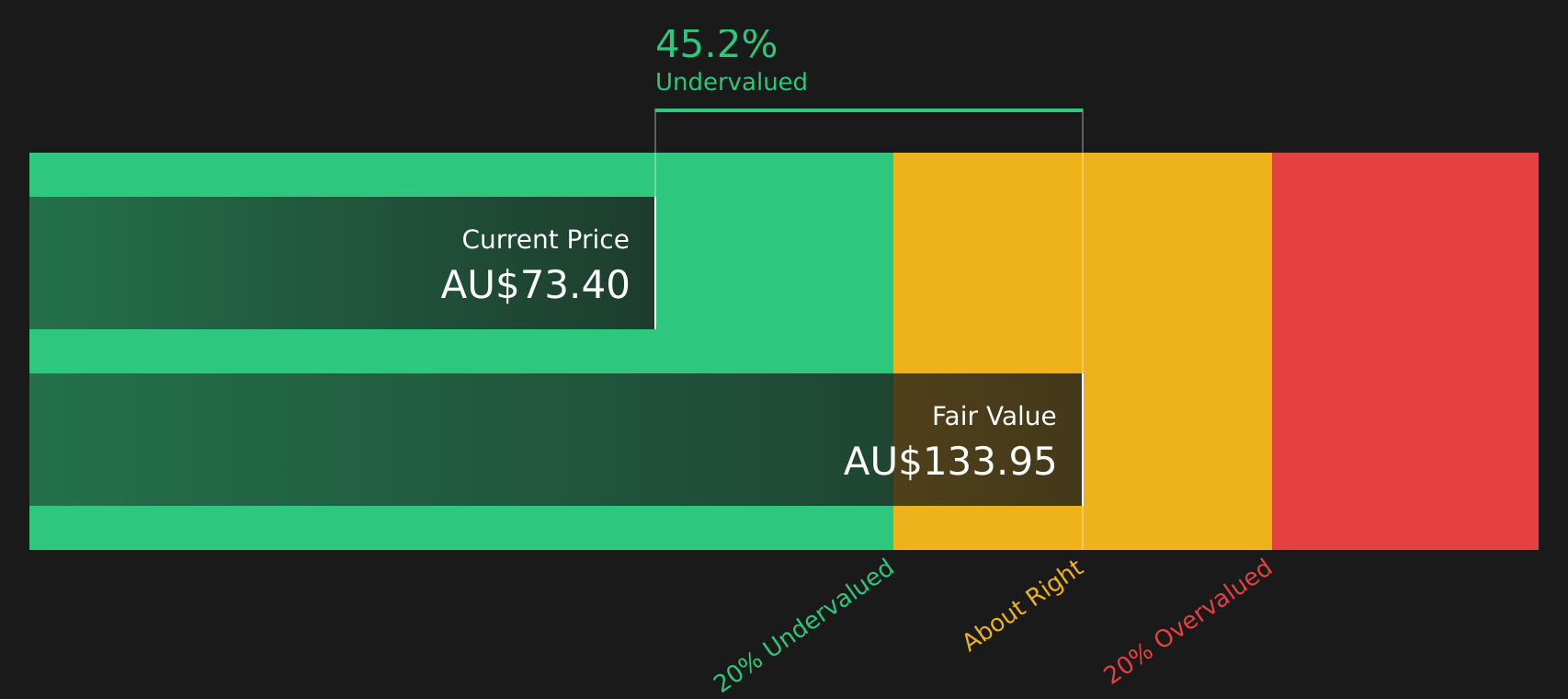
Xero uses a subscriber model (people pay regularly to use it) and is adding lots of AI (smart computer helpers) features. The screener shows its cash flow suggests the stock could be worth more than its current price (which is below the Simply Wall St DCF estimate).
- It keeps about 88% of each dollar it earns as gross margin (after direct costs).
- It hopes to spread its steady costs over more revenue, which could mean higher profit margins if all goes well.
- But caution: Its P/E (price compared to profit) is very high, profits recently dropped a bit, and it borrows money from outside instead of using customer deposits. So watch if profits are healthy and how it funds itself.
- New product launches and partnerships try to turn this mix of growth and risk into a chance.
Important Point: The market might be misreading where Xero’s real strength lies. The DCF valuation analysis for Xero could show what the risk vs reward looks like.
Figure: XRO Discounted Cash Flow as at Jul 2026
Lynas Rare Earths (ASX:LYC)
Overview
Lynas is a miner and processor based in Perth (Australia). It digs up and refines rare earth minerals—special metals like neodymium and praseodymium used in electric car motors, wind turbines, and fancy electronics. Its places include:
- Mt Weld mine in Western Australia
- Processing plants in Kalgoorlie (Australia) and Malaysia
Operations
It makes about A$715.9 million from its Rare Earth Operations segment.
Market Cap
A$16.7 billion total share value.
Why It’s Interesting
Lynas sits at the center of supplying metals for clean energy. It has:
- Recent earnings growth and better margins
- A long-term deal with JS Link to make magnets together through 2038
The screener says its price is below the cash flow fair value, and some analysts expect more growth. However:
- It relies heavily on a few products
- Faces rules and political risks between countries
- Needs outside money to fund work
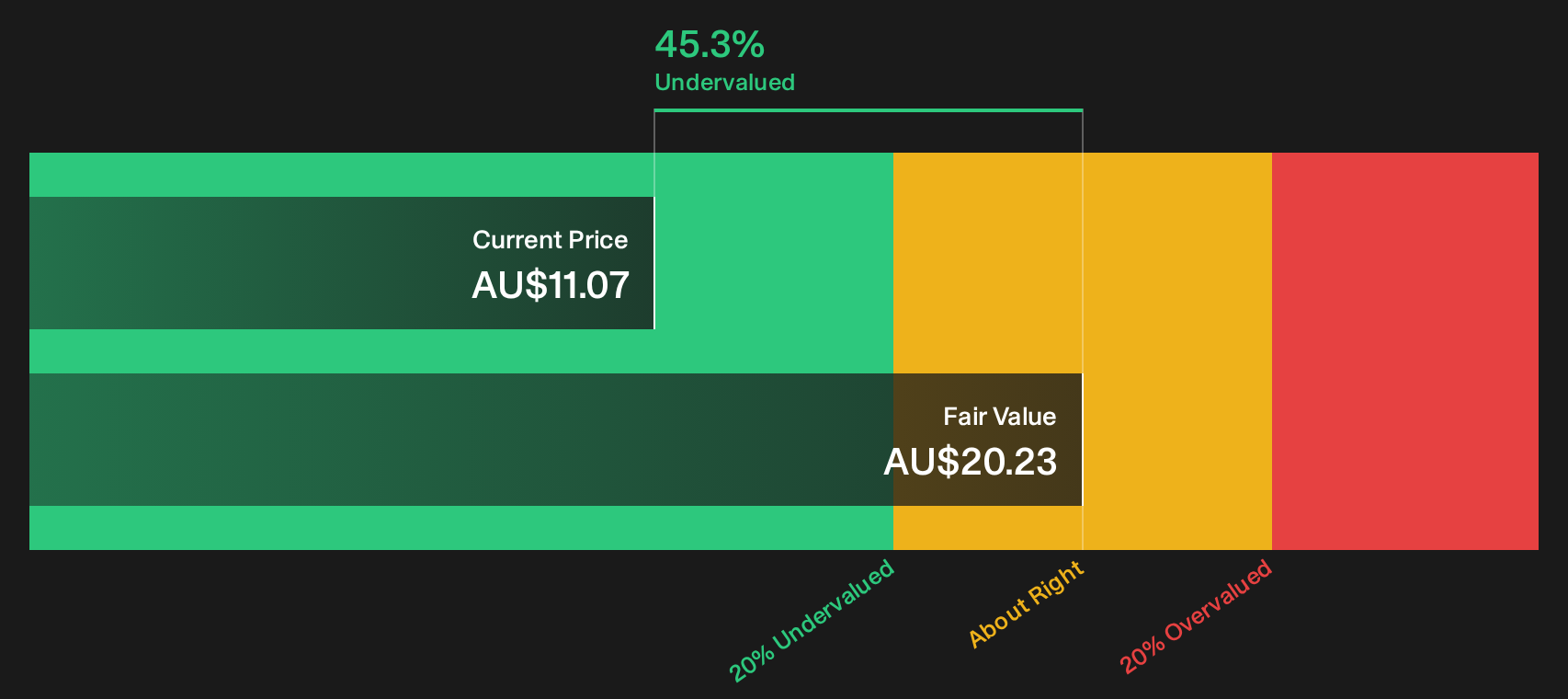
Important Point: The gap between high growth hopes and fair value signals, plus hidden risks, makes Lynas worth a closer look through cash flow eyes. Check the DCF valuation analysis for Lynas Rare Earths to see what optimism might hide.
Figure: LYC Discounted Cash Flow as at Jul 2026
WiseTech Global (ASX:WTC)
Overview
WiseTech makes cloud software (online programs) that helps logistics companies (the folks who move boxes and data around the world) manage shipping, customs, warehouses, and transport. Its main product CargoWise is used across:
- Americas
- Asia Pacific
- Europe, Middle East, Africa
Operations
Money comes from these regions:
- Americas: US$450.7m
- Asia Pacific: US$254.8m
- Europe, Middle East & Africa: US$364.2m
Market Cap
A$11.34 billion total value.
Why It Stands Out
The screener flags WiseTech because its software is key for modern supply chains, yet its share price is below both expert targets and its cash flow estimate.
- It has recurring SaaS revenue (customers pay subscriptions)
- Adds AI workflow tools and bought a company called E2open to serve big clients better
But:
- Higher debt, weaker recent margins, slower natural growth set a higher hurdle
- News about company leadership (founder moved from chair to Chief Innovation Officer) adds something to consider
Important Point: The real value might be masked by AI tools and the E2open deal. The analysis report for WiseTech Global holds insight on this tension.
Figure: WTC Discounted Cash Flow as at Jul 2026

Not Just Three – More to Explore
The 3 companies above are only a taste. The full Undervalued Stocks Based On Cash Flows approach brings up 37 more companies on the screener that also show discounted SWS DCF valuations and strong cash stories. You can use Simply Wall St to spot exact catalysts (events that change price), cash trends, and valuation gaps that matter to you, so you focus on best opportunities instead of endless lists.
Take Control of Your Investment Journey
If Lynas or any of these companies spark your interest, here are simple steps to stay on top:
- Register for FREE with Simply Wall St and add companies to a Watchlist to track price vs fair value.
- Manage your holdings with the Portfolio Command Center that filters noise and gives key updates.
- Join the Community to see best ideas from thousands of investors.
By catching hidden catalysts and risks early, you can decide faster and stay ahead.
Seeking Fresh Alternatives Beyond These Picks?
Some future breakout stories move before most notice. Our new AI Stock Screener scans daily to find:
- Dividend Powerhouses (3%+ Yield – they pay you regular cash)
- Undervalued Small Caps with Insider Buying (small companies cheap, and bosses buy shares)
- High growth Tech and AI Companies
Or build your own screen from over 50 metrics. Explore Now for Free.
Important Disclaimer Callout
Important: This article by Simply Wall St is general in nature. We provide commentary based on historical data and analyst forecasts only using an unbiased methodology and our articles are not intended to be financial advice. It does not constitute a recommendation to buy or sell any stock, and does not take account of your objectives, or your financial situation. We aim to bring you long-term focused analysis driven by fundamental data. Note that our analysis may not factor in the latest price-sensitive company announcements or qualitative material. Simply Wall St has no position in any stocks mentioned.
Feedback and Contact
If you have thoughts or concerns, you can Get in touch with us directly. Alternatively, email editorial-team@simplywallst.com.
Summary
- Investors worried about uneven inflation and central bank moves are turning to cash flow and valuation for steadier decisions.
- The Undervalued Stocks Based On Cash Flows screener uses DCF to find stocks priced below fair value.
- Xero (ASX:XRO): Cloud accounting, NZ$2.75b revenue, A$12.52b cap, high margins but high P/E and borrowing.
- Lynas Rare Earths (ASX:LYC): Rare earth miner, A$715.9m revenue, A$16.7b cap, growth vs geopolitical risk.
- WiseTech Global (ASX:WTC): Logistics software, US$1.07b total revenue (sum of regions), A$11.34b cap, subscription model with debt concerns.
- The screener includes 37 more companies. Tools like Watchlist, Portfolio, Community, and AI Screener help you act.
- Remember: this is not financial advice.
FAQ
1. What is a DCF valuation in simple terms?
DCF stands for Discounted Cash Flow. Imagine you expect to get $10 each year from a lemonade stand for 5 years. Because money today is worth more than money later, you discount (reduce) those future amounts to see what they are worth now. Add them up, and you get a "fair value" estimate.
2. What does "undervalued based on cash flows" mean?
It means the stock price today is lower than what the company’s expected future cash says it should be worth. Like finding a toy priced at $5 but you calculate it’s really worth $8 based on the money it can make you.
3. Why should a beginner care about cash flow instead of just price?
Price can be swayed by news or emotions. Cash flow is the real money the business generates. If a company consistently makes cash, it can grow, pay debts, and survive tough times—making it a steadier sign of health.
4. What are rare earths used for in everyday life?
They are special metals inside electric vehicle motors, wind turbines, phones, and computers. Without them, many green and tech products wouldn’t work well.
5. How can I keep track of these stocks easily?
You can register free at Simply Wall St, add them to a Watchlist, and use the Portfolio tool to get only important updates, as described in the steps above.