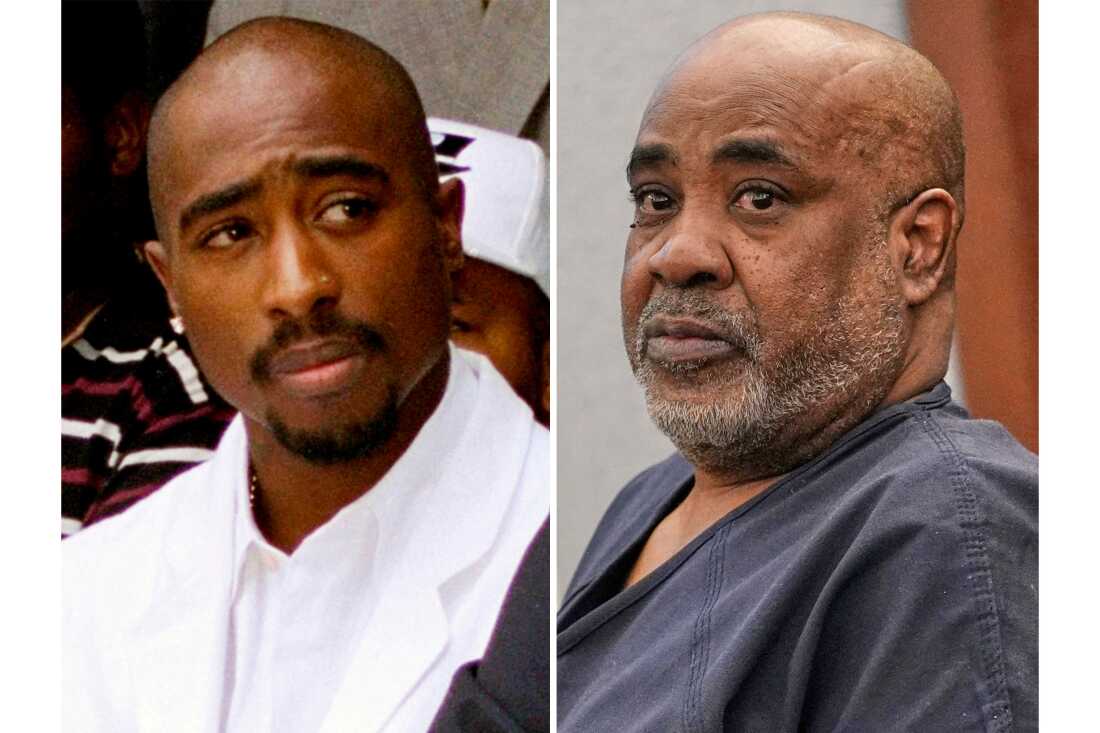
Judge Greenlights Explosive Police Interview for Tupac Murder Trial
Judge Allows Key Interview as Evidence in Tupac Shakur Murder Trial
Quick Summary: A Nevada judge ruled that a 2008 police interview with Duane "Keffe D" Davis—the man charged with orchestrating Tupac Shakur’s 1996 murder—can be used as evidence at his upcoming trial. This is a major win for prosecutors.
What Just Happened?
On Tuesday, February 18, 2025, Judge Carli Kierny made a critical decision in the long-running case of Tupac Shakur’s murder. She ruled that a recorded interview Davis gave to police in 2008 is admissible in court—meaning prosecutors can play it for the jury when the trial begins on August 10, 2025.
Who Is Duane "Keffe D" Davis?
- Age: 63 years old
- Charge: Murder in connection with Tupac Shakur’s 1996 killing
- Possible Sentence: Life in prison without parole if convicted
- Role: Prosecutors allege Davis orchestrated the killing—meaning he planned and directed it, even if he didn’t pull the trigger himself
Important Point: Davis is the only living person who was in the white Cadillac the night of the shooting. The three other men with him have all since died.
Why This Interview Matters So Much
The 2008 Interview
- Davis sat down with law enforcement in 2008
- He described what happened the night Tupac was shot
- He said his nephew, Orlando "Baby Lane" Anderson, "popped them" (fired the shots)
- Anderson denied involvement at the time and died two years later in an unrelated gang shooting
The Defense’s Argument
Davis’s lawyer, Michael Sanft, tried to block the interview from trial. His arguments:
- Detectives explicitly told Davis the interview was confidential
- They promised it wouldn’t be used against him
- Davis wrote in his book: "I sang because they promised I would not be prosecuted."
The Prosecutors’ Argument
Prosecutors said the interview should be allowed because:
- Davis later wrote a book ("Compton Street Legend") about the case
- He spoke publicly in documentaries and interviews
- By going public, he waived any confidentiality
What the Judge Decided
Judge Kierny sided with prosecutors. Her reasoning:
- Davis adopted his book as his own truth — He called it the "real truth" in an interview
- He chose to speak publicly — You can’t claim confidentiality after telling your story to the world
- The interview is now fair game — It can be played for the jury
at trial, which is expected to last about four weeks.
The Night Tupac Was Killed: A Simple Timeline
| Date | Event |
|---|---|
| Sept 7, 1996 | Tupac Shakur and Death Row Records founder Suge Knight sit at a red light near the Las Vegas Strip |
| ~11:15 PM | A white Cadillac pulls up beside them |
| Seconds later | Gunfire erupts — Tupac is shot multiple times |
| Sept 13, 1996 | Tupac dies six days later at age 25 |
| Suge Knight | Survives with minor injuries |
Who Was in the Cadillac That Night?
| Person | Role | Status |
|---|---|---|
| Duane "Keffe D" Davis | Alleged orchestrator; provided the gun | Alive — on trial |
| Orlando "Baby Lane" Anderson | Davis’s nephew; allegedly fired shots | Died 1998 (unrelated gang shooting) |
| Deandrae "Freaky" Smith | Witness says he took the gun and fired when Anderson couldn’t get a clear shot | Deceased |
| Fourth man | Identity less clear in public records | Deceased |
Key Detail: In his memoir, Davis admitted he obtained a handgun from an associate and tossed it into the back seat of the Cadillac—but he did not say who fired the fatal shots.
How the Case Stayed Cold for Decades
- 1996–2008: Case goes cold — no arrests, no charges
- 2008: Davis gives the now-crucial interview to police
- 2010s: Davis begins speaking publicly — book, documentaries, interviews
- 2023: Davis is arrested and charged with murder
- 2024–2025: Legal battles over what evidence can be used
- Aug 2025: Trial set to begin
What Happens Next?
Numbered Steps: The Road to Trial
- Pre-trial motions — Both sides argue over other evidence (ongoing)
- Jury selection — Starts around August 10, 2025
- Opening statements — Prosecutors and defense lay out their cases
- Prosecution presents evidence — Including the 2008 interview recording
- Defense presents its case — May argue Davis didn’t plan the killing
- Closing arguments — Final pitches to the jury
- Jury deliberation — Could take days or weeks
- Verdict — Guilty or not guilty
- Sentencing (if guilty) — Life without parole
Callout: Why This Ruling Is a Big Deal
This interview is the closest thing to a confession the prosecution has.
Davis walked police through the night of the murder, named names, and admitted providing the gun.
If the jury hears it, it could be the most damaging evidence in the entire trial.
Summary
- A Nevada judge ruled the 2008 police interview with Duane "Keffe D" Davis can be used at his August 2025 murder trial.
- Davis is charged with orchestrating Tupac Shakur’s 1996 killing in Las Vegas.
- The defense claimed the interview was confidential and promised immunity—but the judge said Davis waived that by writing a book and speaking publicly.
- Davis is the only surviving person from the Cadillac that night.
- The trial is expected to last four weeks and could finally bring closure to one of music history’s most famous unsolved murders.
FAQ: Your Questions Answered
Why did it take nearly 30 years to charge someone?
The case went cold quickly. Witnesses were uncooperative, evidence was thin, and no one talked—until Davis started talking publicly in books and documentaries. His own words reignited the case.
Did Davis pull the trigger?
Prosecutors say he orchestrated it—meaning he planned it and provided the gun. He admits tossing the gun into the car but doesn’t say who fired. A witness told a grand jury it was Deandrae "Freaky" Smith, not Davis’s nephew Anderson.
Can the defense still argue the interview was coerced?
They can try. But the judge already ruled it’s admissible. The jury will hear it and decide how much weight to give it.
What if Davis is found not guilty?
He walks free. But given his own recorded statements, book, and public interviews, legal experts say the prosecution has a very strong case.
Will Suge Knight testify?
He’s currently in prison for a separate 2015 fatal hit-and-run. It’s unclear if he’ll be called—or if he’d cooperate. He was in the car with Tupac and survived.
This case has captivated the world for decades. Now, after 29 years, a courtroom may finally hear the full story—from the mouth of the only man left who was there.