11
11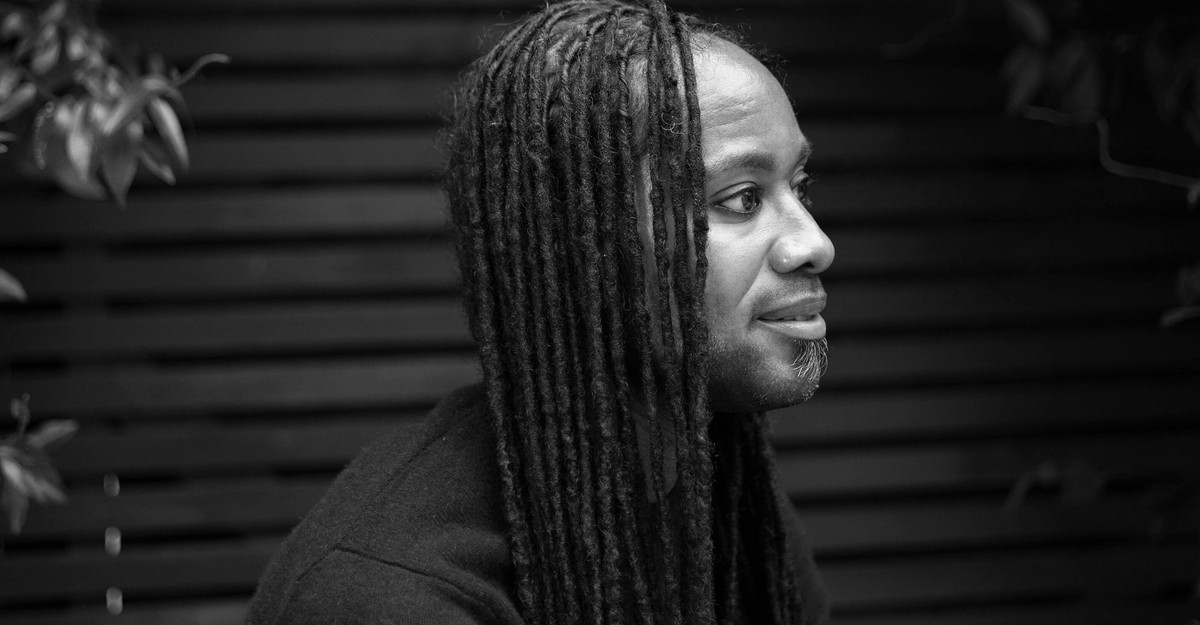
Jason Arday is a British sociologist—a professor who studies how society works. In early 2023, at age 37, he became a professor at the University of Cambridge. This made him the youngest Black scholar ever to hold that position at Cambridge. The news made headlines around the world.
Arday’s life story sounds like a movie:
Despite all this, he went to university, got a Ph.D., and became an academic star.
Arday’s memoir, titled Great and Unfortunate Things, tells a dramatic tale of overcoming impossible odds. Here are the key chapters:
In 2024, Arday’s agent shopped his memoir to publishers with a cover letter calling it "an awe-inspiring tale of near mythic proportions." Simon & Schuster bought it. The book was co-written with Eve Claxton and scheduled for release in summer 2026.
IMPORTANT POINT
The memoir is still being published despite all the controversy. Simon & Schuster says they’re "proceeding with publication."
In July 2026, everything changed. A philosopher named Nathan Cofnas published a long investigation on Substack alleging plagiarism in Arday’s academic work.
Cofnas found 36 passages in Arday’s 2015 Ph.D. dissertation (from Liverpool John Moores University) that closely matched or copied text from a 2009 dissertation by another scholar, Paula Zwozdiak-Myers.
Even the title was suspiciously similar—and Arday misused an apostrophe in the same way.
The problems didn’t stop at the dissertation. Other papers by Arday showed troubling patterns:
IMPORTANT POINT
Retraction Watch reported that two of Arday’s papers were quietly corrected—fixed without public explanation.
Arday released a statement saying:
"I want to reclaim some peace, some privacy and some semblance of an ordinary life. I no longer wish to feel as though I am living under a constant spotlight, where every aspect of my life is subject to public examination and judgement."
He also told The Times:
At a conference in April 2026, he spoke about efforts to "discredit Black scholars including himself," calling his critics "perversely brilliant."
| Claim | Reality Check |
|---|---|
| Ran 300 miles in 3 days | Near world-record level feat |
| Ran 600 miles in 6 days | Later said it took 12 days with rest |
| Raised millions for charity | Later said it was through a "syndicate" |
| Was part of BBC Up series | Later said this was an "analogy" |
The 2024 book proposal (obtained by The Atlantic) tells a different version of events:
| Detail | Memoir | Book Proposal |
|---|---|---|
| Attackers’ age | Same age | 4 years older |
| Suicide attempt | During pandemic | Before pandemic |
| Cancer history | Two brain tumors | Testicular cancer (not in memoir) |
| Teen accident | Finishing school/exams | 3-month coma, locked-in syndrome, "miraculous" recovery |
| Prophecy in Brazil | 2006, aid worker | 2005, "shaman woman"/elder, Spartacus reference |
IMPORTANT POINT
The book’s fact-checker, co-writer Eve Claxton, agent Jennifer Gates, and editors at Simon & Schuster all declined to answer questions about these discrepancies.
Nathan Cofnas, who exposed the plagiarism, has a political agenda. He argues for a "hereditarian revolution"—the idea that intelligence differences between racial groups are innate. He also claims "the humanities and much of the social sciences have been slain on the altar of DEI."
The article argues that Arday’s case reveals a broader problem in universities, media, and publishing:
"Any failing can be forgiven, as long as it’s packaged in a story that people want to hear."
In a 2023 paper, Arday wrote that he:
His mission was to help other disadvantaged academics get the same "allowances" he received. As he wrote in his proposal: "Everybody says, ‘Jason is the guy that teaches everyone the tricks.’"
Jason Arday’s story captivated the world: a man who overcame autism, illiteracy, poverty, violence, and illness to become a Cambridge professor. His memoir promised to be an inspirational bestseller.
But investigations revealed serious problems:
While his critics include people with political agendas, the evidence of academic misconduct and storytelling inconsistencies comes from multiple independent sources. Arday resigned from Cambridge amid a new investigation, but his memoir is still being published.
The case raises uncomfortable questions about how academia and publishing elevate inspiring narratives—and whether we’re too willing to overlook red flags when a story fits what we want to believe.
Yes, evidence shows 36 passages in his 2015 dissertation closely match a 2009 dissertation by Paula Zwozdiak-Myers. However, his university (Liverpool John Moores) investigated and cleared him, saying his Ph.D. still stands.
Multiple papers by Arday contain interview responses that appear in different studies attributed to different people. If intentional, this is academic fraud (fabricating data), which is more serious than plagiarism. Two papers were quietly corrected.
Cambridge announced an investigation into "new information about Professor Arday’s academic qualifications and honorary appointments." The same day, Arday resigned, saying he wanted privacy and peace. The investigation’s specifics haven’t been made public.
Yes. Simon & Schuster confirmed they are "proceeding with publication" next week, and it’s an "Editors’ Pick" on Amazon. The co-writer, agent, editors, and fact-checker all declined to answer questions about discrepancies.
Arday says insufficient supervision given his disabilities led to mistakes, not fabrication. However, the pattern of copied text, duplicated data across studies, and contradictory life stories goes beyond what disability accommodations would explain. The universities and publishers involved have not accepted this as a full explanation.

.jpg "Premier League Giants Circle Japanese World Cup Sensation")