
Trump Admin Sues 31 States for Voter Data: See Who Complied
The Trump Administration’s Push for Voter Data: What You Need to Know
What’s Happening?
Imagine someone asking for a list of everyone in your neighborhood — including their birthdays, addresses, and parts of their Social Security numbers. That’s essentially what the Trump administration has been asking all 50 states to hand over.
The Justice Department (DOJ) wants complete, unredacted voter registration lists from every state. These lists contain sensitive personal information about registered voters.
Important Point: The information requested includes:
- Full names
- Birthdates
- Home addresses
- Partial Social Security numbers
- Driver’s license numbers
Why Does the Administration Want This Data?
The DOJ says it needs this information to make sure states are following two federal laws:
- Help America Vote Act (HAVA) — Passed after the 2000 election to improve voting systems
- National Voter Registration Act (NVRA) — Known as the "Motor Voter" law, makes it easier to register to vote
Both laws require states to keep accurate voter rolls (lists of registered voters). The administration argues it can’t check if states are doing this properly without seeing the complete, unredacted data.
How Have States Responded?
| Response Type | Number of States |
|---|---|
| Provided public versions only | Many |
| Refused to provide complete lists | Many |
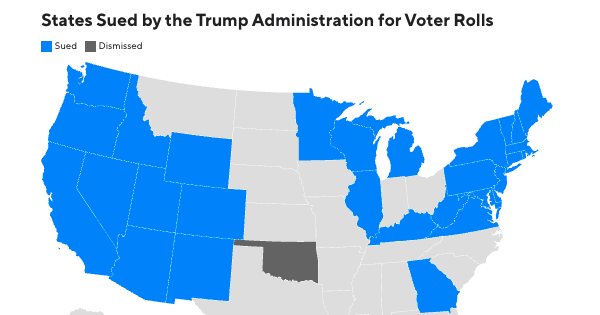
| Sued by DOJ | 30 states + DC |
Most states said: "Here’s the public version anyone can see, but we’re not giving you the private details."
The Court Battles So Far
The DOJ filed lawsuits against 30 states and Washington, D.C. to force them to hand over the data. Here’s the scorecard:
Losses for the Administration (21 cases dismissed)
Federal judges said no in these states:
- (Map shows 21 states where cases were dismissed)
One "Win" (Sort Of)
- Oklahoma: The state agreed to provide its list, so DOJ dropped the lawsuit voluntarily
Still Pending (9 cases)
Cases still active in:
- Delaware
- Georgia (refiled after first case dismissed on technicality)
- Hawaii
- Idaho
- Minnesota
- Nevada
- Utah
- Vermont
- Washington
Appeals in Progress
The administration has appealed most dismissals. So far:
- 6th Circuit Court of Appeals upheld a lower court’s rejection of the Michigan case
- Other appeals are still pending
The Bigger Picture: Election Policy Changes
This voter data push is part of a broader effort to change how U.S. elections work.
Executive Orders (Both Blocked by Courts)
| Order | What It Would Do | Status |
|---|---|---|
| Order 1 (2024) | Require documentary proof of citizenship to register to vote | Blocked by courts |
| Order 2 (March 2025) | Tighten mail-in voting rules; require DHS and USPS to compile lists of eligible citizens | Blocked by courts |
The SAVE America Act
The administration is also pushing Congress to pass this legislation, which would:
- Significantly restrict mail-in voting
- Impose new voter ID requirements
The Claims Behind the Push
President Trump has made several claims to justify these efforts:
| Claim | Fact Check |
|---|---|
| "Mail-in voting leads to widespread fraud" | No evidence provided; numerous studies and courts have found fraud is extremely rare |
| "Democratic states allow noncitizens to vote" | It is already a federal crime for noncitizens to vote in federal elections; no evidence of widespread noncitizen voting |
Important Point: Multiple courts, election officials from both parties, and independent experts have repeatedly confirmed that U.S. elections are secure and that voter fraud is exceptionally rare.
Summary
- The Trump administration wants complete voter rolls (with sensitive personal data) from all 50 states
- 30 states + DC were sued for refusing to provide unredacted lists
- Courts have largely rejected these lawsuits (21 losses so far)
- This is part of a broader strategy including executive orders and proposed legislation to restrict voting access
- The administration’s claims about fraud have not been supported by evidence
FAQ
Why do states have voter rolls in the first place?
States maintain voter rolls to know who is eligible to vote in each precinct. They’re used to check people in at polling places and mail ballots. Most states make limited public versions available (usually just name and address), but protect sensitive data like SSNs and birthdates.
Can the federal government force states to share this data?
That’s exactly what the courts are deciding. So far, most federal judges have said no — ruling that the federal laws cited don’t give the DOJ authority to demand unredacted, sensitive personal information from states.
What happens to the data if states hand it over?
This is a major concern. Once the federal government has this data, there are questions about:
- How it will be stored and secured
- Who will have access to it
- Whether it could be used for purposes beyond checking voter roll maintenance
- Privacy risks if the data is breached or misused
Have other administrations done this?
Previous administrations have requested public voter file data for enforcement purposes, but the scale and specificity of this request — demanding unredacted SSNs, birthdates, and license numbers from every state simultaneously — is considered unusual by election law experts.
What happens next?
- Appeals courts will rule on the pending appeals
- The 9 remaining district court cases will continue
- Congress may consider the SAVE America Act
- The executive orders remain blocked unless higher courts reverse those decisions
This article is based on reporting from CBS News and public court records. Election laws and litigation statuses can change quickly — check official sources for the latest updates.