How the World Cup Knockout Rounds Work: A Simple Guide
What Just Happened in the World Cup?
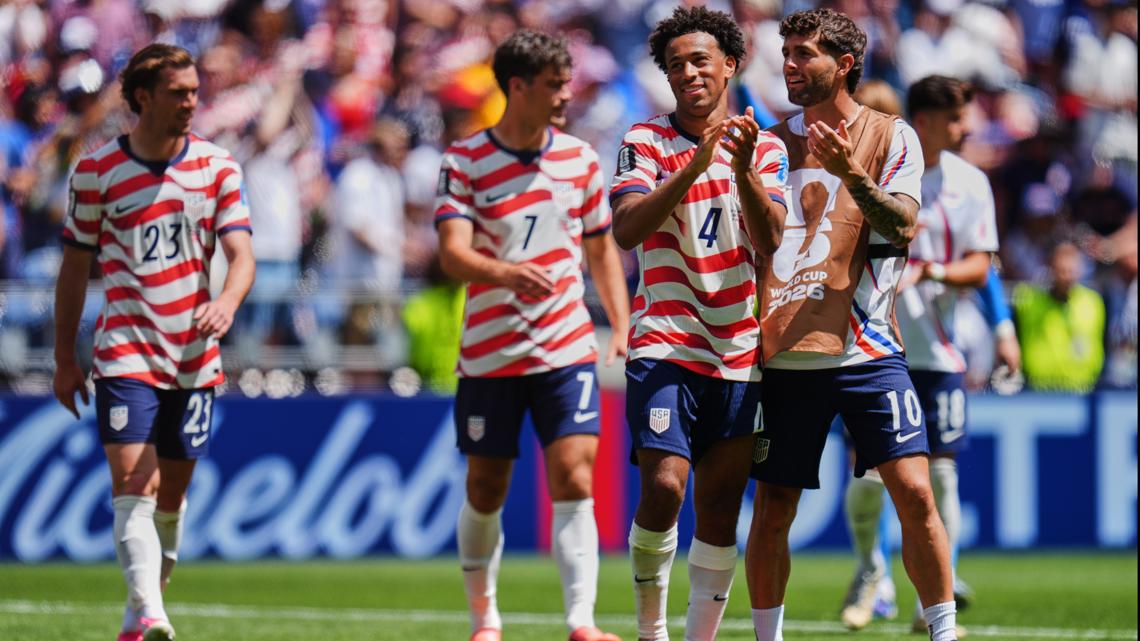
The World Cup group stage has officially ended! The 2026 tournament started with 48 teams — the most in World Cup history — playing across 16 host cities in the United States, Mexico, and Canada.
All 48 teams were split into 12 groups, and each team played 3 matches during the group stage. Now, the top teams have moved on to the exciting knockout rounds!
Group Stage vs. Knockout Rounds: What’s the Difference?
Here’s the big change you need to know about:
- Group stage matches could end in a draw (a tie). Both teams just got one point each, and everyone moved on.
- Knockout round matches cannot end in a draw. Someone has to win, and someone has to go home. No exceptions!
Important Point: Once the knockout rounds begin, there are no more ties. Every single match must produce a winner and a loser.
How Do They Decide a Winner in the Knockout Rounds?
If a knockout match is tied after the regular 90 minutes (plus a little extra time added for stoppages), here’s what happens:
Step 1: Extra Time
- The game goes into extra time, which is made up of two 15-minute halves (so 30 minutes total).
- If a team scores during extra time and wins, great — the match is over!
- But if the score is still tied after those 30 minutes…
Step 2: Penalty Shootout
- The match goes to a penalty shootout.
- Both teams take turns kicking from the penalty spot.
- Each team gets 5 kicks, and the team with the most goals after those 5 wins.
- If it’s still tied after 5 kicks each, the shootout goes into sudden death — meaning each team takes one kick at a time until one team scores and the other misses.
Fun Fact: The famous 2022 World Cup final between Argentina (led by Lionel Messi) and France (led by Kylian Mbappé) was decided by a penalty shootout!
What Was the "Golden Goal" Rule?
You might hear older soccer fans talk about something called the "golden goal." Here’s what that meant:
- During extra time, the first team to score would immediately win the match. Game over!
- It was kind of like sudden death in hockey (NHL).
- This rule was used in the 1998 and 2002 men’s World Cups, but it’s no longer used today.
The Round of 32 Bracket
The knockout stage begins with the Round of 32. Here are the matchups:
- Match 73: South Africa vs. Canada — June 28
- Match 74: Germany vs. Paraguay — June 29
- Match 75: Netherlands vs. Morocco — June 29
- Match 76: Brazil vs. Japan — June 29
- Match 77: France vs. Sweden — June 30
- Match 78: Ivory Coast vs. Norway — June 30
- Match 79: Mexico vs. Ecuador — June 30
- Match 80: England vs. DR Congo — July 1
- Match 81: United States vs. Bosnia-Herzegovina — July 1
- Match 82: Belgium vs. Senegal — July 1
- Match 83: Portugal vs. Croatia — July 2
- Match 84: Spain vs. Austria — July 2
- Match 85: Switzerland vs. Algeria — July 2
- Match 86: Argentina vs. Cape Verde — July 3
- Match 87: Colombia vs. Ghana — July 3
- Match 88: Australia vs. Egypt — July 3
You can follow along with a live bracket tracker on the BBC and The Athletic.
Which Teams Advanced to the Round of 32?
Here’s a full list of the teams that made it out of the group stage:
- Group A: Mexico, South Africa
- Group B: Switzerland, Canada, Bosnia and Herzegovina
- Group C: Brazil, Morocco
- Group D: United States, Australia, Paraguay
- Group E: Germany, Ivory Coast, Ecuador
- Group F: Netherlands, Japan, Sweden
- Group G: Belgium, Egypt
- Group H: Spain, Cape Verde
- Group I: France, Norway, Senegal
- Group J: Argentina, Austria, Algeria
- Group K: Colombia, Portugal, DR Congo
- Group L: England, Croatia, Ghana
Summary
- The 2026 World Cup features 48 teams across 12 groups in the U.S., Mexico, and Canada.
- Group stage matches could end in draws, but knockout round matches cannot.
- If a knockout match is tied after 90 minutes, it goes to extra time (two 15-minute halves).
- If still tied after extra time, a penalty shootout decides the winner.
- The golden goal rule (first goal in extra time wins instantly) was used in 1998 and 2002 but is no longer in effect.
- The Round of 32 is now set with 16 exciting matchups!
Frequently Asked Questions
Q: Can a World Cup knockout match end in a draw?
A: No! Unlike group stage matches, knockout round games must have a winner. If the score is tied after 90 minutes, the match goes to extra time and, if needed, a penalty shootout.
Q: How long is extra time in the World Cup?
A: Extra time consists of two 15-minute halves, for a total of 30 additional minutes of play.
Q: What happens if a penalty shootout is still tied after 5 kicks each?
A: The shootout goes into sudden death. Teams take one kick at a time until one team scores and the other misses.
Q: What was the golden goal rule?
A: The golden goal meant that the first team to score during extra time would immediately win the match. It was used in the 1998 and 2002 World Cups but has since been discontinued.
Q: How many teams made it to the Round of 32?
A: A total of 32 teams advanced from the group stage to the knockout rounds — the top two teams from each of the 12 groups, plus additional third-place qualifiers.
 1
1