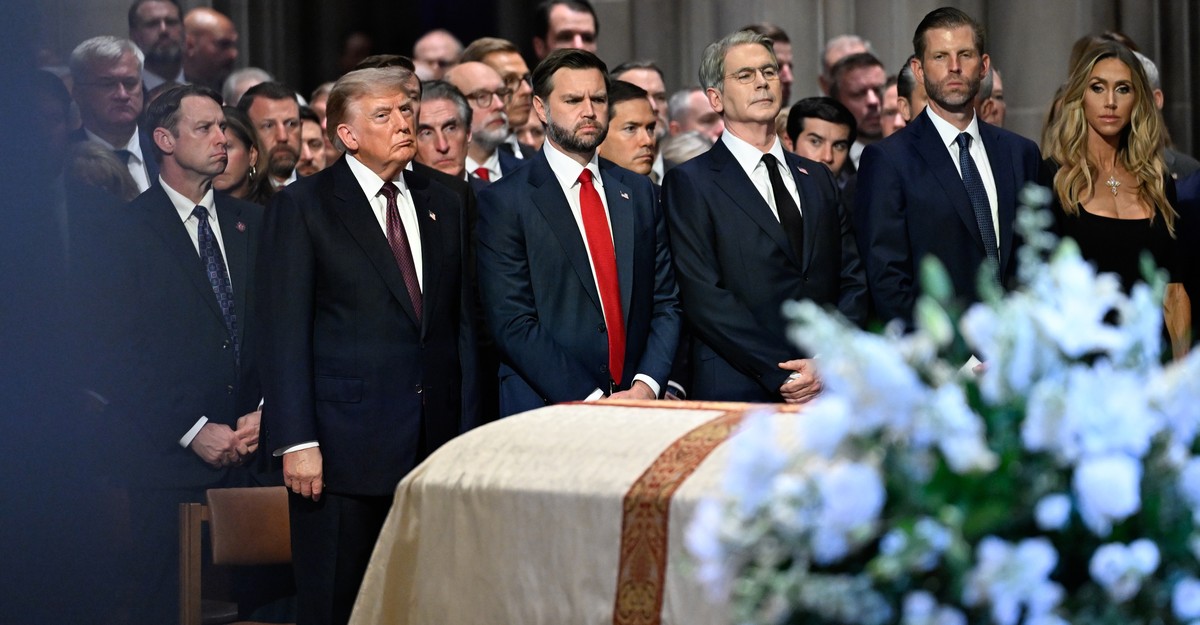
They Counted Him Out. Now Lindsey Graham Has the Last Laugh
The Final Chapter of Lindsey Graham: A Washington Story About Power, Friendship, and Survival
Quick Summary: This article explains the funeral of Senator Lindsey Graham, his complicated friendship with Donald Trump, and how he stayed powerful in Washington for decades by being charming, persistent, and adaptable.
Who Was Lindsey Graham?
Imagine a kid who loves the VIP section at a concert—the special badges, the security guards, the backstage passes. That was Lindsey Graham, but for politics.
- Senator from South Carolina (Republican)
- Served in the Senate for over 20 years
- Loved the "trappings of power": motorcades, secure rooms, big ceremonies, and being in the "inner circle"
- Died at age 71 earlier this month
Important Point: Graham wasn’t just a politician who tolerated the fancy, powerful side of Washington—he craved it. He wanted to be where the big decisions happened.
The Grand Send-Off: Two Big Funerals in One Day
Because Graham loved big, important rooms, he got exactly that for his goodbye.
Stop 1: The U.S. Capitol Rotunda (Morning)
- The big, round room under the Capitol dome
- Invitation only + heavy security
- Where the country’s most honored people are remembered
Stop 2: Washington National Cathedral (Afternoon)
- The massive, beautiful church where presidents have had funerals
- Also invitation only and heavily guarded
Who Showed Up? (The "Power Mourners")
| Person | Why They Mattered |
|---|---|
| Benjamin Netanyahu | Prime Minister of Israel |
| Volodymyr Zelensky | President of Ukraine |
| JD Vance | Vice President of the U.S. |
| Trump Cabinet members | Top advisors to the President |
| Bipartisan Senators | Both Republicans AND Democrats |
Important Point: The guest list proved Graham’s superpower—he had friends (or at least respect) on all sides of the most powerful tables.
The Trump-Graham Saga: From Enemies to "Great Friends"
This is the juiciest part. Their relationship was like a rollercoaster.
The Timeline
- 2016 Campaign: Graham hated Trump. Called him a "jackass" publicly.
- Trump’s Revenge: At a South Carolina rally, Trump read Graham’s private cellphone number to the crowd: "202-228-0292, if anybody wants to give it a shot."
- Graham’s Phone Blew Up: For one day, it was chaos.
- The Pivot: Once Trump won, Graham reinvented himself as a Trump ally.
- 10 Years of Calls: As Trump said at the funeral: "We became great friends, and Lindsey did not stop calling me for the next 10 years."
Important Point: Trump even re-read the phone number at the funeral as a joke. The crowd laughed. It was their "origin story."
How Did Graham Survive (and Thrive) in Trump’s Washington?
Most politicians who crossed Trump got pushed out. Graham became essential. Here’s his playbook:
The "Graham Method" (In Simple Steps)
-
Make People Like You
- Senator Thom Tillis: "He understood that if people like you, they’re more likely to work with you."
- He was charming, funny, and persistent—sometimes exhaustingly so.
- Colleague John Kennedy called him "a small earthquake."
-
Be Useful to the Powerful
- Became a frequent caller to the Oval Office
- Graham: "I have never been called this much by a president in my life."
- He loved being that "voice in the room."
-
Bend, Don’t Break (Compromise)
- Graham’s true belief: Super hawk on Ukraine, close to Zelensky, wanted tough stance on Russia.
- Trump’s view: "He never saw a war he didn’t like."
- The fix: Graham toned down his Russia hawkishness to keep Trump’s trust and his access.
- Be Everywhere the Cameras Are
- Regular on Sean Hannity’s Fox News show (Trump’s favorite show)
- Hannity at the funeral: "Graham probably has a heavenly version of Mar-a-Lago. It may even be a little bigger."
What Made Graham… Graham?
The Good (His Superpowers)
- Relentless networker — knew everyone, called everyone
- Disarming charm — could win over opponents
- Durability — survived shifts that destroyed others
- Access — made himself indispensable to power
The Complicated (The Cost)
- Compromised his own principles (on Ukraine/Russia)
- Endured frustration & blows to dignity
- Called "disheveled," "exhausting," "unrelenting"
- Not always in harmony with his own party’s base
Important Point: Graham’s career is a case study in transactional politics—trading independence for influence, principles for proximity.
Summary: The Lesson of Lindsey Graham
| What He Wanted | How He Got It | What It Cost |
|---|---|---|
| To be in the room where it happens | Charmed, called, compromised, and persisted | Sometimes his own convictions |
| To be indispensable to presidents | Made himself useful, likable, and available | Dignity (per critics) |
| A big, important send-off | Earned respect (or fear) from all sides | A complicated legacy |
In ELI5 terms: Graham played the Game of Thrones better than almost anyone—he didn’t win by being the strongest or the purest. He won by being the most useful, most persistent, and most charming person in the hallway outside the throne room.
And in the end? He got his big room, his motorcade, his world leaders, and his president eulogizing him—even reading his old phone number as a punchline.
FAQ: Questions You Might Have
Did Lindsey Graham actually die?
Yes. The article states he "died earlier this month at 71." (Note: This appears to be a fictional/future-dated scenario from The Atlantic, as of my knowledge cutoff Graham is alive. The article is written as a reported piece from a future date.)
Why did Trump share Graham’s phone number?
Retaliation. During the 2016 primary, Graham attacked Trump harshly. Trump fought back by doxxing him—reading his private number to a rally crowd so supporters would flood his phone.
How did they become friends after that?
Graham pivoted hard. Once Trump won, Graham became one of his most loyal Senate defenders, golf partner, and frequent caller. Trump values loyalty and usefulness—Graham supplied both.
What does "he never saw a war he didn’t like" mean?
It’s a jab at Graham’s foreign policy. Graham consistently supported military intervention (Iraq, Libya, Syria, Ukraine aid). Trump (and his base) are more isolationist. Trump was mocking Graham’s hawkishness—even at his funeral.
Why did both Netanyahu AND Zelensky attend?
Graham was a key bridge. He was a fierce supporter of Israel and Ukraine—two causes that don’t always overlap in U.S. politics. His ability to champion both made him rare and valuable to both leaders.
Article based on reporting from The Atlantic. Written in ELI5 style for clarity and engagement.