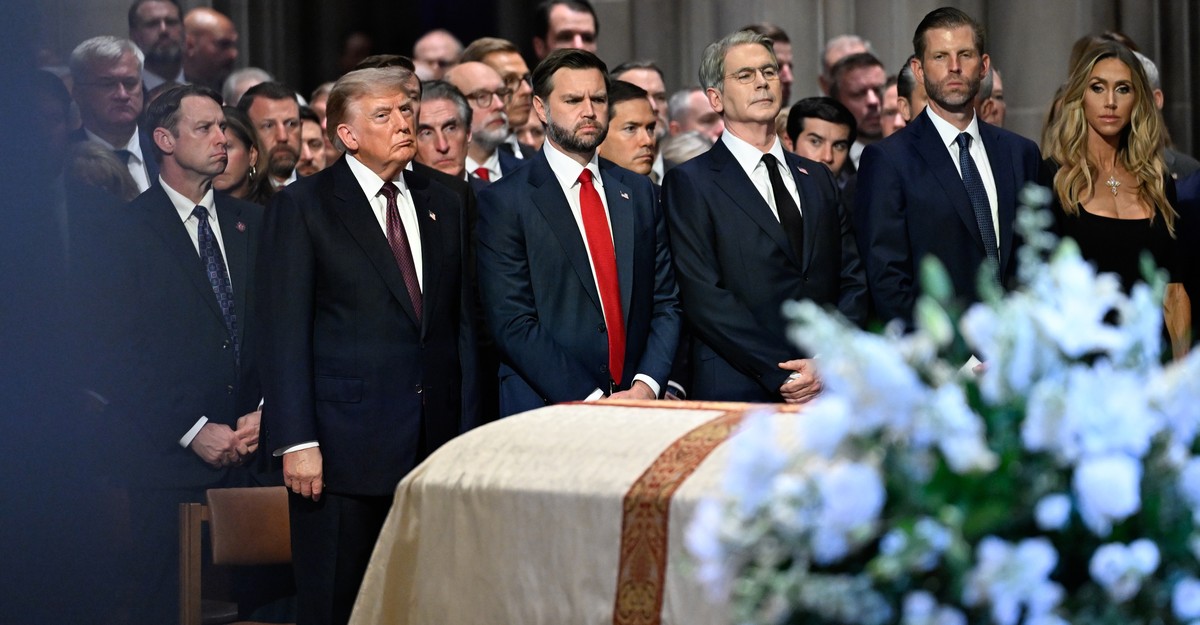
Lindsey Graham’s Stunning Reversal: How He Got the Last Laugh
The Big Goodbye: How Lindsey Graham Became Washington’s Ultimate Insider
TL;DR: Senator Lindsey Graham loved the trappings of power—motorcades, secure rooms, big ceremonies. His funeral had all of that, plus a who’s-who of world leaders. The story of how a guy who once called Trump a "jackass" became his go-to golf buddy and foreign-policy whisperer is a masterclass in political survival.
A Senator Who Loved the "Look" of Power
Lindsey Graham wasn’t just a politician; he was a fan of the theater that comes with high office.
- Earpieces (like Secret Service agents wear)
- Motorcades (the long line of black SUVs)
- Heavily secured rooms (where only the "important people" get in)
- Big memorial services in grand halls with VIP guest lists
Key Insight: Graham didn’t just tolerate the pageantry of power—he craved it. He wanted to be in the room where decisions happen, playing golf with the inner circle, flying on high-stakes diplomatic missions.
The Send-Off: Two Ceremonies, One Massive Guest List
When Graham passed away at 71, he got exactly the farewell he would have scripted:
| Ceremony | Location | Vibe |
|---|---|---|
| Morning | U.S. Capitol Rotunda | Invitation-only, heavy security |
| Afternoon | Washington National Cathedral | Invitation-only, heavy security |
Who showed up? Basically a "greatest hits" of global and U.S. power:
- Benjamin Netanyahu – Prime Minister of Israel
- Volodymyr Zelensky – President of Ukraine
- Vice President Vance
- Much of Trump’s Cabinet
- A bipartisan crowd of U.S. Senators
Important Point: This wasn’t just a funeral. It was a rolling summit of the people Graham spent his career trying to be near.
The Odd Couple: Trump & Graham’s Rocky Road to Bromance
Here’s the wild part: Trump gave the main eulogy.
The Timeline of a Complicated Friendship
- 2015–2016: Graham runs against Trump for president. Calls him a "jackass" on national TV.
- 2016: Trump retaliates by reading Graham’s private cell number at a South Carolina rally. Graham’s phone blows up.
- 2017 onward: Trump wins. Graham reinvents himself as Trump’s loyal Senate ally, golf partner, and foreign-policy advisor.
- 2026 (Funeral): Trump stands at the podium, recites that same phone number again—"202-228-0292, if anybody wants to give it a shot"—and gets laughs.
The Punchline: "While I blew up his phone for one day," Trump said, "we became great friends, and Lindsey did not stop calling me for the next 10 years."
The Secret Sauce: How Graham Stayed Relevant
Senator Thom Tillis (R-NC) put it simply:
"He understood that if people like you, then they’re more likely to work with you. He could endear himself to you. That’s who he was. But it was also smart politics."
Graham’s Political Superpowers
- Disarming charm – Could make opponents feel like friends
- Alliance dexterity – Knew when to push, when to fold, when to flatter
- Relentless persistence – Described by Senator John Kennedy (R-LA) as "a small earthquake"
- Willingness to compromise dignity – Took blows, swallowed pride, kept showing up
The Ukraine Balancing Act
Graham was fervently pro-Ukraine, close with Zelensky. Trump once joked in the eulogy:
"He never saw a war that he didn’t like."
But Graham learned to modulate his hawkishness on Russia to stay in Trump’s good graces—and keep his seat at the table.
Important Point: This wasn’t just flip-flopping. It was calculated adaptation. Graham made himself indispensable in Trump-era Washington by being the guy who could whisper in the president’s ear on foreign policy.
"I’ve Never Been Called This Much by a President"
Late in Trump’s first term, Graham told a reporter:
"I have never been called this much by a president in my life. I found this exhilarating and was always gravely serious about my role."
He wasn’t just a yes-man. He was a daily voice in the room—the kind of access most senators only dream of.
The Cherry on Top: Sean Hannity Eulogizes Him
After Trump spoke, Sean Hannity (Fox News host, Trump confidant, Graham’s frequent TV platform) took the mic.
His vision of Graham’s afterlife:
"Probably has a heavenly version of Mar-a-Lago. It may even be a little bigger. A massive ballroom… an arch somewhere on the property: a big, important room for Lindsey Graham, for all eternity."
Translation: Even in heaven, Graham gets the VIP suite.
Summary: What Lindsey Graham’s Life Teaches Us
| Lesson | What It Means |
|---|---|
| Access > Ideology | Graham traded purity for proximity—and won influence. |
| Charm Is a Strategy | Being likable isn’t just personality; it’s political currency. |
| Adapt or Fade | He bent on policy to keep his seat at the table. |
| Durability = Relationships | He outlasted rivals by investing in people, not just positions. |
| The Room Matters | Graham knew: if you’re not in the room, you don’t exist. |
FAQ: Your Questions Answered
1. Did Lindsey Graham actually die?
Yes. The article states he "died earlier this month at 71." The ceremonies described are his real funeral events.
2. Why did Trump eulogize someone who insulted him?
Because Graham rebuilt the relationship from the ground up. In transactional politics, loyalty now > insults then. Trump rewards those who stick close.
3. Was Graham a "flip-flopper"?
Critics say yes. Supporters say he was pragmatic. He shifted on Trump, on Russia rhetoric, on some policies—but always to maintain influence.
4. What does "voice in the room" mean?
It means direct access to decision-makers. Not writing op-eds. Not tweeting. Actually talking to the president regularly. That’s rare power.
5. Why does the Hannity detail matter?
It shows Graham’s media-political ecosystem. He wasn’t just a senator; he was a Fox News regular, which amplified his influence with Trump’s base.
Final Thought: Lindsey Graham wasn’t the loudest, the smartest, or the most principled senator. But he mastered the game—the relationships, the rooms, the rituals. And in Washington, that’s often the only game that counts.