Clues to the Origins of Life: What a Space Rock Told Us
What This Article Is About
Scientists studied a special space rock (a meteorite) to learn how life might have started on Earth. Here’s the simple version of what they found!
How Salty Liquids Might Help Make Life
- Briny fluids are just very salty liquids (like super-salty water).
- A high concentration of salt in these fluids can potentially create molecules that are crucial to life on Earth.
- Brines help phosphate (a substance life needs) stay dissolved in water.
- They can also speed up (catalyze) chemical reactions between organics (carbon-based stuff) and make minerals form (precipitate).
A Meteorite That Fell From Space
- Cosmochemist Queenie Chan and biogeochemist Nana Ogawa said: “Isotope studies of carbon and nitrogen suggest that primitive carbonaceous chondrites, including CM-types, delivered organic matter to the early Earth.”
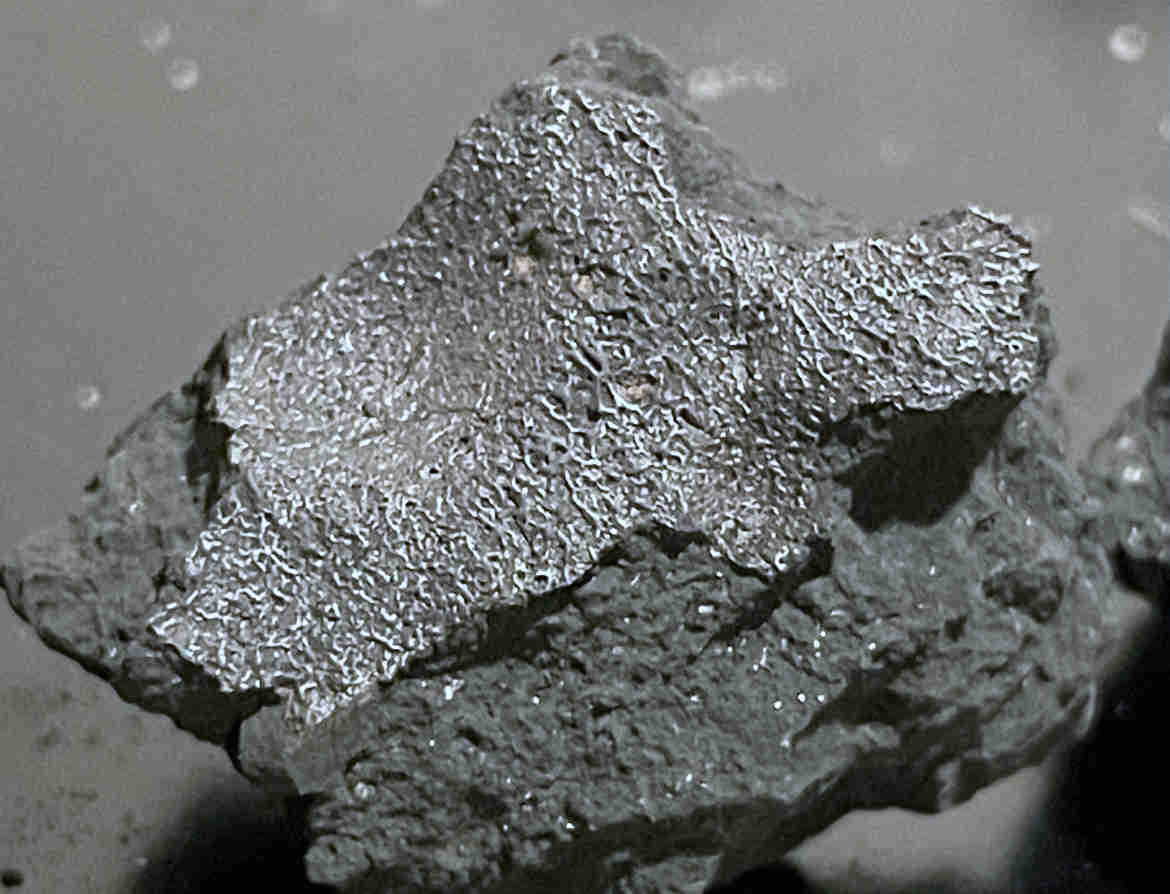
- The Hillsborough meteorite contained:
- 1.8% by weight of carbon
- 0.07% of nitrogen
- Carbon and nitrogen isotopes typical for CM-type meteorites.
- The meteorite had many soluble organic compounds (tiny carbon-based molecules that dissolve in water).
- Its makeup shows it was more changed by water than most other CM-type meteorites.
Important Point: The Hillsborough meteorite was more altered by water than most other similar space rocks, which makes it extra interesting!
What the Molecules Tell Us
- Organic mass spectrometry specialist Phil Schmitt-Kopplin said: “A high fraction of compounds were the product of organic chemistry with minerals.”
- We do not know if these magnesium organic compounds came from brine chemistry or were simply left over from earlier impact shock processes (when space rocks crash).
- In living things, organo-metallic compounds (metal + carbon molecules) are found in blood and used in photosynthesis (how plants make food from sunlight).
- The meteorite also had many amino acids (the building blocks of proteins), similar to those in more moderately altered CM2 chondrites.
Did Space Rocks Help Life Begin on Earth?
- Astrobiologist Danny Glavin and his team at NASA’s Goddard Space Flight Center concluded:
- Delivery of amino acids, carboxylic acids, and other soluble organic molecules by CM-type bodies may have added to the prebiotic organic inventory (the raw materials before life) on early Earth.
- Their analysis suggests the complex mix of amino acids in the Hillsborough meteorite formed inside its parent body (the bigger space rock it came from), likely helped by brine fluid chemistry.
Where the Space Rock Went
- Some meteorite fragments will be kept at the American Museum of Natural History in New York City.
- Curator Denton Ebel said: “We are thrilled that nature delivered such a precious asteroid sample on our doorstep.”
Original Research
Read the original paper: https://www.science.org/doi/10.1126/sciadv.aea2105
About the Organizations
- SETI Institute: Founded in 1984, it is a non-profit, multi-disciplinary research and education organization. Its mission is to lead humanity’s quest to understand the origins and prevalence of life and intelligence in the Universe and to share that knowledge. Research covers physical and biological sciences and uses data analytics, machine learning, and advanced signal detection. It works with NASA, NSF, and others.
- JAMSTEC’s Biogeochemistry Research Center: Part of the Japan Agency for Marine-Earth Science and Technology. It investigates the origins and evolution of life-related primordial organic matter through chemical and isotopic analyses. It studies asteroid samples (like Ryugu, Bennu) and carbonaceous meteorite samples to understand pristine chemical processes in molecular evolution.
Contact
- Rebecca McDonald, Director of Communications, SETI Institute
- Email: [email protected]
Summary
Salty brines may help build life’s molecules. The Hillsborough meteorite, a CM-type space rock, brought organic matter to Earth and was heavily changed by water. Scientists found amino acids and metal-organic compounds in it, suggesting such rocks may have supplied the raw materials for life. Some pieces are now in a museum, and you can read the full science paper online.
FAQ
1. What is a CM-type meteorite?
It is a kind of primitive space rock (carbonaceous chondrite) that contains carbon and organic matter and may have delivered ingredients for life to early Earth.
2. What are brines and why do they matter?
Brines are very salty liquids. They can keep phosphate dissolved and help chemical reactions that might lead to life’s molecules.
3. What are amino acids?
They are small molecules that act like building blocks for proteins in living things. The meteorite had many of them.
4. Where can I read the real science paper?
You can read it at: https://www.science.org/doi/10.1126/sciadv.aea2105
5. Who keeps the meteorite pieces?
Some fragments are curated (taken care of) at the American Museum of Natural History in New York City.
 1
1