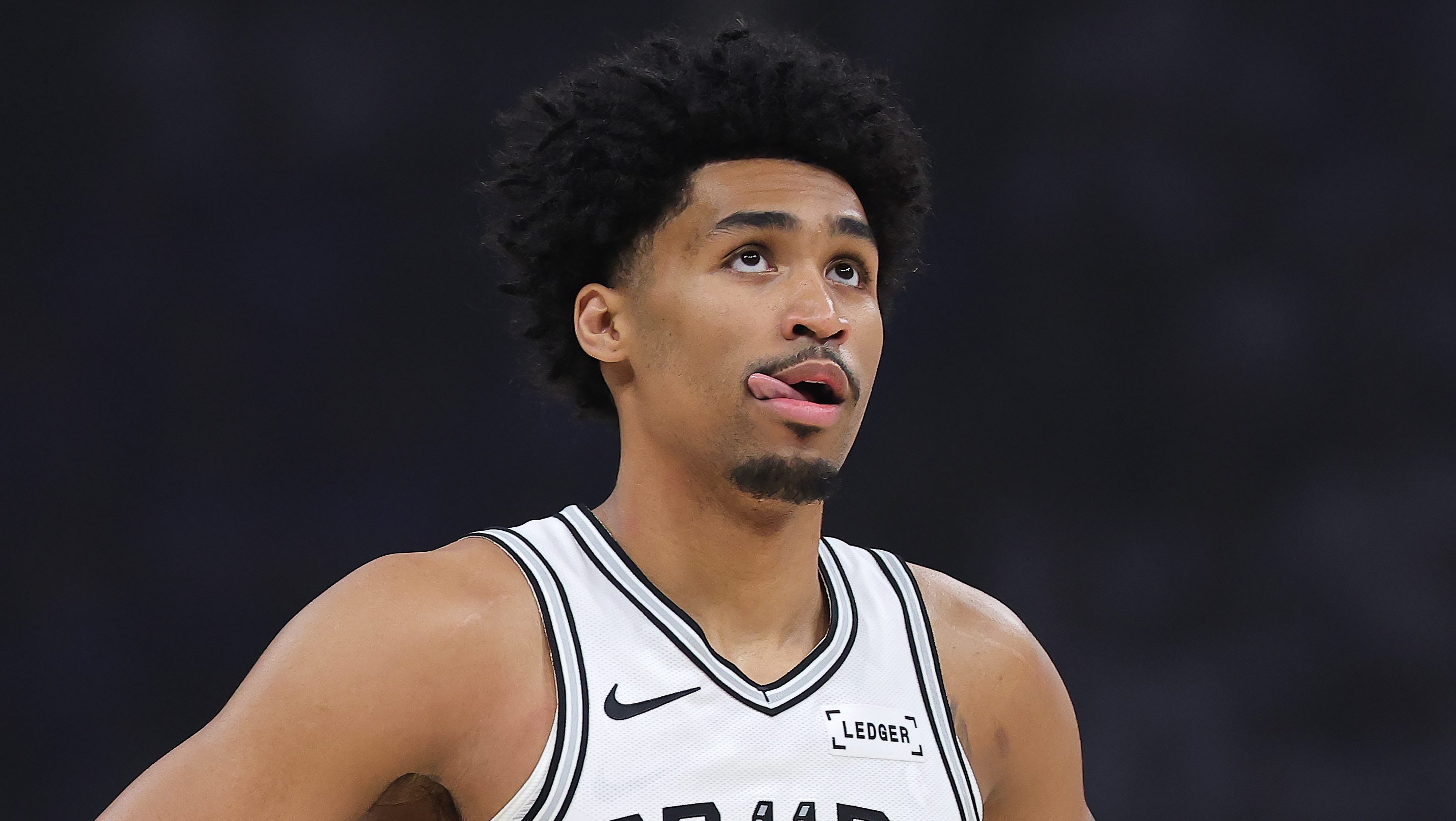
Lakers’ Blockbuster 6-Player Trade Proposal Lands Dylan Harper
Could the Lakers Trade for Young Star Dylan Harper? A Super Simple Guide
The Lakers Already Have Good Players, But Might Want More
The Los Angeles Lakers (a basketball team in California) already have a strong group of "guards" – think of guards as the players who usually hold the ball and start the attacks. Their stars include:
- Luka Doncic, a super talented player.
- Austin Reaves, who just got a new, better long-term contract (meaning the team promised to keep him and pay him for many years).
Even with those guys, the team might look to add more helpful players from other teams to make their group deeper (so they have good substitutes).
A Chance to Get a Young Rising Star
There is a young player named Dylan Harper who is seen as one of the most promising young guards in the whole league (the NBA, which is the big basketball organization). He was picked #2 overall in the 2025 draft (like being chosen second out of all new players). He currently plays for the San Antonio Spurs (a team in Texas).
The Lakers could try to make a "trade" – that’s when two teams swap players or future picks. The idea would send Harper to Los Angeles.
What Would the Lakers Give Up?
In a suggested trade plan, the Lakers would get Harper and send the Spurs a bunch of stuff:
- Jaden Hardy (a player)
- Jake LaRavia (a player)
- Dalton Knecht (a player)
- Adou Thiero (a player)
- Cameron Carr (a player)
- A 2032 first-round draft pick (a chance to pick a new player in 2032)
- A 2033 second-round draft pick (another chance in 2033)
Important Point: Some people might say this is giving up too much! Why? Because Harper is not the main star on his team (maybe not even the 2nd or 3rd most important), and he scored less than 12 points per game. Also, the Lakers would be letting go of two guys (Thiero and Carr) who could become future stars themselves.
Harper’s First Year Was Pretty Good
Even though he is young, Harper had a nice first season with the Spurs:
- He fit in well with his team and got important playing time.
- He was named to the NBA All-Rookie First Team (a special list of the best first-year players).
- He helped the Spurs reach the NBA Finals (the big championship series). In fact, photos from May 2026 show him playing in the Western Conference Finals against the Oklahoma City Thunder, and later in June 2026 he played in the NBA Finals against the New York Knicks.
The Lakers might see this as a chance to grab a "star of the future."
Are the Lakers in a Good Spot to Trade for Him?
Lakers Positioned for a Direct Dylan Harper Trade?
Because Harper has only played one year, the trade wouldn’t be complicated. He is still on a "rookie scale deal" – which is a cheap contract for new players – paying him about $12.9 million per year. That is "cap-friendly," meaning it doesn’t use up too much of the team’s salary limit, so the Lakers can afford him. They would get a player who is cheap now but could become much better.
The only big problem: convincing San Antonio to give away a young talent, especially to a rival team in the same conference (the West). That’s why the Lakers are offering many players and draft picks. The Spurs would get more depth (backup players) and flexibility (ability to make other moves later).
The far-away draft picks (2032 and 2033) might seem like a lot for a second-year guard, but it shows the Lakers believe Harper will become very good (his "ceiling" = how good he could become).
Important Point: The chances of the Spurs actually trading Harper are slim (low), but in today’s NBA anything can happen. If the Lakers want to open up space on their team and add a high-potential player, this trade idea looks reasonable.
Could Harper Get a Big Role in Los Angeles?
Harper’s First Year Performance Could Earn Him a Long-Term Role in L.A.
Let’s look at his numbers from his first year:
- 11.8 points per game
- 3.4 rebounds (grabbing the ball after a missed shot)
- 3.9 assists (passing to a teammate who scores)
- Played 69 games, but started only 4 of them.
- He wasn’t in the "Rookie of the Year" talk, but was still impressive.
In the playoffs (games to decide the champion), he played with confidence like a veteran (experienced player). He even scored 25 points in a key Finals game against the Knicks.
With Luka and Reaves already there, it’s hard to say Harper would start. But he would be a great fit next to those ball-handling stars. Because he is young, he could be part of the Lakers’ future.
If the Lakers used a "small-ball lineup" (a strategy with smaller, faster players) and put three guards on the court, Harper could start next to Doncic and Reaves. But that’s very unlikely because the Lakers are said to be looking for a "wing" (a player who plays on the sides and is medium-sized) instead.
Summary
To sum up:
- The Lakers have Luka Doncic and Austin Reaves, but might trade for young Dylan Harper from the Spurs.
- The proposed trade sends many players (Hardy, LaRavia, Knecht, Thiero, Carr) and two future draft picks to San Antonio.
- Harper is cheap ($12.9M/year) and showed promise: All-Rookie team, helped Spurs to Finals, 25-point playoff game.
- It’s a risky move because the Lakers give up potential future stars, but they bet on Harper’s growth.
- A starting spot isn’t guaranteed, but he’d add depth and future upside.
FAQ
1. Who is Dylan Harper?
He’s a young basketball player drafted 2nd overall in 2025 by the San Antonio Spurs. He plays guard, averaged 11.8 points in his first year, and was on the NBA All-Rookie First Team.
2. What does “rookie scale deal” mean?
It’s a special, lower-cost contract that NBA teams give to players just out of college or draft. It saves the team money while the player is new.
3. Why would the Lakers give up so many players and picks?
Because the Spurs might not want to trade Harper to a rival, so the Lakers must offer a lot. They believe Harper could become a big star later (his ceiling).
4. Would Harper start for the Lakers?
Probably not right away, since Luka Doncic and Austin Reaves are already stars. But in a special three-guard lineup he could, though the team prefers adding a wing player.
5. Is this trade likely to happen?
The chances are slim because teams rarely trade such young talents, but in the NBA surprises happen.