11
11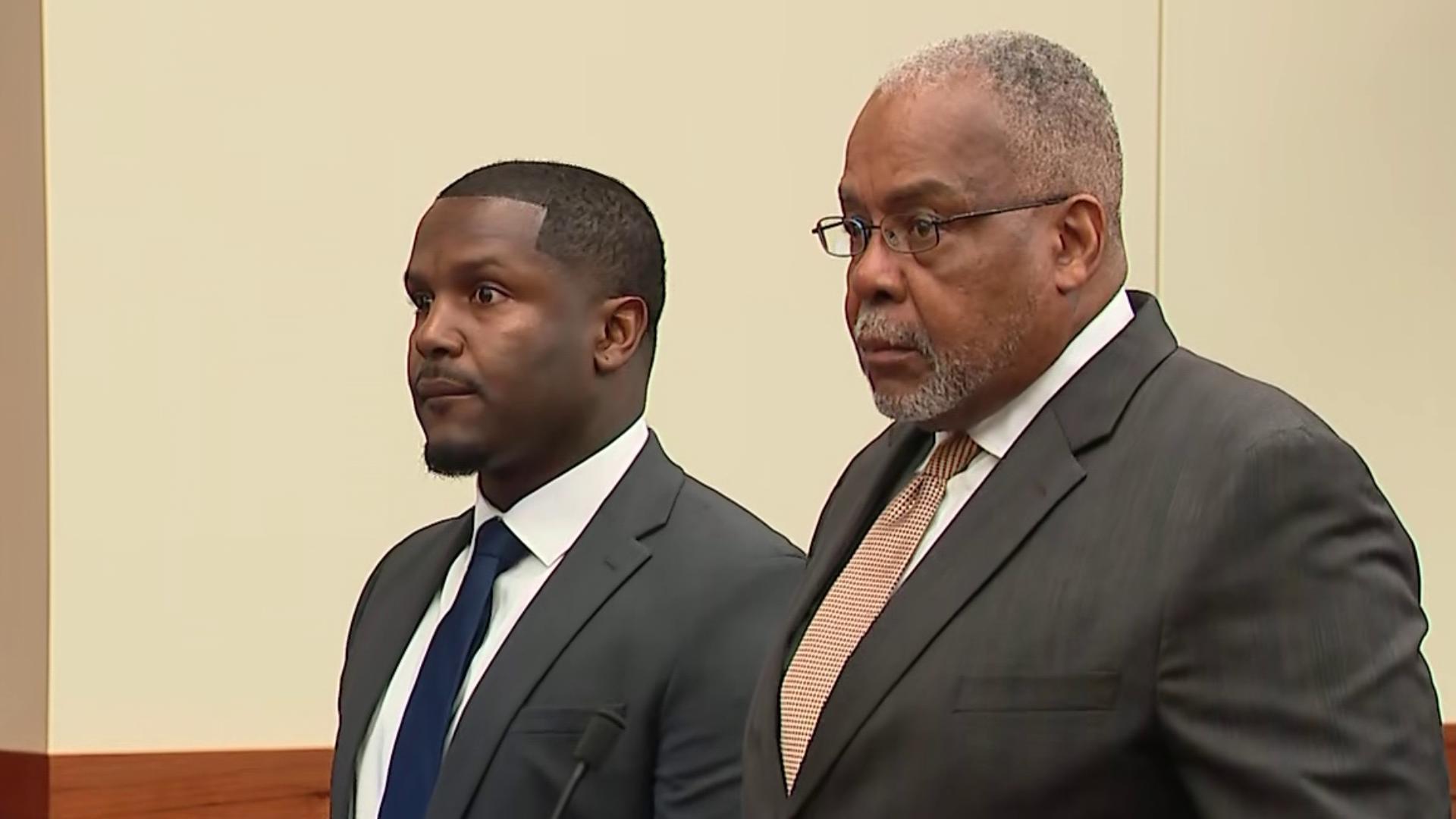
A judge in Columbus, Ohio decided not to send Marcus Williamson to prison right now, even though he admitted to robbing nine banks in 2024. Instead, the 27-year-old former Ohio State football player must complete a special mental health treatment program and follow strict rules for four years.
Important Point: Williamson pleaded guilty to nine counts of robbery. The judge gave him a 19-to-21.5-year prison sentence — but put it on pause. If he succeeds in the program, he won’t serve a single day behind bars.
Police say Williamson used the same method every time:
Williamson told the judge he has schizoaffective disorder — a serious mental health condition — and admits he failed to manage it properly.
"I failed to set the right example for how to handle oneself in crises… While I’m not responsible for my diagnoses, I am responsible for taking care of it, for the sake of those around me and myself." — Marcus Williamson
Judge Sheryl Munson said she thought long and hard about this case. She acknowledged the trauma Williamson caused but asked:
"Even if I incarcerate Williamson for the maximum sentence, at some point, he’s coming home. So the question that we have to ask ourselves is how do we want people to re-enter?"
The RISE program (run by Franklin County Common Pleas Court) is designed for high-risk felony offenders who have a serious mental illness that played a major role in their crime.
| Requirement | Details |
|---|---|
| Complete RISE program | Mental health treatment court program |
| 4 years of community control | Like probation — strict supervision |
| House arrest with GPS monitor | Starting immediately |
| Stay away from all banks/financial institutions | "For now" |
| Commit no new crimes | Zero tolerance |
If he completes everything → No prison time.
If he fails → He serves 19–21.5 years.
Prosecutors revealed Williamson also robbed a bank before the nine he pleaded guilty to — making it 10 total.
"I’d first like to apologize to the victims. I’m deeply sorry for the harm I’ve caused to all those affected by my actions."
Franklin County Prosecutor Shayla Favor said she respects the judge but disagrees:
"Someone can be struggling with mental health issues, but also choose to commit acts of violence… we can walk and chew gum at the same time."
Judge Munson knew people would be upset:
"The state of Ohio is probably very, very unhappy with me right now… and the victim… may be very unhappy with me right now… but at the end of the day, I have to do what I think is right."
She also noted: Williamson has been out on bond for two years with zero issues.
| Key Takeaways |
|---|
| Marcus Williamson, former Ohio State player, pleaded guilty to 9 bank robberies (10 total alleged) |
| He used the same disguise and method each time; caught via GPS tracker |
| He has schizoaffective disorder and admits he didn’t manage it |
| Judge sentenced him to 19–21.5 years but paused it |
| He must complete the RISE mental health program + 4 years community control |
| Success = no prison. Failure = full sentence. |
| Victim and prosecutors wanted prison; judge chose treatment path |
| Williamson has followed all bond rules for 2 years |
It’s a mental health condition that includes symptoms of both schizophrenia (like hallucinations or delusions) and a mood disorder (like depression or bipolar disorder). It can make it very hard to think clearly, manage emotions, and function day-to-day — especially without treatment.
The judge officially gave a prison sentence (19–21.5 years) but put it on hold. Williamson doesn’t go to prison now. If he breaks the rules or fails the program, the judge can activate the sentence immediately — no new trial needed.
It’s Ohio’s term for probation. Williamson will be supervised by a probation officer, must follow strict rules (curfew, drug tests, check-ins, no travel without permission), and can be sent to prison for any violation.
Judge Munson believes prison alone won’t fix the root problem — Williamson’s untreated mental illness. She wants him to get long-term treatment so he’s safer when he re-enters society. She also noted he’s already been successful on bond for two years.
Generally, prosecutors cannot appeal a sentence just because they disagree with it. They can only appeal if there was a legal error (like the judge ignored a mandatory minimum). This was a judge’s discretionary call, so it likely stands.