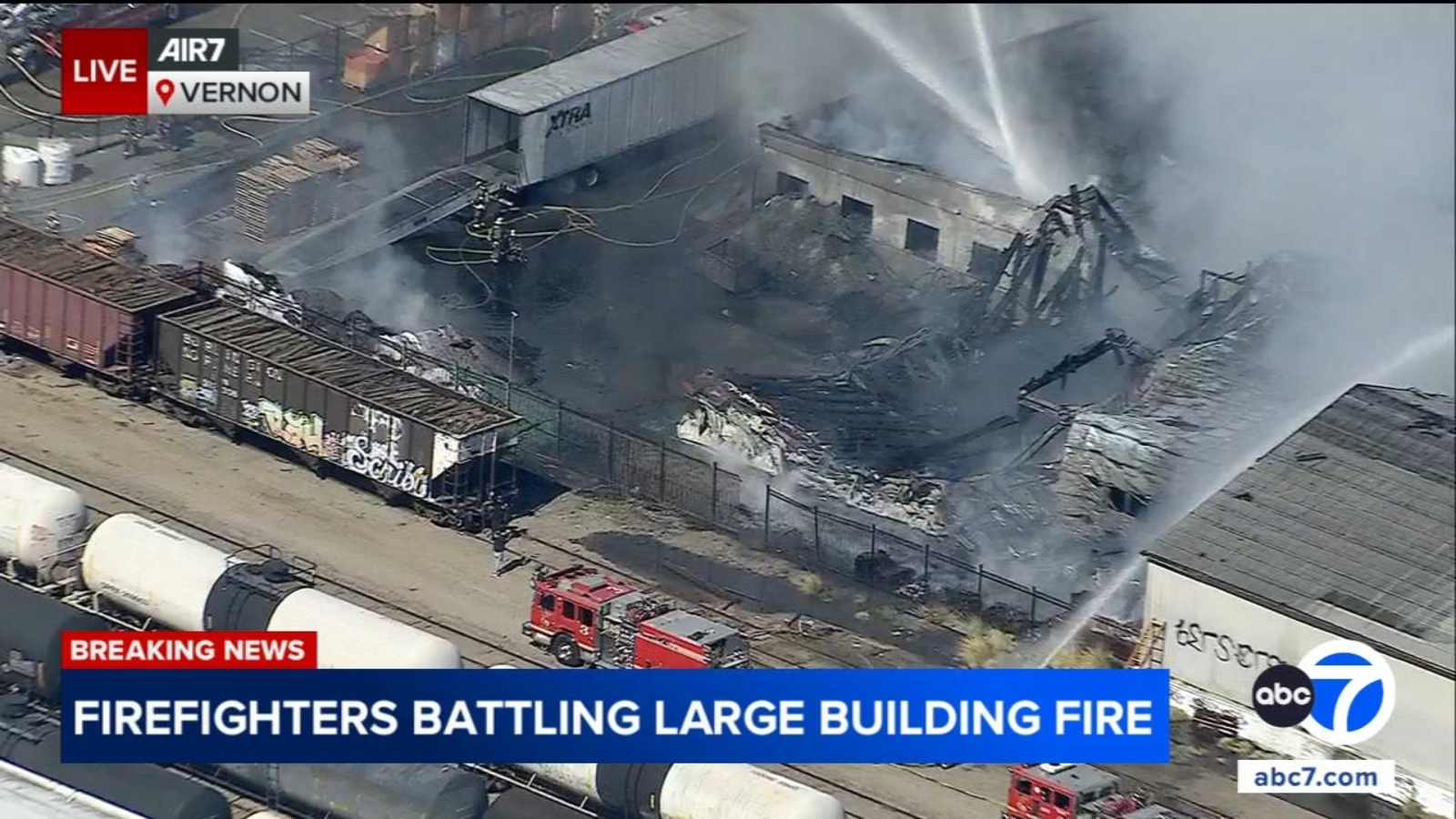
Vernon Inferno Engulfs Commercial Building; Firefighters Go Defensive
Big Fire in Vernon: What Happened and Why It Matters
The Story in Simple Terms
Imagine a really big building—like a huge warehouse or factory—catching on fire. That’s what happened in Vernon, California on a recent afternoon. The fire was so big that firefighters called it a "three-alarm fire." That’s a special code that means "This is serious! Send lots of help, fast!"
What Happened, Step by Step
- The fire started just before 3:30 PM at a large, single-story commercial building on Hampton Street.
- Flames shot through the roof and thick, heavy smoke filled the air.
- Firefighters rushed to the scene with fire trucks, long hoses, and tall aerial ladders.
- They went into "defensive mode." This means the fire was too dangerous to go inside, so they fought it from the outside to keep everyone safe.
- The battle continued past 4:30 PM—more than an hour after it began.
- Good news: No one was hurt, and firefighters stopped the fire from jumping to nearby buildings.
- The cause is still a mystery—investigators don’t know yet how it started.
Important Facts to Remember
KEY TAKEAWAYS
- Three-alarm fire = Major emergency requiring many firefighters and trucks
- Defensive mode = Firefighters stay outside for safety; they protect surrounding buildings
- Zero injuries = Everyone stayed safe, including firefighters
- No spread = Nearby buildings were protected
- Cause unknown = Investigation will happen after the fire is fully out
Where Did This Happen?
- City: Vernon, California (an industrial city near downtown Los Angeles)
- Address area: 4600 block of Hampton Street
- Nearby landmark: Southeast of where Pacific Boulevard crosses Santa Fe Avenue
- Distance from recent Boyle Heights fire: About 4 miles southwest of the Lineage warehouse that burned on June 17
Firefighter Words Made Simple
| Fire Term | What It Means (ELI5) |
|---|---|
| Three-alarm | A rating system: more alarms = bigger fire = more help needed |
| Defensive mode | "Too hot and dangerous inside—let’s spray water from outside" |
| Aerial ladder | A really tall ladder on a fire truck that reaches high places |
| Commercial building | A building used for business (factory, warehouse, store—not a house) |
| Contained/controlled | The fire isn’t growing anymore; it’s surrounded by wet lines |
Why This Matters
- Industrial areas like Vernon have lots of big buildings close together. If one burns, others can catch fire too.
- Firefighters train for exactly this—protecting neighborhoods by stopping the spread.
- Recent history matters: The Boyle Heights warehouse fire (June 17) was catastrophic. This fire was handled differently and had a much better outcome so far.
Summary
A large commercial building in Vernon caught fire in the afternoon. It was a three-alarm fire, meaning it was very serious. Firefighters attacked it from the outside (defensive mode) using hoses and tall ladders. No one was injured, and they kept the fire from spreading to other buildings. The fire was still burning past 4:30 PM, and the cause is not yet known. This happened about 4 miles from another big warehouse fire that happened recently in Boyle Heights.
FAQ: Questions You Might Have
What does "three-alarm" actually mean?
It’s a way fire departments measure how big a fire is. One alarm = first trucks sent. Two alarms = more trucks. Three alarms = "All hands on deck!" Lots of firefighters, engines, and special equipment respond.
Why did they fight it from the outside? ("Defensive mode")
When a fire gets too hot, the roof might collapse, or floors could give way. Firefighters’ #1 rule: Life safety first. If going inside is too risky, they stay out and protect everything around it.
How long does it take to put out a fire this big?
It can take hours to fully extinguish, and sometimes days to make sure every hot spot is out. "Under control" doesn’t mean "completely out"—it means it’s not growing anymore.
Could this fire have spread to homes?
Vernon is mostly industrial (factories, warehouses), not residential. But firefighters always create a "wet blanket" around the fire to protect whatever is nearby—homes, businesses, schools, anything.
How do they figure out what started the fire?
After the fire is completely out and the building is safe to enter, fire investigators (like detectives for fires) go in. They look for burn patterns, check electrical systems, talk to witnesses, and review cameras to find the origin and cause.
Stay safe! If you ever see smoke or fire, call 911 immediately and get to a safe place.