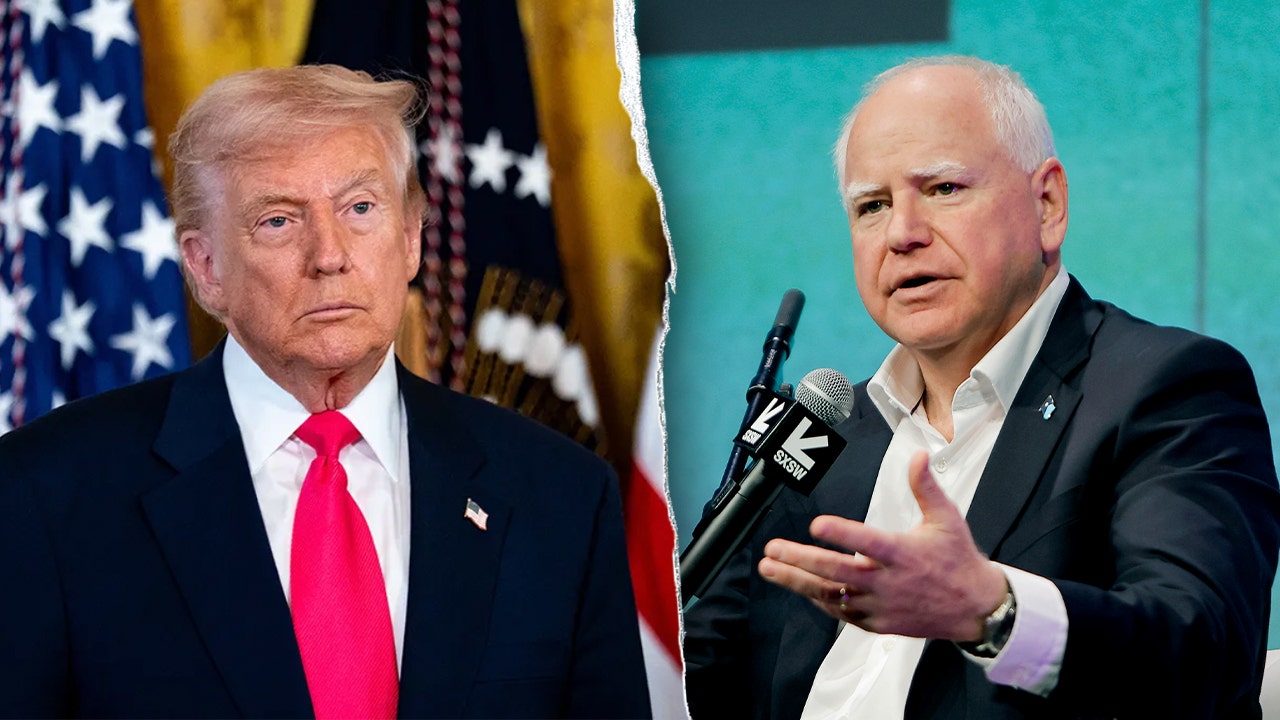
Trump Accuses MN Governor Over Water System Cyberattack
Trump Blames Minnesota, Not Iran, for Cyberattack on 30+ Water Systems
NEW You can now listen to Fox News articles!
What Happened? (The Simple Version)
Imagine someone tries to break into the computer systems that control your town’s water supply. That’s basically what happened in Minnesota recently. But there’s a big argument about who did it and why it happened.
The Two Sides of the Story
Side 1: President Trump’s View
At a Cabinet meeting at Camp David, President Trump said:
- He doesn’t believe Iran did it
- He blames Minnesota’s "corrupt governor," Tim Walz
- He calls the state "grossly incompetent"
- His exact words: "Iran should be so lucky. Iran’s got bigger problems than worrying about Minnesota."
Side 2: What Officials & Experts Say
- U.S. and state officials (people whose job is to investigate hacks) think Iranian hackers were likely behind it
- Federal agencies warned just days before that Iranian-affiliated hackers were targeting water systems
- The New York Times reported that officials familiar with the incident point to Iran
- Minnesota IT Services says they haven’t identified a "specific actor" yet — the investigation is still active
Important Point: These two things can be true at the same time:
• Iran may have launched the attack
• Minnesota’s cybersecurity may have been weak enough to let them in
Bad security doesn’t mean no hacker — it means the hacker had an easy time.
What Actually Happened to the Water Systems?
The Attack Details
- When: Sunday and Monday (late July 2026)
- Where: More than 30 community water systems across Minnesota
- What was hit: Operational technology — the computers that control pumps, wells, and treatment plants
- Result: Automated systems were disrupted in several towns
Real-World Examples
| City | What Happened |
|---|---|
| Braham | Malicious software shut down controls for the well and treatment plant |
| Plymouth | Shifted some operations to manual control (humans running things by hand) |
| South St. Paul | Also switched to manual operations |
Good News
- No known threat to drinking water — the Minnesota Department of Health confirmed this
- No cities have asked residents to change how they use tap water
Why Do Experts Suspect Iran? (The Track Record)
This wouldn’t be the first time. Iran has a history of targeting U.S. water systems:
1. 2023 Attacks (Confirmed by CISA)
- Who: Hackers linked to Iran’s Islamic Revolutionary Guard Corps (IRGC)
- What they did: Breached programmable controllers at several U.S. water/wastewater facilities
- How: Exploited equipment connected to the internet with default or no passwords
- Outcome: Utilities moved operations offline; no drinking water compromised
2. 2013 Case (Justice Department Charges)
- Who: An Iranian hacker (charged by DOJ)
- Target: A small dam in Rye, New York
- What he did: Repeatedly accessed the control system
- Could have: Operated the sluice gate remotely
- Luckily: The gate was manually disconnected for maintenance at the time
The Bigger Picture: Federal Warnings
Just days before the Minnesota attack, federal agencies issued a warning:
- Iranian-affiliated hackers were actively targeting computerized controls for:
- Water systems
- Power facilities
- Local governments
- The campaign had already disrupted operations and caused financial losses
- Investigators believe the hackers want to cause disruption inside the U.S.
Who Is Tim Walz? (And Why Does Trump Mention Him?)
- Current role: Governor of Minnesota
- Recent role: 2024 Democratic Vice Presidential Nominee (ran with Kamala Harris)
- Status: Abandoned bid for a third term in January 2026
- Why? Mounting scrutiny over fraud in state-administered social services programs
- Important: Walz has not been accused of personally participating in the fraud
- Trump’s history: Has repeatedly attacked Walz over these fraud allegations
What Happens Next?
- Investigation continues — Minnesota IT Services is still working to identify the "specific actor"
- Water systems are recovering — most have switched to manual or backup operations
- Security reviews likely — expect renewed focus on protecting critical infrastructure
- Political debate continues — the blame game between Trump and Walz isn’t over
Summary
| Key Point | Details |
|---|---|
| What | Cyberattack on 30+ Minnesota water systems |
| When | Sunday–Monday, late July 2026 |
| Impact | Disrupted automated controls; switched to manual ops; water safe to drink |
| Trump says | Blames Gov. Walz & Minnesota’s "incompetence," not Iran |
| Officials say | Preliminary assessment points to Iranian hackers |
| History | Iran has hacked U.S. water systems before (2023, 2013) |
| Warning | Feds alerted days prior: Iran targeting water, power, gov systems |
| Status | Investigation active; no specific actor confirmed yet |
FAQ
1. Was my drinking water contaminated?
No. The Minnesota Department of Health confirmed there is no known threat to drinking water. The attack hit control systems, not the water itself.
2. How do hackers "attack" a water system?
They target the computers that control pumps, valves, and treatment — not the pipes or water. If they gain access, they could theoretically shut off water or change chemical levels. In this case, they disrupted automation, forcing staff to run things manually.
3. Why would Iran hack Minnesota’s water?
Experts believe the goal is disruption and fear — showing they can reach critical infrastructure inside the U.S. It’s not about Minnesota specifically; it’s about sending a message.
4. Could this happen in my town?
Yes. Many U.S. water systems use internet-connected equipment with weak passwords — exactly what Iranian hackers exploited before. This is a nationwide vulnerability, not just a Minnesota problem.
5. What’s a "default password" and why is it bad?
Many industrial devices come with preset passwords like admin/admin or 1234. If organizations don’t change them, hackers can easily guess them. It’s like leaving your front door unlocked with a sign saying "Key under mat."
Final Thought: Whether Iran pulled the trigger or not, the real lesson is clear: America’s water systems need better locks on their digital doors. Blaming the victim (Minnesota) doesn’t fix the broken security — but fixing the security does stop the hacker.