 11
11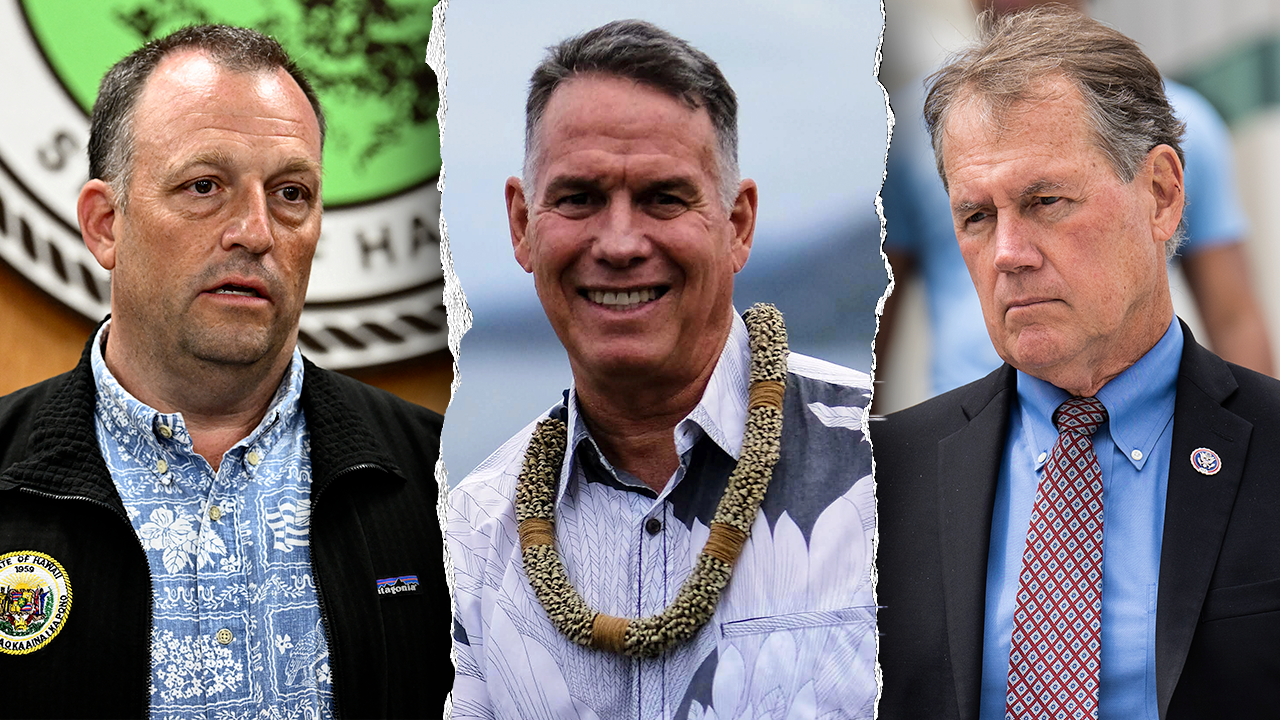
Important Note: This article explains the primary elections held in Hawaii on Saturday, August 2026. A primary election is like a "pre-game" where each political party picks their best player to compete in the main championship (the general election in November).
Hawaii voters went to the polls to decide who will represent their parties in November. Two big races were on the ballot:
Because Hawaii leans heavily Democratic, the Democratic primary winners are heavily favored to win in November.
Josh Green is the current governor (first elected in 2022). He is the "incumbent"—that means he already has the job and is running to keep it. He is heavily favored to win his party’s nomination.
His three challengers are relative unknowns:
| Challenger | Background | Key Promises | Campaign Resources |
|---|---|---|---|
| George "Teva" Lucas-Tadeo | Democratic Socialist | Open a government-run grocery store; Legalize recreational marijuana | No website; $0 raised |
| David "Duke" Bourgoin | Perennial candidate (ran against Green in 2022, lost 590 to 158,161) | N/A | No website; $0 raised |
| Lauren Kapoliahiʻlaka Shim | CEO/Founder of Aloha AI Inc. | N/A | No website; $0 raised |
Money Talks: As of June 30, Gov. Green raised ~$3.5 million. His three Democratic challengers raised $0 combined. The next closest fundraiser overall was Republican Gary Cordery with ~$313,000.
Two Republicans are fighting for the chance to try to break nearly 20 years of Democratic control (the last GOP governor was Linda Lingle, 2002–2010).
| Candidate | Day Job | Big Ideas |
|---|---|---|
| Gary Cordery | Owner, Kingdom Builders (contracting) | • Lower cost of living • Build 15,000 homes for working families • Use state land for housing • Eliminate state sales tax on food & medicine |
| Ken Fujiyama | Entrepreneur & Investor | • Develop 100,000 residential lots • Partner with large landowners to spur growth |
The Reality Check: Whoever wins this primary faces a steep uphill battle. Gov. Green has a 56% approval rating, and the nonpartisan Cook Political Report rates the race "Likely Democrat" with a 13-point advantage for Democrats.
All eyes are on the 1st Congressional District (urban Honolulu). This is a safe Democratic seat, so the primary winner is almost certainly the next Congressperson.
| Metric | Number | Context |
|---|---|---|
| Green’s War Chest | $3.5 Million | vs. $0 for Dem challengers |
| Green’s Approval | 56% | Strong for an incumbent |
| Cook Political Rating (Gov) | Likely D (D+13) | GOP needs a miracle |
| Last GOP Governor | Linda Lingle | Left office 2010 (16 years ago) |
| Case’s Terms | 7th Term Bid | High seniority = Clout |
| Keohokalole Backer | Bernie Sanders (Our Revolution) | Progressive seal of approval |
1. What is a primary election anyway?
Think of it as the semi-finals. Registered Democrats vote for their favorite Democrat; Republicans vote for their favorite Republican. The winners face off in the General Election (Super Bowl) in November.
2. Why does Josh Green have so much money and his opponents have $0?
Incumbents (current officeholders) have a massive fundraising advantage. Donors give to winners. Challengers without name recognition or party support struggle to raise a dime.
3. If the district is so Democratic, why does Ed Case vote with Republicans sometimes?
Case represents a diverse district and has a long record as a moderate/centrist. He argues bipartisanship gets results (like sitting on Appropriations). Progressives argue it betrays Democratic values.
4. Can a Republican actually win the Governor’s race in Hawaii?
Theoretically yes, practically no. Hawaii hasn’t elected a GOP governor since 2002. Green is popular, the state is D+13, and the GOP nominee will be vastly outspent. A major scandal or economic collapse would be needed.
5. What is the "SAVE America Act" Case voted for?
It’s a federal bill requiring documentary proof of U.S. citizenship (like a passport or birth certificate) to register to vote in federal elections. Supporters call it election integrity; opponents call it voter suppression.
Final Thought: Primaries are where the soul of a party is debated. In Hawaii 2026, the Democratic establishment (Green, Case) held the fort, but the progressive wing (Keohokalole) got a high-profile platform. The GOP offered detailed policy menus (housing) but lacks the voters to order the meal.