The Big Bridge Battle: Why a New Detroit–Windsor Crossing Was Almost Blocked
What Is This Story About?
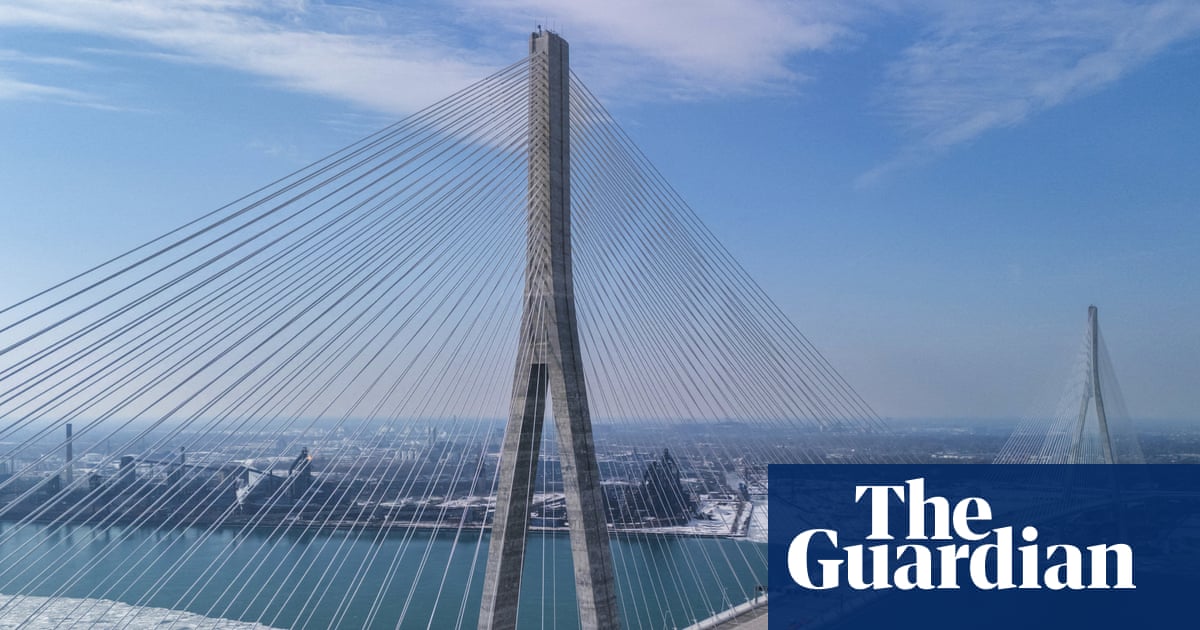
Imagine two giant neighbors — the United States and Canada — built a new bridge between Detroit (in the U.S.) and Windsor (in Canada). It cost $4.7 billion and was paid for by the public (meaning regular taxpayers). But for months, the Trump administration (the team running the U.S. government at the time) stopped the bridge from opening. Critics say this was a "favor" to a rich donor who already owns a different bridge nearby.
Meet the Bridges
- Gordie Howe International Bridge (the "Howe"): The new bridge. Canada paid to build it. It will be owned and run together by Michigan (a U.S. state) and the Canadian government.
- Ambassador Bridge: The old bridge nearby. It is 93 years old and owned by Matthew Moroun (son of the late wealthy businesswoman/man Manuel Moroun). It is the busiest international crossing in North America.
What Was Supposed to Happen?
- The Howe bridge was built over 8 years.
- It was first supposed to open earlier this year.
- A ribbon-cutting (a fancy "we are open!" party) was planned for early June.
- That was suddenly canceled because the U.S. and Canada disagreed.
- On July 10, Canada said a deal was reached with the U.S.
- The bridge will now open on July 27.
Why Was It Delayed?
- The Trump team seemed to want to protect Matthew Moroun’s old bridge.
- Moroun’s family has fought the new bridge for decades because they would lose business.
- Moroun gave $1 million to a Trump political group (a PAC — a pool of money used to help politicians) in January.
- In February, he met with Howard Lutnick, the U.S. commerce secretary (a top business official).
- Hours later, Trump posted online that he might not open the Howe.
- Democrats (like Representative Rashida Tlaib) say this looks like a trade: donate money → get protection.
Important Point
The U.S. already owns half the project! Canada paid for building, but a 2012 deal says Michigan and Canada jointly operate it and split toll money 50-50 after Canada is paid back. Trump said the U.S. should own half — but it already did.
The Old Bridge Problems
- Up to 3 million trucks cross the Ambassador Bridge each year.
- Moroun charges up to $100 per truck.
- The bridge is often jammed, causing long delays for businesses.
- It has safety problems and narrow lanes that are dangerous for emergency workers.
- Many truckers use a tunnel or a bridge an hour north to avoid it.
The New Deal and Rules
- The U.S. must staff the entry plaza (put workers at the U.S. side). A government official said on June 13 they were ready.
- The new agreement says: if toll prices are lowered below the local average, the U.S. government must approve it.
- Before, Canada set the prices alone.
Political Fallout
- A House investigation is looking into whether Moroun used donations to hurt the project.
- A letter accused him of trying to "derail" (stop) the bridge to protect his profits.
- Democrats use this as an attack on Republicans before the 2026 elections.
- One candidate called it "a sordid tale of collusion, of corruption."
- Michigan’s Democratic Party chair said it is "Trump’s plan to sabotage Michigan’s economy."
Bigger Picture
- This happens during a trade fight between the U.S. and Canada.
- Trump let a trade deal (US-Mexico-Canada Agreement) lapse on July 1.
- Wild ideas were floated, like extra fees on Chinese cars, and Trump even joked China would "terminate all ice hockey in Canada."
Summary
The new Gordie Howe bridge between Detroit and Windsor was paid for by Canada and jointly owned with Michigan. The Trump administration delayed its opening for months. Critics say it was to help a billionaire donor (Matthew Moroun) who owns the competing old Ambassador Bridge. A deal was finally made on July 10 to open the bridge on July 27. The story shows a mix of money, politics, and U.S.–Canada tension.
FAQ
1. Who paid for the new bridge?
Canada paid for the construction. The U.S. (through Michigan) will jointly own and operate it with Canada.
2. Why does the old bridge owner care?
Matthew Moroun owns the nearby Ambassador Bridge and makes money from trucks crossing it. A new free-flowing bridge would take his customers.
3. Did the U.S. really not own the bridge?
No — the U.S. (Michigan) already owned half under a 2012 deal. Trump said the U.S. should own half, but it already did.
4. Is the new bridge open now?
Not yet — it is scheduled to open on July 27 after the July 10 deal.
5. Why is this a big deal for regular people?
Delays hurt businesses, trade, and jobs in Michigan. A blocked bridge means higher costs and fewer goods moving smoothly.
 1
1