 11
11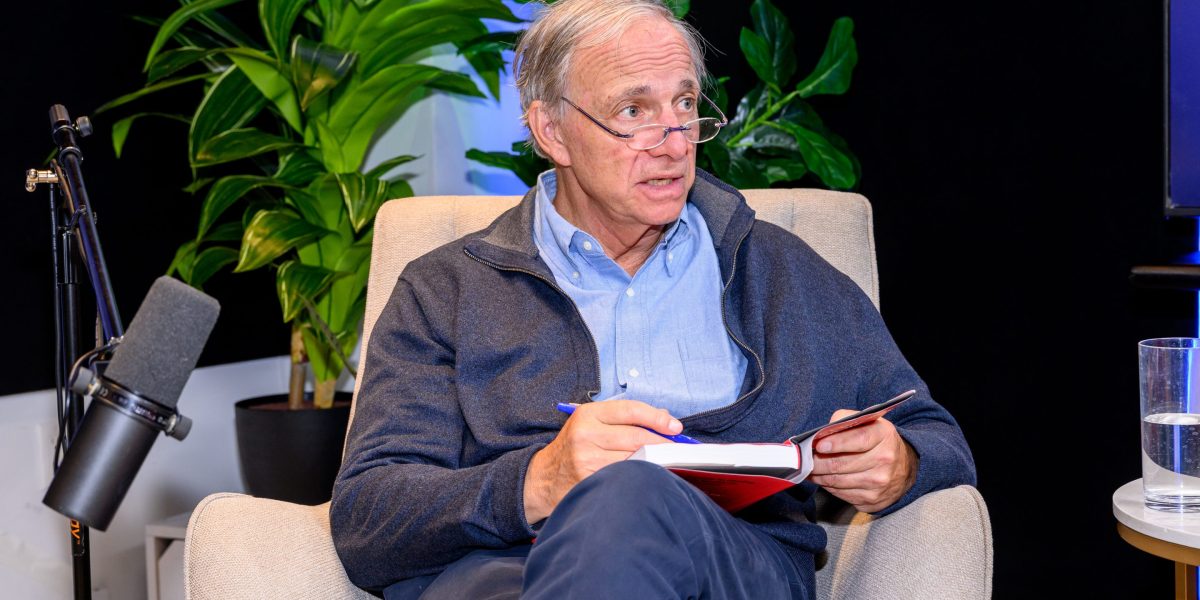
TL;DR: Billionaire investor Ray Dalio says the AI frenzy has pushed stock markets into dangerous bubble territory—similar to 1929 and 2000. Other legendary investors agree. The warning signs are flashing red, and history suggests what comes next could be painful.
When Ray Dalio (founder of Bridgewater Associates, the world’s largest hedge fund) sat down with Steven Bartlett on The Diary of a CEO, he didn’t mince words.
Host Steven Bartlett mentioned that previous guest Jeremy Grantham—a famous investor who predicted the Japanese bubble, the dot-com crash, and the 2008 housing crisis—called this "the biggest investment bubble in American history."
Dalio’s response? "He’s right."
Grantham isn’t just some guy with an opinion. He co-founded GMO, a major investment firm, and has a track record of spotting bubbles before they burst:
| Bubble | When Grantham Warned | What Happened |
|---|---|---|
| Japanese Asset Bubble | Early 1990s | Collapsed shortly after |
| Dot-com Bubble | Late 1990s | Burst in 2000 |
| U.S. Housing Bubble | September 2007 (in Fortune magazine) | Great Financial Crisis hit months later |
Key Insight: In 2007, even the Federal Reserve said "no bubble here." Grantham was right anyway.
Owen Lamont (Acadian Asset Management) says a true bubble needs four conditions—like the Four Horsemen. Dalio’s warning hits Horseman #3 directly.
| Horseman | What It Means | Are We There? |
|---|---|---|
| 1. Extreme Overvaluation | Stocks priced at historic highs vs. earnings/book value | Yes — levels seen only in 1929, 1972, 1999–2000, 2021 |
| 2. "Bubble Beliefs" | Investors know prices are too high but buy anyway, expecting to sell higher | Yes — "FOMO" driving leveraged bets |
| 3. Surge in Equity Issuance | Companies flooding market with new shares/IPOs to cash in on hype | YES — Happening RIGHT NOW |
| 4. Flood of New Participants | Unsophisticated investors piling in (often with borrowed money) | Yes — leveraged ETFs, retail trading apps |
IMPORTANT CALLOUT: Dalio says Horseman #3 (issuance surge) is one of the two main things that prick bubbles. The other? Rising interest rates.
Companies are rushing to go public while the getting’s good:
| Company | Status | Valuation Target | Red Flags |
|---|---|---|---|
| SpaceX | Went public June 2026 (largest IPO ever) | — | Now trading below IPO price; S&P projects negative free cash flow through 2029; Moody’s flags Elon Musk’s voting control |
| Anthropic | Confidentially filed for IPO (expected Oct 2026) | ~$1 trillion | |
| OpenAI | Filed separately | >$1 trillion | Timeline slipped from late 2026 → 2027 ("shifting market dynamics") |
"Wealth is not the same as money. You see people getting wealthy but you can’t spend wealth. You have to sell wealth to get money—because you can only spend money."
Here’s how the trap works:
Dalio’s verdict on bubble signs: "Yeah. Yeah. Yeah. Classic signs that we’re in [one]."
This isn’t just "permabears" anymore. Bullish Wall Street shops are waving flags:
| Firm | What They Said | Date |
|---|---|---|
| Goldman Sachs | "There may be an earnings bubble in tech" (not just valuation) | Aug 3, 2026 |
| Apollo (Torsten Slok) | "The 60/40 portfolio is broken" — stocks & bonds no longer behave as history predicts | Aug 3, 2026 |
| BCA Research | AI trade is "primarily an earnings bubble" — like pre-2008 banks | Months prior |
All Big Tech posted strong earnings—but the market stopped rewarding spending just for existing:
Translation: Investors are getting picky. The "blind faith" phase may be ending.
Dalio places this in his "Big Cycle" framework—a roughly 80-year pattern combining:
"You have people at each other’s throats."
Dalio cites the UK’s six prime ministers in seven years—a symptom of governments running out of money and voters turning on each other.
| Force | How It Works | Current Status |
|---|---|---|
| 1. Rising Interest Rates | Makes debt expensive; pops leveraged bets | "Higher for longer" regime (Slok’s warning) |
| 2. Stock Issuance Surge | Companies cash out at the top; floods supply | SpaceX, Anthropic, OpenAI IPOs |
Dalio shares a story: A friend running an AI company is raising hundreds of millions specifically because he expects a downturn—planning to buy struggling competitors cheap when the music stops.
| Point | Takeaway |
|---|---|
| 1. Two legends agree | Dalio + Grantham = "Classic bubble signs" |
| 2. Four Horsemen present | All four bubble conditions are met |
| 3. Issuance surge = danger | SpaceX, Anthropic, OpenAI IPOs = Horseman #3 arriving |
| 4. Wealth ≠ Money | Paper gains vanish; debts stay real |
| 5. Wall Street concurs | Goldman, Apollo, BCA see "earnings bubble" |
| 6. Big Cycle context | Burst → not just portfolio loss, but political/geopolitical conflict |
| 7. Smart money prepping | Insiders raising cash to buy the dip |
A: Dalio says bubbles are "a degree thing, not binary." It’s not 0% or 100%—it’s how much. He sees classic signs but doesn’t give personal investment advice. Talk to a financial advisor before making moves.
A:
A: For 40 years, the standard advice was 60% stocks / 40% bonds. When stocks fell, bonds rose (and vice versa)—smoothing returns. Apollo says that relationship is broken. Both may fall together now. Diversification may not protect you like it used to.
A: Not necessarily. But Dalio warns the financial pain triggers political fights (who gets bailed out? who pays taxes?). That conflict—combined with debt, inequality, and geopolitical tension—is the real risk in his "Big Cycle" model.
A: No one-size-fits-all answer, but principles from Dalio/Grantham:
Final Thought:
Bubbles feel like genius while they’re inflating. The pain comes after.
As Dalio puts it: "You can’t spend wealth. You have to sell it to get money."
The question isn’t if the music stops—it’s whether you have a chair when it does.
Disclaimer: This article summarizes public comments by Ray Dalio, Jeremy Grantham, and financial analysts. It is for educational purposes only and does not constitute investment advice. Always consult a qualified financial professional before making investment decisions.