 11
11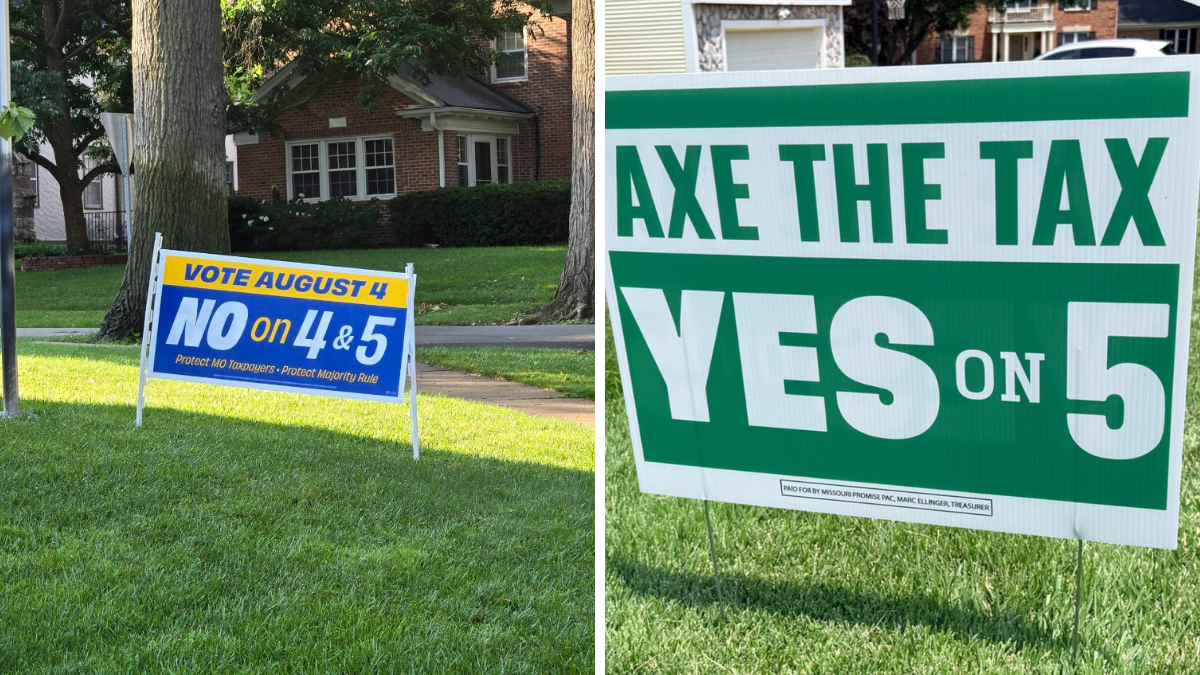
Important Points
- Record spending: Over $26.7 million has been spent on Missouri ballot issue ads this primary season
- Amendment 5 is the star: This proposed constitutional change would phase out state income tax while potentially expanding sales taxes
- Ads contradict each other: Proponents promise tax cuts; opponents warn of massive tax hikes on everyday services
- Few rules for truth: Political ads—especially online—face minimal fact-checking requirements
Every election year, political ads bloom like dandelions across Missouri. Yard signs pop up, TV commercials flood the airwaves, and social media feeds fill with campaign messages. Usually, candidate ads dominate both attention and spending.
But 2026 is different.
This year, ballot measure ads have taken center stage, with various groups spending a whopping $26.7 million to sway your vote on constitutional amendments. Two amendments are hogging the spotlight:
| Amendment | What It Does |
|---|---|
| Amendment 4 | Changes how citizen-led ballot initiatives pass—requiring majority support in all 8 congressional districts instead of a simple statewide majority |
| Amendment 5 | Aims to eliminate state income tax over time, while giving lawmakers power to raise sales taxes and tax new services for 5 years without voter approval |
Note: Amendment 5 was placed on the ballot by the legislature through HB 173, not by citizen petition.
Amendment 5 has attracted the most money—and the most confusing, conflicting ads. Let’s break down what each side claims.
Who’s behind it: Missouri Promise PAC, treasured by Jefferson City lawyer Marc Ellinger (a veteran of Republican tax campaigns).
Money spent: $6.4 million on TV ads as of July 24 (per FCC records).
Their star ad: "Mule" – featuring a talking mule explaining the amendment.
| Claim | What It Means |
|---|---|
| "It ain’t fair you pay all those taxes while big corporations pay almost nothing" | Suggests corporations will finally pay their "fair share" |
| "Dollar for dollar, that’s income and property taxes cut by law" | Promises mandatory tax cuts tied to new sales tax revenue |
| "Every dollar brought in must go towards cutting taxes" | Implies ironclad protection for taxpayers |
Corporate taxes: Amendment 5 does not change Missouri’s corporate income tax (flat 4%). The "fair share" argument relies on future legislation broadening the sales tax base to hit currently-exempt business purchases.
Income tax elimination: Lawmakers would set "triggers" based on revenue growth—similar to how the rate dropped to 4.7% via SB 3 in 2022. But no timeline is guaranteed.
Property taxes: Local governments would need to adjust rates if the state expands the sales tax base—but school funding cannot be harmed. Since property taxes fund ~57.5% of Missouri school budgets (70% in Kansas City!), this severely limits property tax cuts.
Key distinction: The campaign emphasizes "broadening the base" (taxing currently-exempt transactions) rather than "raising the rate." Opponents say that distinction won’t matter to your wallet.
| Scenario | Projected State Sales Tax Rate |
|---|---|
| No base expansion (replace $7.75B income tax revenue) | 11.925% (up to 16-20% with local taxes) |
| Full base expansion (tax everything, no exemptions) | ~6% |
Reality check: Missouri’s total economic output is ~$350B. To replace income tax revenue only by broadening the base, lawmakers would need to find $225B in new taxable transactions. That’s a tall order.
Main player: Missourians for Fair Taxation (backed by Missouri Realtors, treasurer: Jessica Jordan).
Money spent: $2.42 million on ads (including production + airtime).
Their star ad: "Musical Chairs" – 10 people, 2 chairs claimed by politicians, then a projector flashes: "Up to 80% pay more, seniors and families hurt by Amendment 5."
| Claim | Source / Context |
|---|---|
| "Up to 80% pay more" | Missouri Budget Project analysis (based on Institute on Taxation & Economic Policy data) |
| "Seniors and families hurt" | Seniors & low-income families already pay little/no income tax → get no benefit from cuts, but would pay new sales taxes |
| "New taxes on doctor visits, childcare, rent" | Amendment allows taxing any service—no specific industries protected in the text |
| "Rate could exceed 20%" | Combined state + local rate if base isn’t expanded (Missouri Budget Project projection) |
| "Eliminates your constitutional protections, including your right to vote on new taxes" | Suspends Hancock Amendment (revenue limits) and 2016 sales tax freeze for 5 years |
The 80% figure: Comes from modeling showing most households would pay more in new sales taxes than they’d save in income tax cuts—especially those already paying little income tax.
Services on the table: The amendment does not list protected industries. Gov. Mike Kehoe says he wants healthcare/ag/real estate exemptions, but nothing in the law makes that binding.
"Eliminates" vs. "Suspends": Technically, Amendment 5 suspends (not eliminates) constitutional protections for 5 years. The Realtors’ spokesperson argues: "The practical effect is the same because of the damage done in that time frame."
Important Points
- TV/Radio: FCC requires only sponsor ID and payment disclosure in station files. No truth requirement for issue ads.
- Digital (social media, websites, search): Zero federal regulations. Only 6 states have any rules.
- Platforms self-police: Meta, Google, X have policies—but studies show they often fail to enforce them.
| Platform | Requirements |
|---|---|
| Meta (Facebook/Instagram) | Advertiser authorization + "Paid for by" disclosure + AI-generated content label |
| Similar verification + disclosure rules for election ads | |
| X (Twitter) | Bans false voting info, intimidation, election security undermining |
Bottom line: "Unfortunately, in our system, we don’t really have a way to punish people who are inaccurate, except for the other side calling them out," says WashU marketing professor Raphael Thomadsen. "Human beings respond to shortcuts… If you just laid out a very detailed argument, especially for ballot initiatives, they would tend to get lost."
| What Amendment 5 Does | What It Doesn’t Do |
|---|---|
| Sets a goal to eliminate state income tax over time | Guarantee your taxes go down |
| Lets lawmakers expand sales tax base (tax new services/goods) for 5 years | Protect specific industries (healthcare, rent, childcare) in the constitution |
| Lets lawmakers raise sales tax rate for 5 years without voter approval | Eliminate constitutional protections permanently (suspends for 5 years) |
| Requires matching income tax cuts for any sales tax revenue increase | Ensure property taxes drop (school funding protection limits this) |
| Gives local governments 1 year to adjust local taxes after state acts | Prevent combined state+local sales tax from reaching 15-20% |
The core tension: Shift from income tax (paid based on earnings) → sales tax (paid based on spending). Winners/losers depend entirely on what gets taxed and how much you spend vs. earn.
No. The amendment only directs lawmakers to pass future legislation with the goal of eliminating income tax. Triggers based on revenue growth would determine the timeline—just like the gradual cuts that brought the rate to 4.7%. There’s no guaranteed end date.
Probably not much. The amendment requires local governments to adjust rates if the state expands the sales tax base, but it explicitly protects school funding. Since property taxes provide ~57.5% of school revenue (up to 70% in urban districts), this severely restricts property tax reductions. Special districts (libraries, fire, transit) also rely heavily on property taxes.
Almost any service. Currently, Missouri taxes only specific listed services (see DOR’s list). Amendment 5 lets lawmakers add any service to the taxable list—doctor visits, childcare, rent, legal fees, haircuts, you name it. No industries are constitutionally protected in the amendment text.
They’re modeling different scenarios:
Be skeptical. Issue ads (unlike candidate ads) face almost no truth-in-advertising rules. TV/radio stations can reject false ads but rarely do. Online ads have zero federal oversight. Always cross-check claims with:
Amendment 5 isn’t a simple "tax cut" or "tax hike"—it’s a fundamental restructuring of how Missouri funds government, shifting from income-based to consumption-based taxation. The ads are selling competing visions of what that future looks like.
Your vote decides which vision gets the chance to become reality.
Want to dive deeper? Check out The Beacon’s full election guide for more on all ballot issues.