 11
11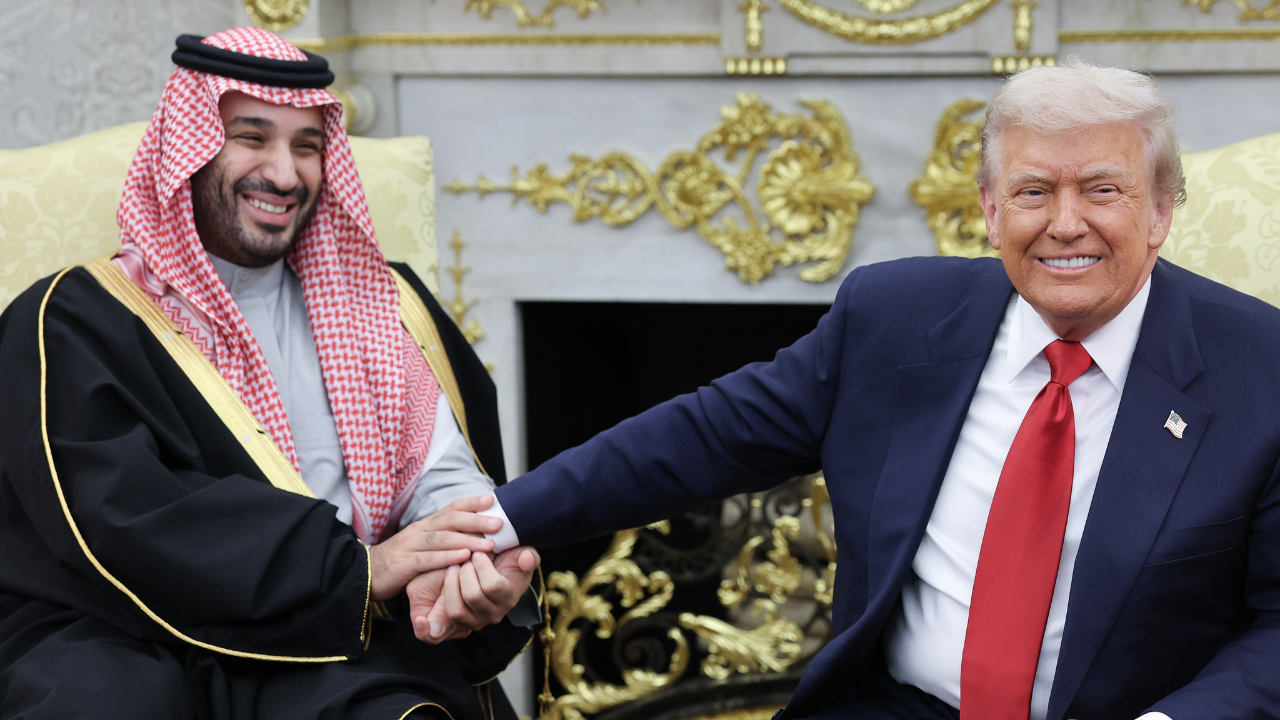
Quick Summary: A top retired U.S. general says Pakistan, Qatar, and Saudi Arabia cannot be trusted as mediators in nuclear talks with Iran. He argues they favor Iran and have steered the U.S. away from military pressure—while America and Israel bear all the risk.
The United States is trying to negotiate with Iran over two huge issues:
To help talk to Iran, the U.S. is using mediators—countries that carry messages back and forth. The main mediators are Pakistan, Qatar, and Saudi Arabia.
But retired four-star General Jack Keane (a Fox News senior strategic analyst and former Army Vice Chief of Staff) says these mediators are compromised.
"It is well known in the Middle East region, by our intelligence services, by all the players, that the Pakistanis and the Qataris are compromised because they favor Iran at the expense of the United States. This is historical. This is not new."
— Gen. Jack Keane
Keane’s criticism of Saudi Arabia is even sharper:
| Allegation | Detail |
|---|---|
| Denied U.S. airspace & base access | During prep for a possible military operation to reopen the Strait of Hormuz. |
| Lobbied Trump against strikes | Repeatedly persuaded the president not to resume major military operations against Iran. |
| Wants others to fight | "They’re willing for us to make that sacrifice… for Israel to make that sacrifice." |
Keane’s bottom line: The Saudis won’t risk their own oil infrastructure or casualties—but expect the U.S. and Israel to do so.
Raza Rumi, editor-at-large of The Friday Times (Pakistan), disputes Keane:
Salman Al-Ansari, a Saudi geopolitical analyst, rejects the "unwilling to confront" label:
"Saudi Arabia supports confronting Iranian aggression, but not an open-ended regional war without clear objectives or an endgame. Riyadh favors diplomacy backed by credible deterrence… any agreement must be enforceable and verifiable, addressing Iran’s nuclear program, its proxies, and freedom of navigation in the Strait of Hormuz."
But an anonymous Gulf analyst disagrees:
Richard Goldberg (Foundation for Defense of Democracies, former NSC official) adds nuance:
"We also are relying on Saudi Arabia with their overland pipelines to keep us in the game here. The fact that they’re at maximum capacity moving through the Red Sea also allows us to continue the strangulation strategy."
Translation: Even if the U.S. and Saudi Arabia disagree on military strategy, America depends on Saudi oil pipelines to bypass the Strait of Hormuz and keep pressure on Iran.
| Agreement | Date | Key Points |
|---|---|---|
| Islamabad Memorandum of Understanding | June 22, 2024 | Pakistan & Qatar formally mediating. Working groups on: nuclear, sanctions, monitoring, dispute resolution, Strait of Hormuz shipping safety. |
| U.S.–Iran Memorandum of Understanding | Earlier (referenced in G7 summit) | Broader framework credited to Pakistan & Qatar by Trump. |
| New Interim Arrangement (reported Wed) | June 2024 (week of article) | Separate shipping lanes through Iranian and Omani waters—decoupling maritime crisis from nuclear talks. |
| Viewpoint | Argument |
|---|---|
| Keane (Skeptic) | Mediators are biased. Iran will never give up control of the Strait—it’s a "strategic asset." Nuclear deal will be even harder. "My gut feeling here is no… The president is not going to make a bad deal here." |
| Trump & White House | "Great respect for Pakistan… been terrific." Regional partners are helping. "If Iran cannot agree to a good deal… the fault will lie squarely with the regime." |
| Saudi Analyst (Al-Ansari) | Confrontation yes—but with a plan. Enforceable, verifiable deal covering nukes, proxies, shipping. |
| Anonymous Gulf Analyst | Saudi fear of Iranian missiles drives restraint, not strategy. |
| Goldberg (Pragmatist) | U.S. needs Saudi pipelines now. Disagreement on war ≠ breakdown of alliance. |
- Mediators ≠ Neutral. Pakistan, Qatar, and Saudi Arabia have their own interests—some align with Iran.
- Trump trusts them; Keane doesn’t. This is a real split inside the U.S. establishment.
- The Strait of Hormuz is the flashpoint. 20% of world oil passes through it. Iran uses it as leverage.
- Saudi Arabia holds cards the U.S. needs (pipelines, airspace, oil markets)—but may not play them the way Washington wants.
- No deal yet on nukes. The maritime side-track (shipping lanes) may be easier than the nuclear endgame.
- Iran sent a "whole-regime" team to talks—signal they want sanctions relief, but not necessarily to dismantle the program.
Because the U.S. and Iran have no diplomatic relations since 1980. Mediators pass messages, propose frameworks, and build trust step-by-step.
It’s a narrow waterway between Iran and Oman. About 20–30% of the world’s oil ships through it. If Iran blocks it, global energy prices spike—giving Iran massive leverage.
Yes. In January 2024, both countries launched missile strikes on each other’s territory targeting militant groups. This shows their relationship is transactional, not an alliance.
Saudi oil facilities are within easy range of Iranian missiles. Riyadh fears a wider war would devastate its economy and infrastructure. They prefer diplomacy backed by deterrence.
It’s harder. If mediators soften Iran’s demands or downplay its cheating, the U.S. may agree to a weak deal. That’s Keane’s fear. But without mediators, there’s no channel at all—so the U.S. walks a tightrope.
Reporting by Efrat (Effie) Lachter, Fox News Digital. This article synthesizes on-the-record statements, analyst commentary, and diplomatic developments as of June 2024.